


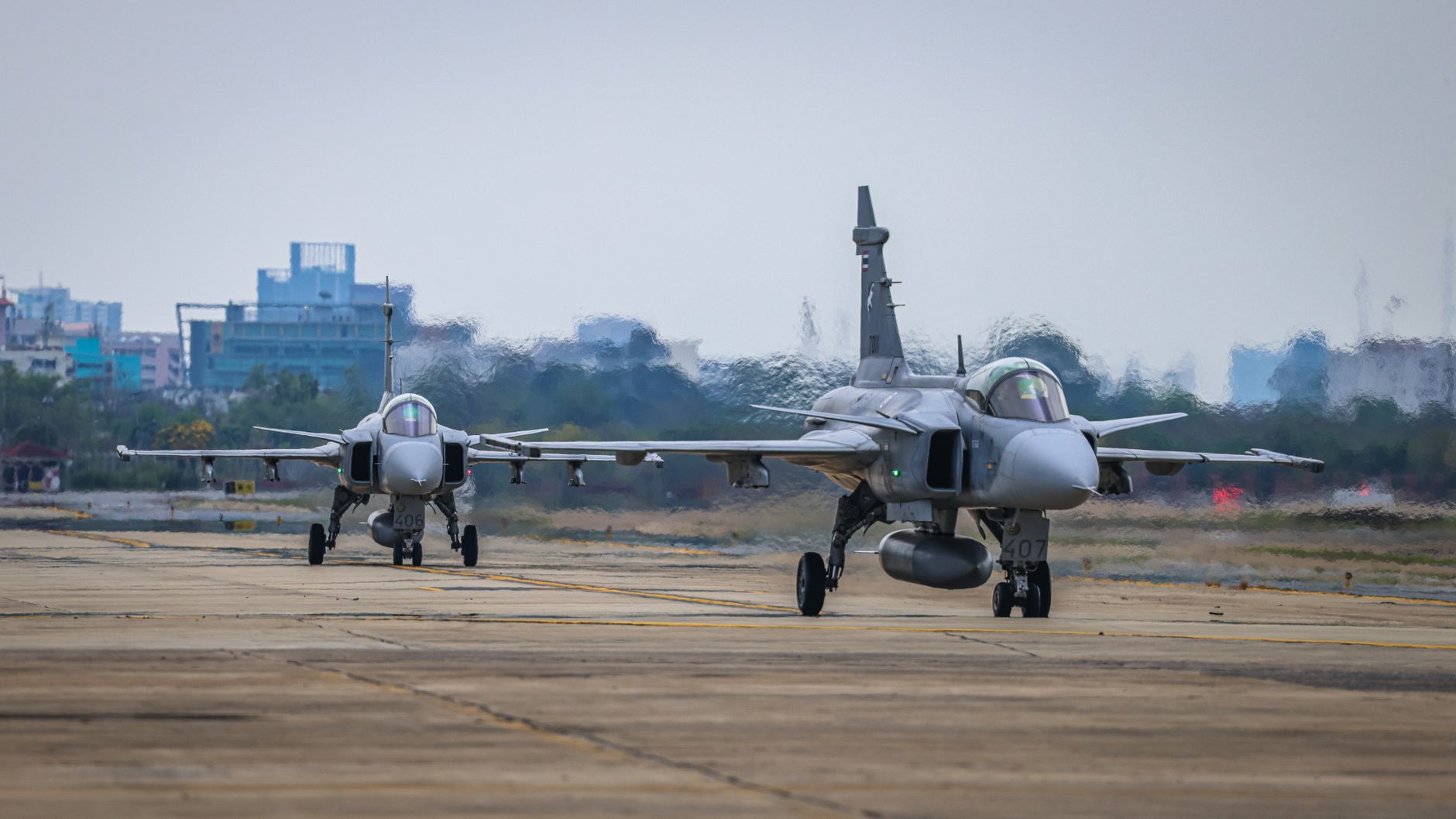
The Indian Air Force (IAF) is set to induct its first squadron of indigenous Light Combat Aircraft (LCA) Mark 1A fighters within the current financial year, according to Chief of the Air Staff Air Chief Marshal Ashutosh Dixit. Speaking at the ANI National Security Summit 3.0 in New Delhi, the Air Chief confirmed that the fleet expansion is a primary focus of the force’s modernization efforts.
Air Chief Marshal Dixit emphasized that the development of indigenous fighter platforms represents a significant technological challenge that few nations have successfully achieved. He noted that the LCA Tejas programme has functioned as a massive national undertaking, involving approximately 600 to 700 laboratories and research institutions. This network includes contributions from the Council of Scientific and Industrial Research (CSIR), various Indian Institutes of Technology (IITs), and railway laboratories.
Addressing the technical evolution of the aircraft, the Air Chief explained that the IAF identified four specific areas for improvement in the original Tejas design. To facilitate the development of the upgraded Mark 1A variant, the Air Force provided an aircraft from its own inventory to Hindustan Aeronautics Limited (HAL). Improvements in these four areas are now nearly complete, supplemented by the integration of new weapons developed by the Defence Research and Development Organisation (DRDO) and extensive flight testing.
Looking toward future aerial capabilities, Air Chief Marshal Dixit stated that the development of the next-generation LCA Mark 2 and the Advanced Medium Combat Aircraft (AMCA) is also progressing. He indicated that the LCA Mark 2 is expected to roll out as early as next year.
Key facts
- The first LCA Mark 1A squadron is scheduled to join the IAF within the 2026-27 financial year.
- Development of the Tejas programme involved collaboration between 600 to 700 research centres and laboratories nationwide.
- The IAF collaborated with Hindustan Aeronautics Limited (HAL) to address four key performance shortfalls identified during initial testing.
- Air Chief Marshal Ashutosh Dixit assumed his position as the Chief of the Air Staff on October 31, 2026.
- The Air Force contributed an aircraft from its existing inventory to assist in the Mark 1A testing and development process.
Why it matters
The induction of the Mark 1A variant is a core priority for the Indian Air Force as it works to bolster its fighter fleet. The reliance on indigenous design and manufacturing, supported by a broad coalition of national scientific institutions, reflects a strategic shift toward self-reliance in high-end defence technology.
Background
Fighter aircraft development requires expertise across multiple scientific disciplines, including physics, chemistry, and life sciences. Only a limited number of countries globally have mastered the capability to design, develop, test, and manufacture such sophisticated combat platforms domestically.
Source: News18, Hindustan Times





Comments