


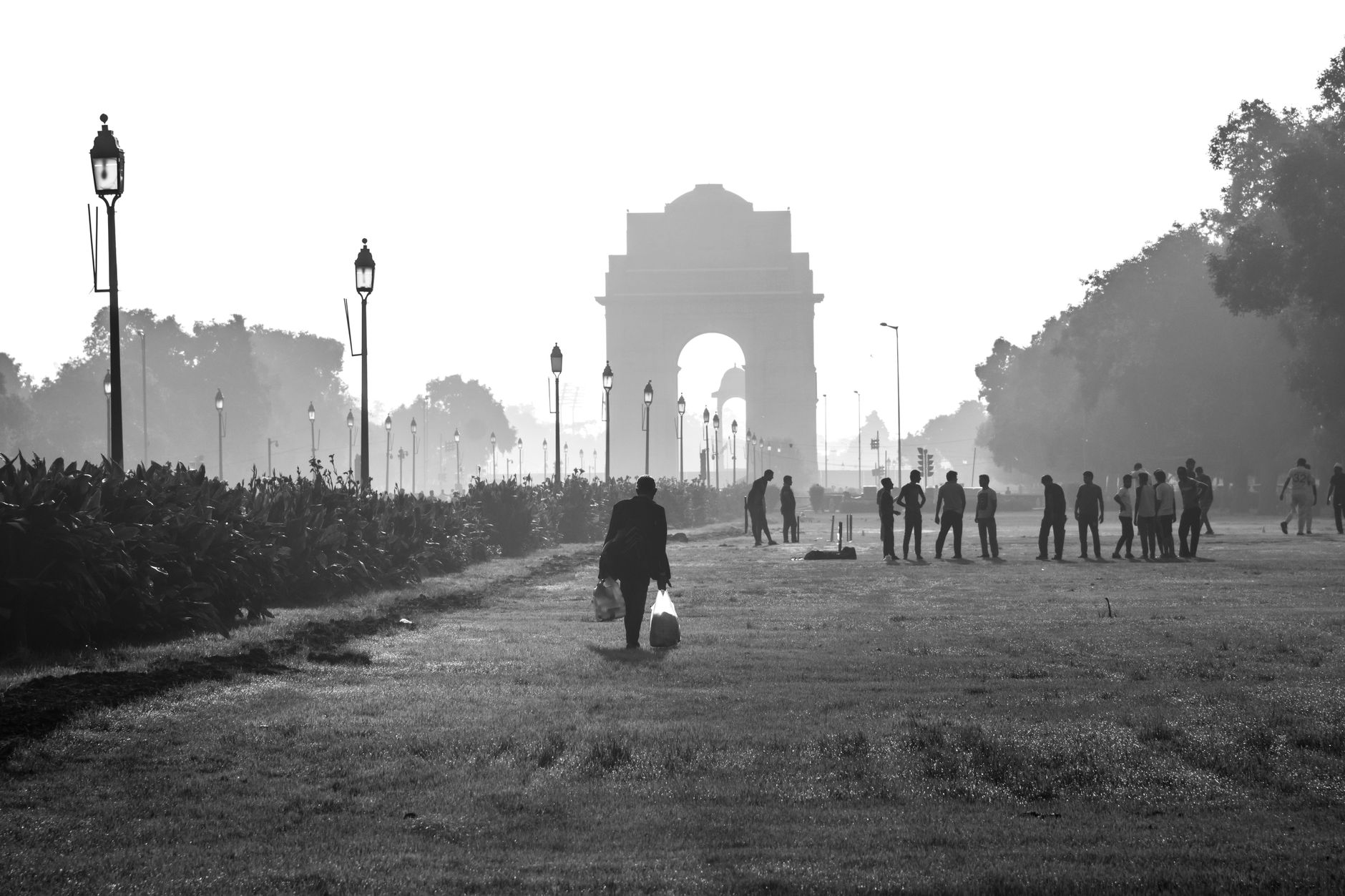
Delhi’s air quality continues to hover in the 'very poor' range, with the city’s average Air Quality Index (AQI) recorded at 367 on Saturday evening. This follows a period where the capital’s air quality breached the 'severe' threshold on Friday, shortly after the city experienced its most polluted Diwali in five years.
Successive governments have introduced distinct strategies to combat the seasonal crisis. Under the Aam Aadmi Party (AAP) administration in 2024, the government launched a 21-point winter action plan. This approach relied on emergency interventions such as drone surveillance, the odd-even vehicle scheme, and the deployment of anti-smog guns and mechanical sweepers to suppress dust and control emissions from construction and waste burning.
Following the assembly elections in February 2025, the government led by Chief Minister Rekha Gupta shifted focus toward stricter enforcement. The new administration’s 25-point mitigation plan and subsequent 2026 winter strategy emphasized the use of automated cameras to identify overage vehicles, restricted polluting commercial transport, and expanded electric public transit. Additionally, the government attempted experimental cloud seeding in October 2025, though trials failed due to insufficient moisture in the clouds and unfavorable atmospheric conditions.
Environmental experts, including Sunil Dahiya of EnviroCatalysts, have questioned the efficacy of such reactionary measures. According to Dahiya, cloud seeding is not a viable solution because the necessary moisture-laden clouds are typically absent during the smog-heavy winter months. He further noted that even if rain were successfully induced, it would provide only temporary relief, as pollution remains an issue across the wider Delhi-NCR airshed.
Key facts
- The average Air Quality Index in Delhi was recorded at 367 as of 7:00 PM on Saturday.
- Vehicular emissions accounted for 31% of PM2.5 levels on November 13, according to IITM data.
- The BJP government’s winter plan includes the deployment of 86 mechanical road sweepers, 300 water sprinklers, and 362 anti-smog guns.
- Roughly 6,400 buses with GPS were operational in Delhi on November 13, falling short of the city’s established target.
- Two attempted cloud seeding trials on October 28, 2025, failed to produce rainfall.
Why it matters
Experts argue that Delhi requires a sustained, science-led approach rather than temporary fixes. Dahiya emphasized that until the city provides robust, viable alternatives to private vehicle use, restrictions on transport will have limited impact. Furthermore, he noted that equipment like smog guns only settles coarse dust locally and does not effectively mitigate the fine combustion particles that drive winter pollution.
Source: Times of India





Comments