


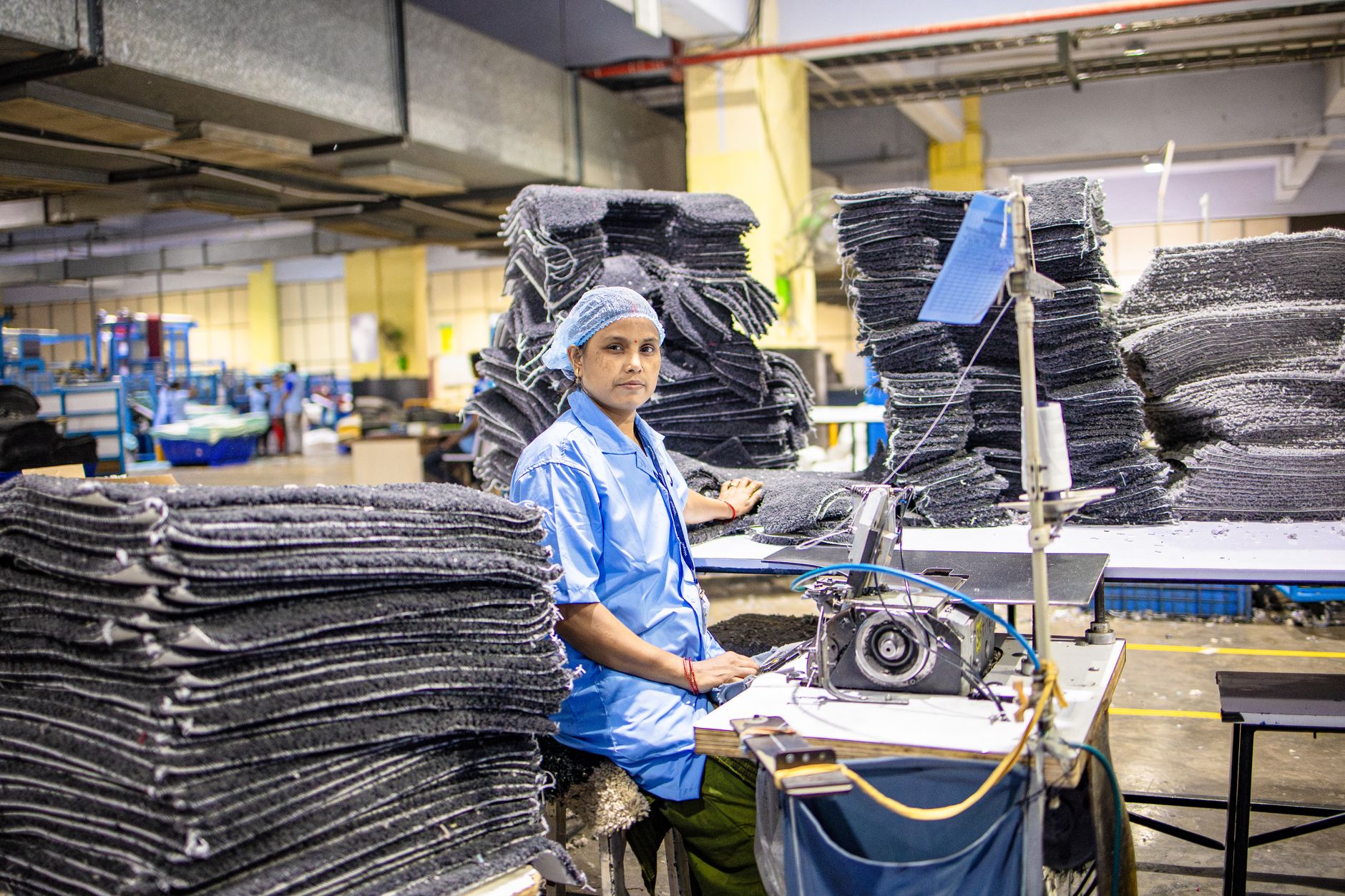
Garment manufacturers in Bangladesh have threatened to withdraw from minimum wage negotiations and suspend factory operations indefinitely if worker protests continue to result in vandalism. The Bangladesh Garment Manufacturers and Exporters Association (BGMEA) and the Bangladesh Knitwear Manufacturers and Exporters Association (BKMEA) announced on Saturday that they are re-evaluating their participation in talks due to a lack of security guarantees for their facilities.
BGMEA president Mahmud Hasan Khan stated at a briefing in Dhaka that the industry would be forced to reconsider its position if the current unrest persists. Khan noted that factories unable to function safely are being closed under Section 13(1) of the Bangladesh Labour Act, which permits a “no work, no pay” policy. According to reports, seven factories in Savar and Ashulia have already enacted this closure policy.
Recent weeks have seen significant disruptions across the sector, including roadblocks and clashes that led to property damage and the torching of police vehicles. As of Saturday, 147 factories remained shut across the manufacturing hubs of Savar, Ashulia, and Gazipur. The industry, which employs over four million people and generates approximately 80% of Bangladesh’s export earnings, is bracing for potential further disruptions as the year-end export season approaches.
A Minimum Wage Board, established on November 1, is scheduled to convene on Monday to discuss a new pay structure. While the current minimum wage remains Tk12,500, fixed in December 2023, worker representatives have proposed increases to between Tk30,000 and Tk32,000 to combat an inflation rate currently hovering around 8%. Factory owners are expected to submit their formal recommendations, though the recent threats of withdrawal have cast uncertainty over the session.
Key facts
- Over 147 factories are currently closed in Savar, Ashulia, and Gazipur due to ongoing unrest.
- The current minimum monthly wage for garment workers in Bangladesh is Tk12,500.
- Worker representatives have requested a minimum wage increase to between Tk30,000 and Tk32,000.
- The garment industry accounts for roughly 80% of Bangladesh’s total export earnings.
- Section 13(1) of the Bangladesh Labour Act allows for operational suspension under a “no work, no pay” provision.
Why it matters
The conflict poses a risk to the stability of an industry central to the country's economy. With the peak export period for Christmas approaching, continued shutdowns and unresolved wage disputes threaten to impact production schedules and potentially erode the confidence of international buyers.
Background
The Minimum Wage Board was formed on November 1 to deliberate on pay adjustments, following a period where inflation has outpaced the wage increases typically granted to garment workers.
Source: Times of India




Comments