


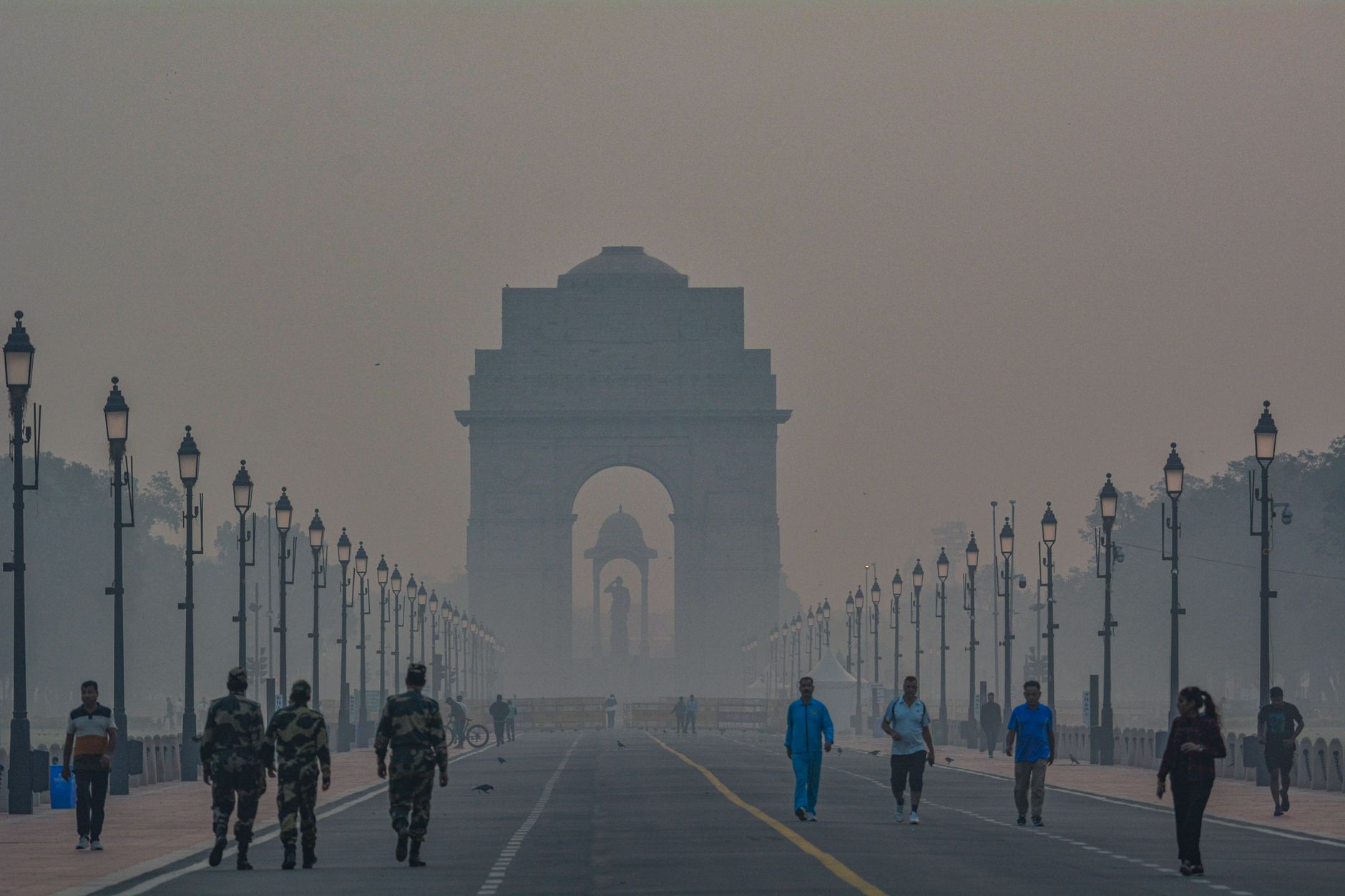
Delhi’s air quality crisis has deepened, with new data suggesting that the capital’s pollution levels were already surging well before the start of Diwali. An analysis by the Centre for Science and Environment (CSE) shows that the average concentration of PM2.5—fine particulate matter—during the week preceding the festival reached 236 micrograms per cubic metre. This figure is nearly double the level recorded during the same timeframe in 2025.
The findings challenge the common perception that Delhi’s winter pollution is primarily driven by Diwali fireworks and seasonal stubble burning. According to the CSE, the capital begins its winter season with high baseline pollution levels trapped in the air, caused by vehicles, industrial emissions, construction dust, waste burning, and air currents from neighbouring NCR districts. Between November 1 and 8, pollution originating from nearby districts accounted for 54.43% of the PM2.5 levels in the city.
"Diwali pollution is an annual tipping point, but elevated particulate levels before the festival this year show that baseline pollution is higher than in previous years," said CSE executive director Anumita Roychowdhury. Local data indicates that vehicles remain the largest source of poor air quality in Delhi, contributing 52% of the pollutants, followed by residential activities at 13%, industries at 11%, construction at 7%, and waste burning at 5%.
While firecrackers were found to be a short-term trigger causing sharp spikes in nitrogen dioxide levels on the night of the festival, officials and researchers emphasize that the broader crisis is rooted in persistent, year-round emissions. Even during periods when farm fires were low, such as November 6, Delhi recorded an AQI of 382, indicating severe air quality despite minimal stubble burning.
Key facts
- Average PM2.5 levels the week before Diwali hit 236 micrograms per cubic metre, up from 120 in 2025.
- Vehicles account for 52% of local air pollution sources in Delhi, according to the CSE analysis.
- WHO guidelines recommend an annual PM2.5 average below 5 micrograms per cubic metre.
- India’s national standard for PM2.5 is 40 micrograms per cubic metre as an annual average.
- Delhi’s AQI reached 382 on November 6, despite farm fires contributing only 8% to the pollution.
Why it matters
The report underscores that emergency measures like the Graded Response Action Plan (GRAP) offer only limited, short-term relief. Research suggests that the efficacy of these interventions is heavily contingent on weather conditions, such as wind speed. Experts argue that without addressing the higher baseline pollution caused by year-round activities, short-term restrictions may fail to mitigate the city’s recurring health-based air quality challenges.
Background
Over the past five years, the Commission for Air Quality Management (CAQM) has mandated a shift toward cleaner fuels like PNG for over 96% of industries in the region and implemented stricter regulations on construction sites and diesel-powered vehicles to combat rising pollution levels.
Source: Economic Times







Comments