


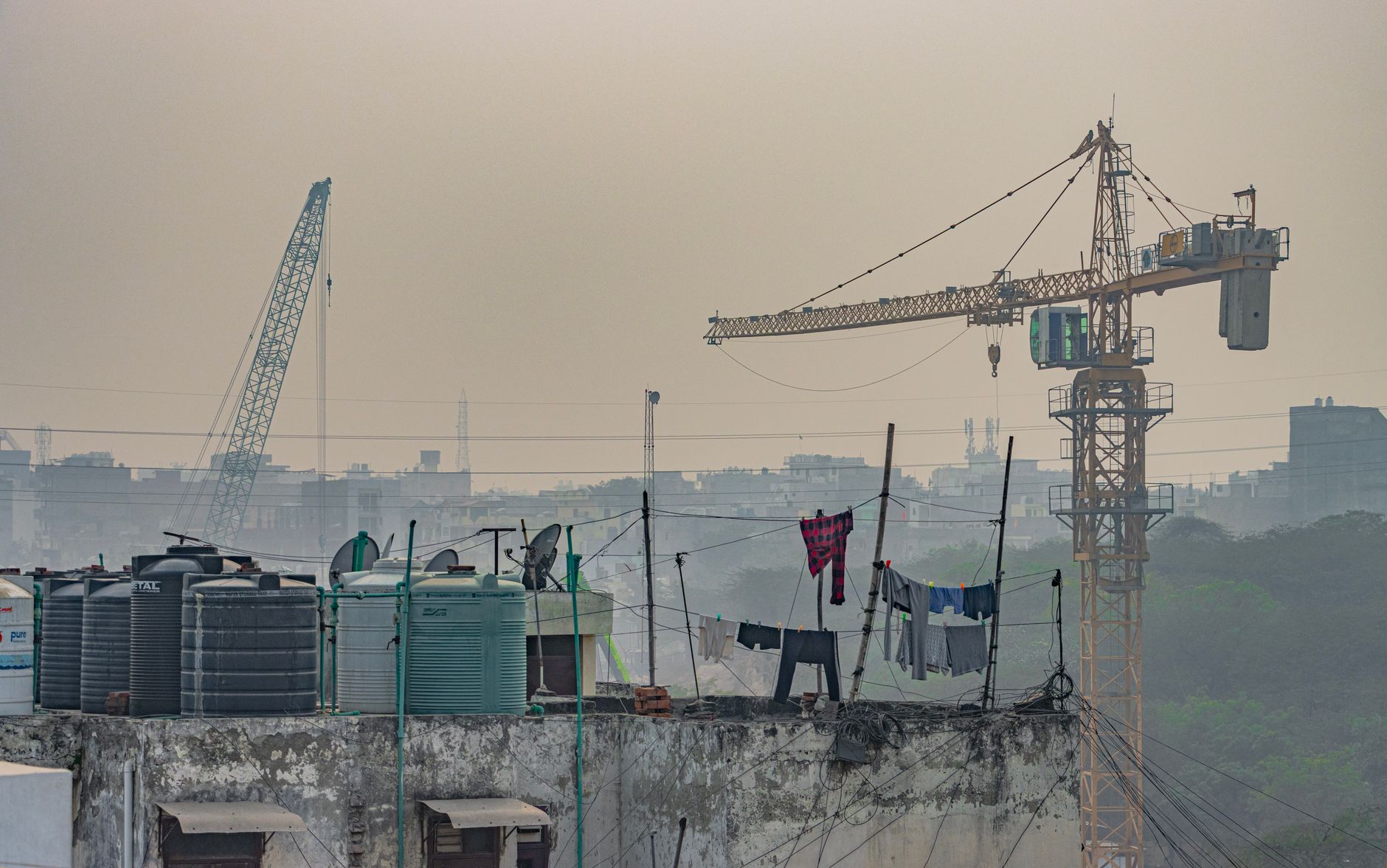
New Delhi’s air quality deteriorated to hazardous levels on the morning of November 12, according to data from the AQI.in dashboard. At 8:11 AM, the capital recorded an Air Quality Index (AQI) of 597, placing it firmly within the hazardous category, which is defined as any reading of 301 or above on the US scale used by the platform.
The air quality index experienced a significant surge overnight. While the city recorded a reading of 206 at 4:01 PM on November 11, the index climbed steadily throughout the night. It crossed the 300 mark by approximately 8 PM and neared 500 around midnight. By 6:01 AM on November 12, the AQI had peaked at 609 before settling at 597 by 8:11 AM.
Technical data from the dashboard at 8:11 AM indicated that the concentration of PM2.5 pollutants was 374 micrograms per cubic metre, while PM10 levels stood at 394 micrograms per cubic metre. Weather conditions recorded at the time included a temperature of 22°C, 57% humidity, and wind speeds of 4.7 km/h, with smoke listed under the weather panel.
The current levels in Delhi remain significantly higher than those reported in other major Indian cities. Chennai recorded the highest AQI among seven other listed metros at 190, followed by Bengaluru and Hyderabad at 173. Mumbai and Pune both registered 170, while Ahmedabad stood at 147. Kolkata reported the lowest reading among these cities at 126. None of the seven other metros reached the severe category.
Key facts
- New Delhi’s AQI reached a peak of 609 at 6:01 AM on November 12.
- The AQI rose from 206 on the afternoon of November 11 to 597 by 8:11 AM the next day.
- PM2.5 concentration was recorded at 374 micrograms per cubic metre during the hazardous morning period.
- The air quality calendar showed hazardous readings in Delhi for every day between November 1 and November 11.
- The highest recorded AQI for the month of November reached 666 on November 9.
Why it matters
Discrepancies in air quality readings frequently arise between private monitoring apps and official data. The Central Pollution Control Board (CPCB) explains that private dashboards often respond to instantaneous hourly pollution spikes, whereas the official National AQI is calculated based on pollutant exposure over the preceding 24 hours.
Background
Delhi has experienced consistently poor air quality throughout the current month. Since the beginning of November, daily readings have remained within the hazardous range, with the air quality index climbing from 306 on November 1 to 445 by November 4. Recent peak pollution levels have consistently followed a trend of sharp overnight increases.
Source: Livemint







Comments