


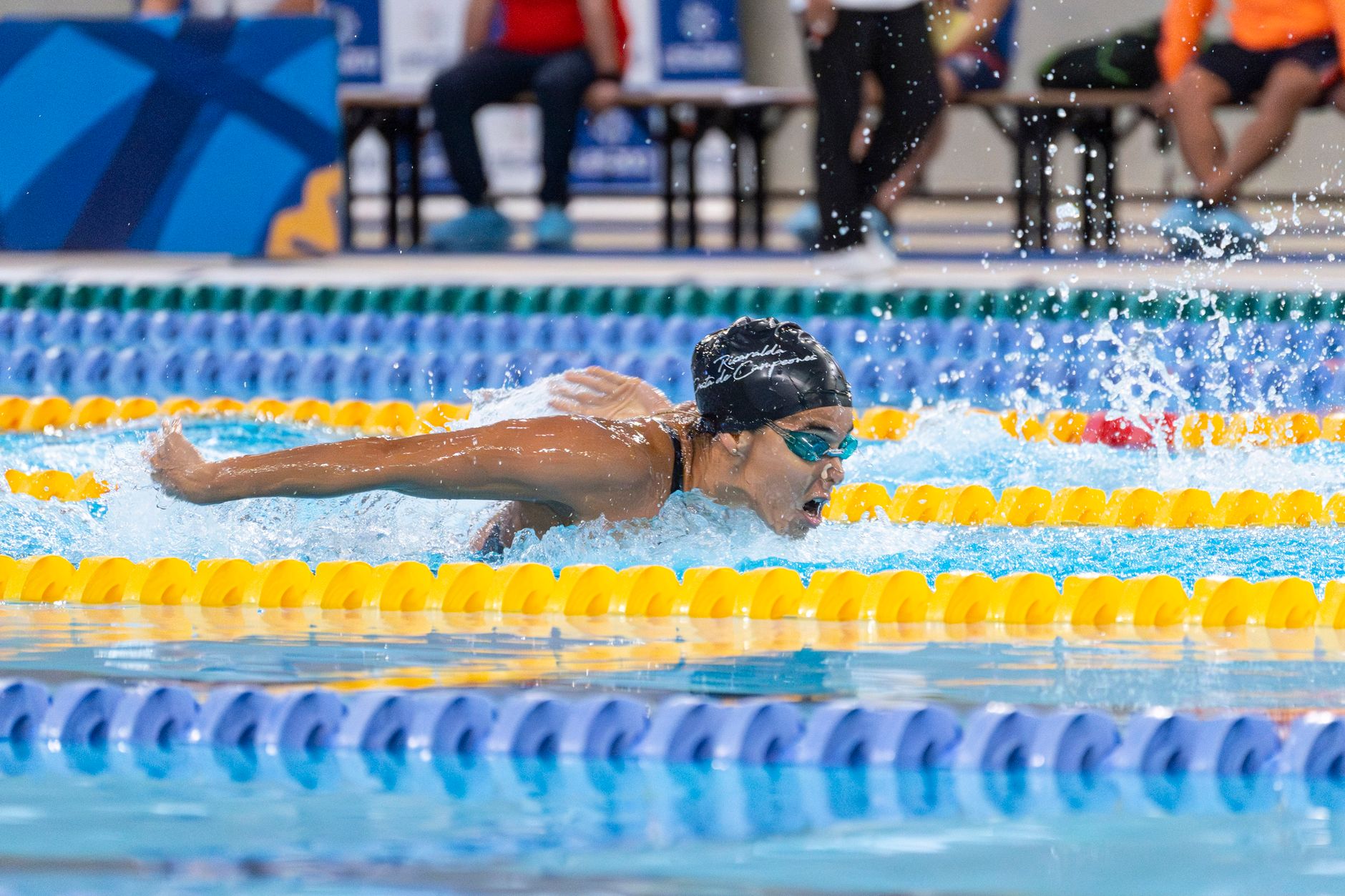
Tirthank Pegu, the 17-year-old swimmer who recently became the first Indian male to win a medal at the Youth Olympics, has shared reflections on his journey and the psychological hurdles he continues to face. After securing a bronze medal in the men’s 200m butterfly event with a time of 2:01.25, Pegu admitted that his performance may have been even stronger had he managed his nerves more effectively. The athlete, who trains at the Inspire Institute of Sport, identified mindset and self-confidence as the primary areas requiring development as he looks toward future competition goals, including an Olympic final appearance.
Reflecting on his performance, the teenager noted that the pressure of the competition weighed heavily on him, particularly after a narrow miss in the 100m butterfly event. In that earlier race, Pegu finished fourth with a time of 54.98 seconds, missing the bronze podium by a mere 0.27 seconds. He explained that the distress of falling short of a medal in his first event created significant anxiety heading into the 200m final. During a virtual interaction on Monday, Pegu remarked that his preoccupation with potentially disappointing his coach and supporters impacted his focus during the race, where his only objective in the final 50 meters became securing any medal possible.
Pegu’s path to the podium is deeply rooted in the support of his late father, Kunal, an amateur boxer who served as the primary driving force behind his swimming career. According to Pegu, his father viewed his son’s athletic progression as a significant personal investment, consistently prioritising his training despite financial challenges. While his father’s dream was for his son to follow him into boxing, his mother’s concerns regarding facial injuries led Pegu to take up swimming at the age of four. Though his father did not live to see this historic achievement, Pegu credits him for the resilience that carried him through the rigorous training process.
The teenager also highlighted the influence of his coach, Sandeep Sejwal, who has been instrumental in his technical and personal development. As Sejwal prepares to retire from coaching, Pegu acknowledged the significance of the medal in the context of their professional relationship. He described the coach as a family figure who provided guidance beyond the pool, teaching him the elite mentality required to compete at the highest levels. This support system was essential, especially as Pegu aimed to navigate the challenges of transitioning from regional talent to an international medalist.
Pegu was quick to place his achievement within a broader historical context, rejecting the idea that his success was a sudden breakthrough. Instead, he emphasised that he is a beneficiary of the groundwork laid by earlier Indian swimmers. He cited the recent performance of Dhinidhi Desinghu—who also secured a medal at these Games—as well as the trails blazed by established athletes like Sajan Prakash and Srihari Nataraj. According to Pegu, these swimmers established the necessary pathways for the current generation to follow, proving that success on the international stage was an attainable goal for Indian athletes.
Looking toward the next phase of his career, Pegu remains focused on continuous improvement. He has expressed intentions to refine his performance in the 50m butterfly and the 400m individual medley. He believes that strengthening his base in these disciplines will contribute to better results in his primary 200m butterfly event. As he recovers from the intensity of the Youth Olympics, Pegu stated that he is ready to apply the lessons learned from both his triumph and his struggles, aiming to represent India on even larger stages in the future.








Comments