


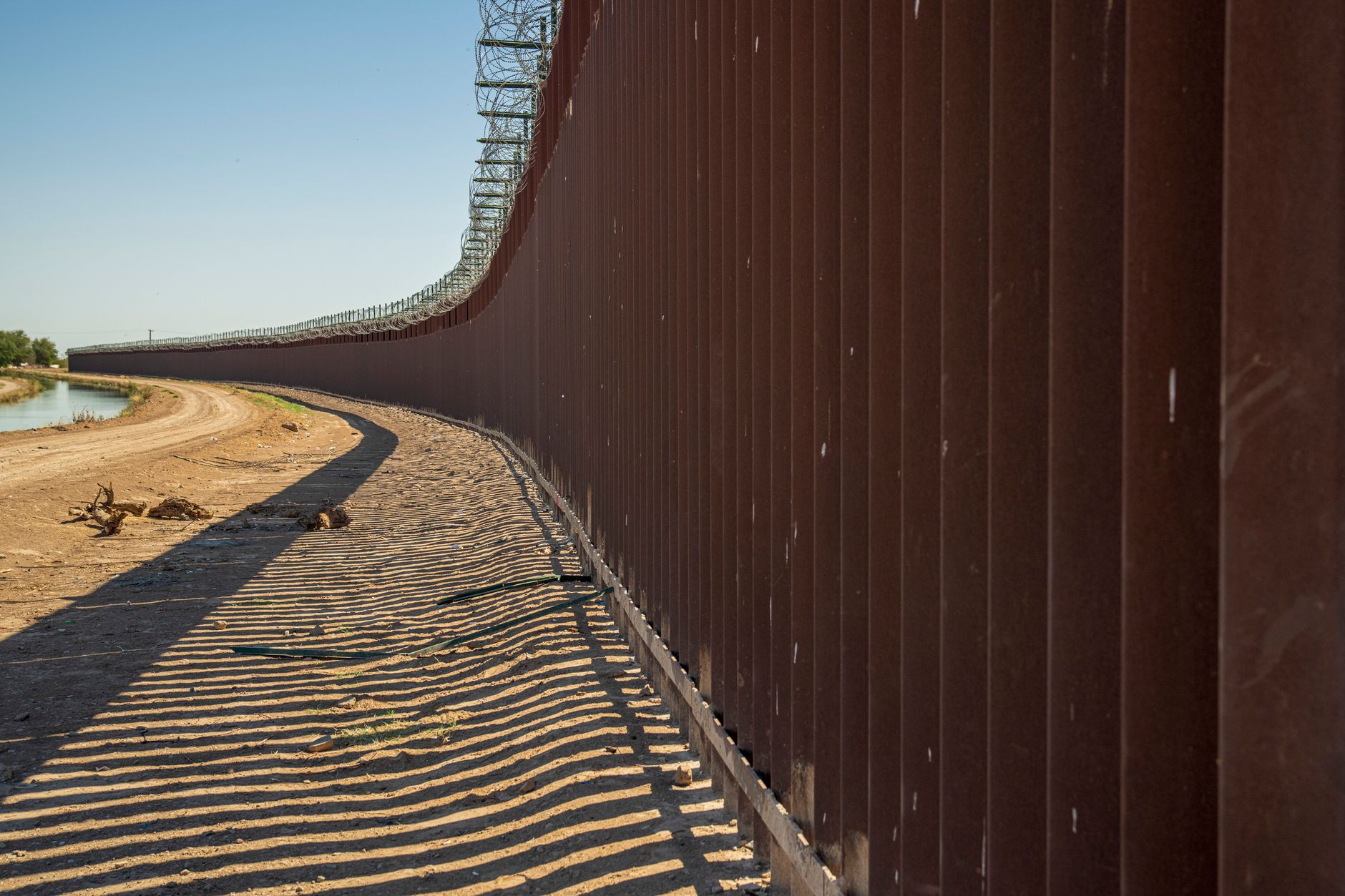
The United States Supreme Court has cleared the path for the resumption of border wall construction in Texas, granting a significant legal victory for efforts to reinforce barriers along the US-Mexico border. The high court's decision effectively lifts previous judicial constraints that had halted specific projects, allowing federal authorities to move forward with plans to build or fortify physical infrastructure in the region. This ruling is expected to have immediate implications for immigration enforcement and federal border security initiatives, which have remained a subject of intense political debate for several years.
Border barrier construction has long been a centerpiece of Donald Trump's approach to national security and immigration restriction. During his time in office and beyond, the former president consistently emphasized the necessity of physical walls to deter unauthorized entry. Supporters of the construction projects argue that the physical barriers serve as an essential tool for border patrol agents, providing them with the necessary infrastructure to manage large-scale migration flows. Conversely, the projects have faced persistent legal challenges from environmental groups and property owners, who have raised concerns regarding the ecological impact and the seizure of land through eminent domain.
The Supreme Court’s intervention comes after months of litigation involving various lower courts that had issued conflicting injunctions. By allowing the work to proceed, the justices have provided a measure of clarity on the federal government’s authority to execute construction contracts that were previously mired in legal limbo. Federal agencies, including the Department of Homeland Security, are now empowered to resume the installation of fencing and other security measures in identified areas of Texas. The administration is expected to mobilize engineering crews to start the designated segments of the project in the coming weeks.
For residents and landowners in the borderlands, the announcement brings a new layer of uncertainty. Legal experts suggest that while the Supreme Court has cleared the current obstacle, further litigation regarding the specific placement of walls and the compensation of affected landowners remains a distinct possibility. The intersection of federal mandates and local property rights has created a complex legal environment, ensuring that the debate over border wall construction will likely continue in the lower courts, even as physical construction begins on the ground.
Beyond the immediate construction phase, the ruling highlights the ongoing tension between federal executive power and the judiciary regarding the management of international borders. The ability of the government to prioritize border infrastructure as a matter of national security, versus the procedural and environmental protections demanded by opponents, remains a defining struggle in contemporary American administrative law. Policymakers on both sides of the aisle are closely monitoring the developments, as the border continues to be a central issue in the national discourse.
As construction equipment prepares to head toward the border, the focus will now shift to how quickly these barriers can be erected and what impact, if any, they will have on current migration patterns. Border patrol operations will likely see a shift in deployment strategies as the landscape changes. Officials have indicated that the focus remains on securing specific corridors that have historically been utilized by unauthorized border crossers. The coming months will likely reveal the practical efficacy of these new wall segments as the government seeks to bolster its regional security infrastructure.
Looking ahead, the administration’s ability to sustain the project may depend on future congressional funding and potential shifts in federal policy. While the current court order is a major milestone for the proponents of the barrier, the overarching debate regarding the long-term strategy for border management remains unresolved. The legal precedent set by this latest decision will likely be cited in future challenges, cementing its place as a significant turning point in the prolonged legal saga of the US-Mexico border wall.








Comments