


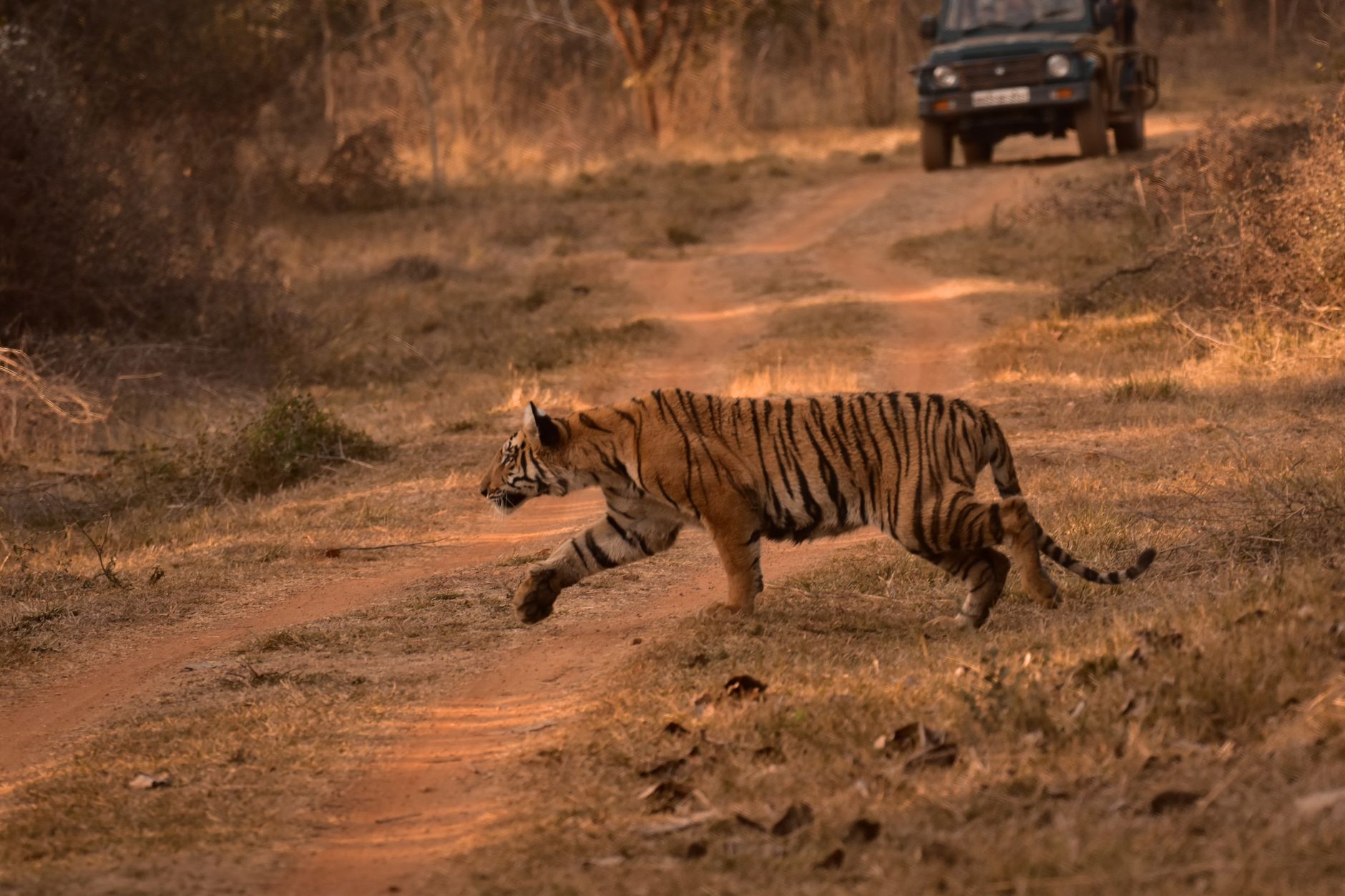
A high-stakes operation is underway in the forests of West Bengal as wildlife authorities scramble to relocate a three-year-old Royal Bengal tigress that has escaped from her enclosure for the second time in just over a month. The tigress, officially identified as BTR-TF-1 or T-138 and affectionately known as “Dooars Rani,” has become the focal point of an intense search effort involving more than 60 trained forest personnel and tracking elephants.
Rani was originally translocated from Bihar’s Valmiki Tiger Reserve and airlifted to Alipurduar on September 30 as part of an initiative to bolster the tiger population within the Buxa Tiger Reserve. Following an initial release into a soft enclosure on October 2, the tigress began a journey that took her over 100 kilometres away. She crossed the Sankosh River and ventured into Assam’s Raimona National Park, where she reportedly strayed near human settlements in the Kokrajhar district, leading to incidents involving domestic livestock.
The first capture operation was a significant challenge, requiring 13 days of collaborative efforts between West Bengal and Assam forest departments before the animal was finally tranquilised and returned to a secure Buxa enclosure on November 3. However, the respite was brief. By November 8, just five days after her return, the tigress managed to bypass her containment measures by digging a hole directly beneath the foundation of her concrete enclosure, successfully fleeing back into the wild.
Wildlife experts and forest officials have posited two primary theories to explain her persistent attempts to head eastward toward the Bengal-Assam border. One possibility is that during her initial trek, the tigress may have encountered or formed a bond with a male tiger, and is now actively tracking scent marks she previously picked up. Alternatively, biologists suggest this behavior aligns with the natural instincts of a young, translocated tiger. Rather than remaining within the constraints of man-made fences, she may be driven by an innate desire to map out and claim a large, expansive territory.
The situation has prompted authorities to issue a red alert throughout the region. Officials are currently relying on high-frequency signals transmitted from the tigress's radio collar to monitor her movements as she traverses the forest corridors. The sheer scale of the ongoing operation reflects the significant logistical challenges inherent in reintroducing predators into managed reserves, particularly when the animals involved display such determined exploratory behavior.
As the search continues, the repeated escapes of “Rani” have highlighted both the unpredictability of wildlife and the complexities of the Buxa reintroduction programme. For now, the forest department remains fully mobilised, aiming to secure the tigress before she reaches populated areas or moves further away from the reserve boundaries. The outcome of this mission remains uncertain as ground teams coordinate with the telemetry data to narrow down her exact location within the dense landscape.








Comments