


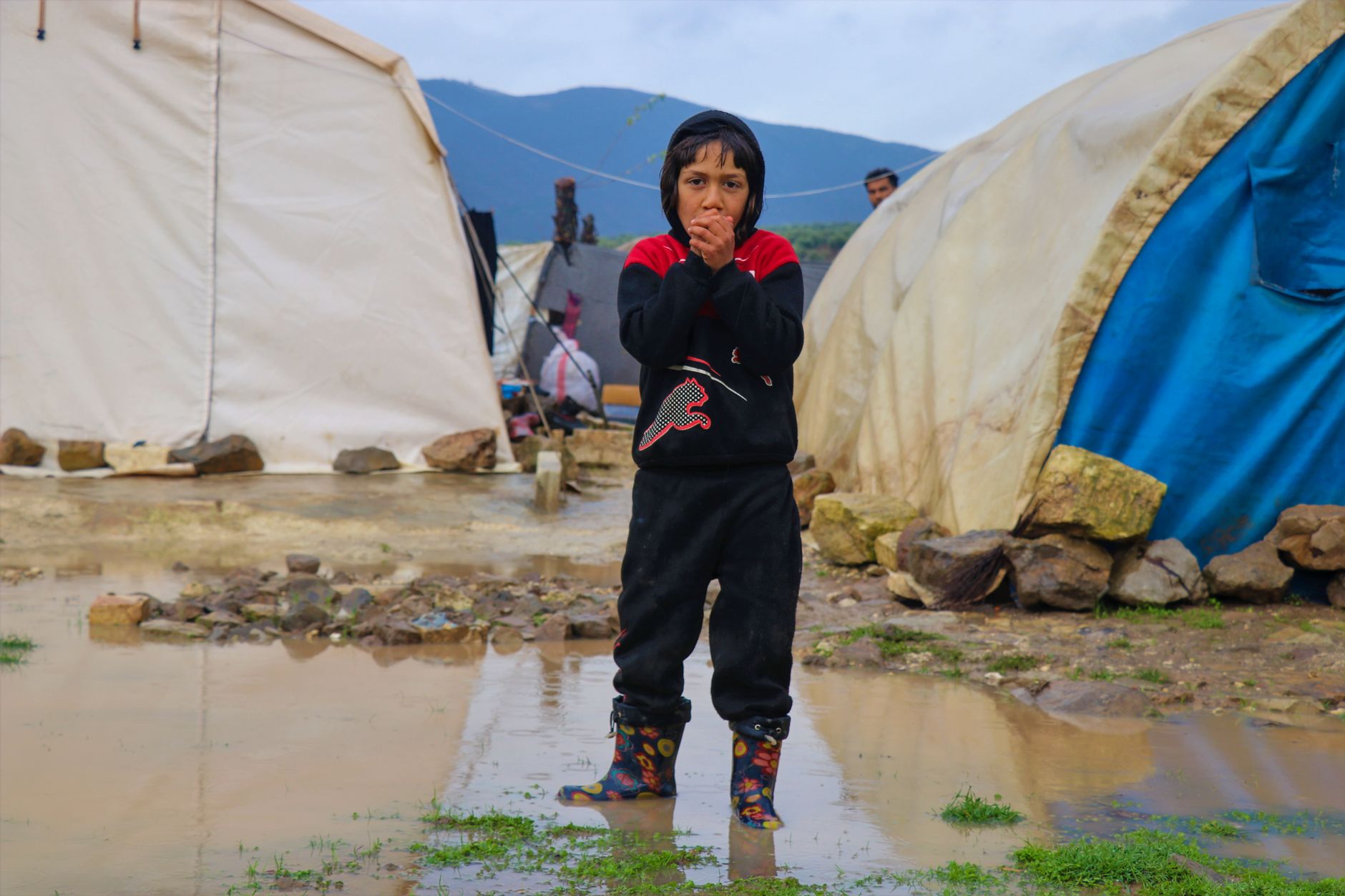
A tragic incident in central Gaza has resulted in the deaths of four people, including three children, after a sand embankment collapsed onto a cluster of tents on Sunday night. Local health authorities confirmed the casualties, identifying the victims as Tahrir Nabhan, children Mariam and Salah Nabhan, and Habiba al-Zein. The collapse occurred at a camp for displaced families located south of Deir al-Balah, following a period of torrential rain that had already compromised living conditions across the region.
Reports from the scene indicate that five additional individuals were rescued from the debris. Emergency responders and local residents faced significant difficulties during the recovery operation, as the scale of the collapse and the surrounding terrain limited the use of machinery. Eyewitnesses described using their bare hands to navigate through sand, boulders, and damaged tents in an attempt to reach those trapped underneath. One rescuer, Mustafa al-Masri, recounted the emotional struggle of pulling victims from the rubble, noting that the collapse had buried the tent area completely.
This incident follows widespread flooding across the territory, with recent downpours affecting tens of thousands of makeshift shelters. The Civil Defence service, operating under the Hamas-run interior ministry, reported that water levels reached up to 1.5 meters in some areas. Their teams struggled to respond to the high volume of distress calls, reportedly attending to only 10% of the 2,100 requests for help received during the storm. The agency has issued a stern warning, describing the event as a humanitarian tragedy and urging international organizations to prioritize the relocation of camps away from sandy slopes and unstable terrain.
The current humanitarian situation remains critical, as approximately 1.2 million of Gaza's displaced population are living in tents or makeshift structures. According to the United Nations, nearly 80% of all infrastructure in the territory has been damaged or destroyed during the ongoing conflict. With a vast majority of the 2.1 million residents confined to a fraction of the total land area, the lack of suitable, safe space for shelter has become a primary concern for international aid agencies attempting to provide winter support.
Karl Baker, the regional crisis coordinator for the International Organization for Migration, highlighted the precarious living conditions during a briefing, noting that the population is currently squeezed into about 30% of Gaza's total land area. He cautioned that current aid supplies, while necessary, are insufficient to meet the overwhelming demands of the displaced families. Agencies are advocating for improved drainage systems and the provision of more resilient shelter materials to prevent further fatalities as winter conditions intensify.
The Israeli military body responsible for coordinating aid, Cogat, stated that it has facilitated the delivery of over 91,000 tents, vacuum trucks for waste management, and fuel for pumping operations as part of its winterization plan. However, officials noted that certain materials remain restricted due to concerns that they could be repurposed for military activities by armed groups. Meanwhile, humanitarian groups continue to call for the entry of specialized equipment that could help stabilize living environments for families who have been displaced multiple times.
As the region grapples with the aftermath of the storm, the incident serves as a stark reminder of the vulnerability of those living in makeshift camps. The ongoing displacement crisis, coupled with the destruction of housing and limited access to basic infrastructure, continues to leave thousands of people exposed to environmental hazards. International aid organizations maintain that without substantial funding and the ability to distribute necessary materials, the risk of further loss of life during the winter months remains dangerously high for the displaced families currently residing in central and southern Gaza.








Comments