


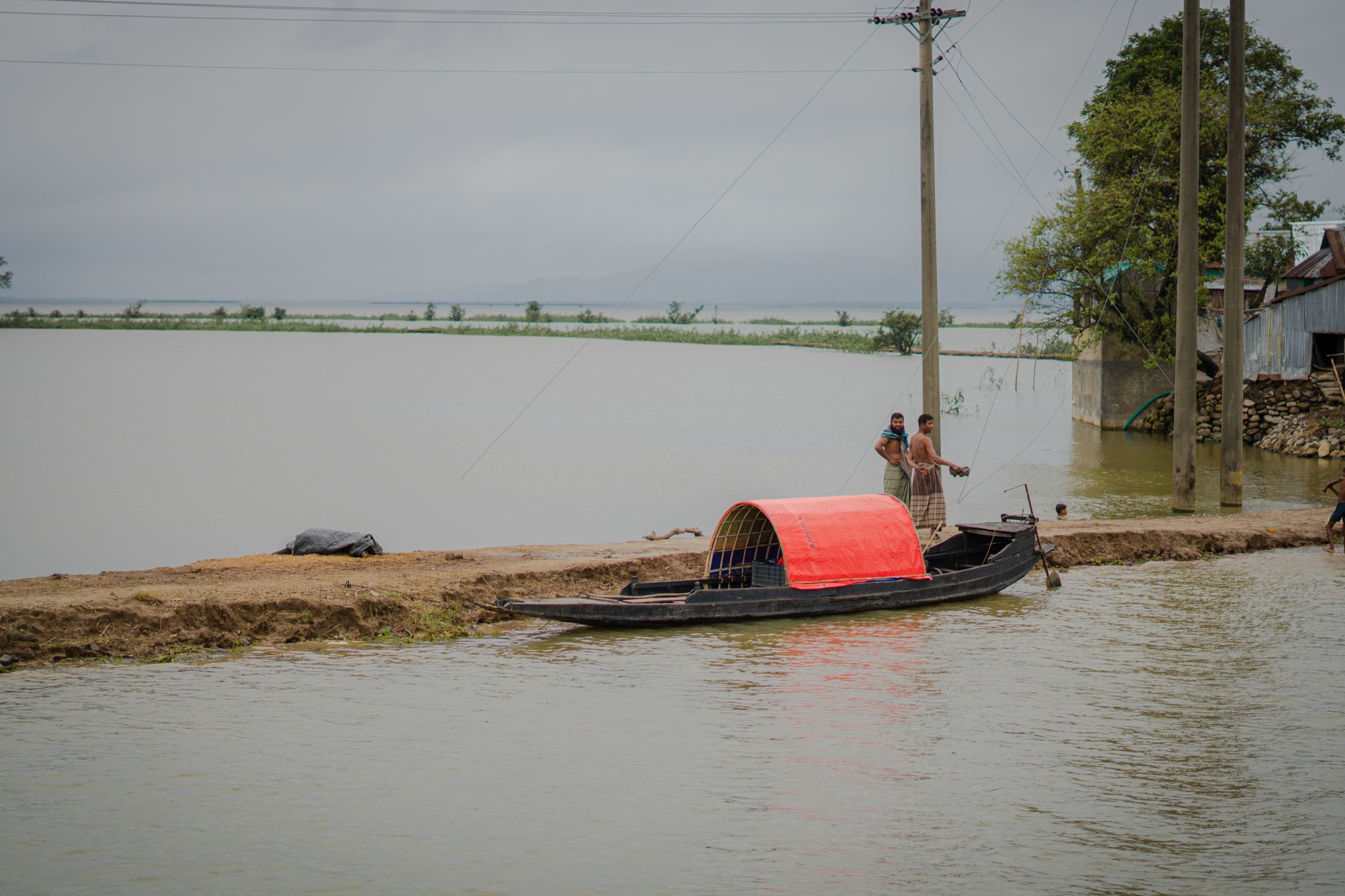
Former Odisha Chief Minister and Biju Janata Dal (BJD) president Naveen Patnaik visited the flood-hit Ganjam district on Saturday, in a move widely viewed as an effort to reclaim the party’s traditional political stronghold. The visit follows one of the most severe flooding events in the region in 36 years, with the Rushikulya river basin suffering damage comparable to the historic 1990 floods. Patnaik, who represented the constituency of Hinjili during his tenure as Chief Minister, toured the flood-affected blocks of Sheragada, Hinjilicut, Aska, and Sorada to review the administration’s relief and rehabilitation efforts.
During the visit, Patnaik interacted with local residents, farmers, and families displaced by the disaster. After assessing the destruction—which included washed-away roads, damaged infrastructure, and ruined paddy and vegetable crops—the BJD leader expressed concern over the plight of the agrarian community. “The people, particularly farmers, are in great distress. Their demands have not been addressed yet. I strongly demand that the state government come to their relief immediately,” Patnaik stated. He further assured the residents that he would bring their grievances to the attention of the state government to push for urgent action.
The visit carried significant political weight, as Ganjam is the district where Patnaik began his electoral career in 1997 after the passing of his father, former Chief Minister Biju Patnaik. The region has historically been a pillar of the BJD’s electoral success, contributing to the party’s five consecutive terms in government. However, the political landscape shifted dramatically in 2024, when the BJP secured 11 of the 13 Assembly seats in Ganjam, along with both parliamentary constituencies. The BJD managed to retain only the Hinjili seat, while the Congress secured one assembly segment.
The timing of Patnaik's tour is strategic, coming ahead of the local body elections scheduled for early 2027. By engaging directly with the flood victims, the BJD is attempting to revive its fortunes and counter criticisms regarding its waning influence in the region. The visit was marked by a significant turnout of supporters, with thousands gathering at helipads and along routes to greet the former Chief Minister. Senior BJD leader Debi Prasad Mishra argued that the large crowds demonstrated the public’s enduring faith in Patnaik and their growing dissatisfaction with the current state administration.
The ruling BJP, however, has contested this narrative, highlighting that the former Chief Minister was absent from his home constituency when the floods first occurred. Cabinet Minister Gokulananda Mallick defended the state government’s disaster response, stating that the public had previously questioned Patnaik’s whereabouts during the height of the crisis. Minister Mallick also claimed that some residents had raised slogans against the BJD president in parts of the district. The political friction is exacerbated by the fact that posters depicting Patnaik as “missing” had appeared in Hinjili during the immediate aftermath of the floods, providing the BJP with an opportunity to challenge his response to the natural disaster.
As the state government faces scrutiny over its preparedness and the speed of its relief operations, the debate over the floods has become a focal point of local politics. For the BJD, the primary objective remains stabilizing its base in Ganjam before the upcoming local body polls. For the governing BJP, the focus remains on cementing its recent gains in the district and framing the disaster response as a failure of the previous political order. As both parties continue to trade allegations, the residents of Ganjam await the resolution of the infrastructure and agricultural challenges left behind by the deluge.








Comments