


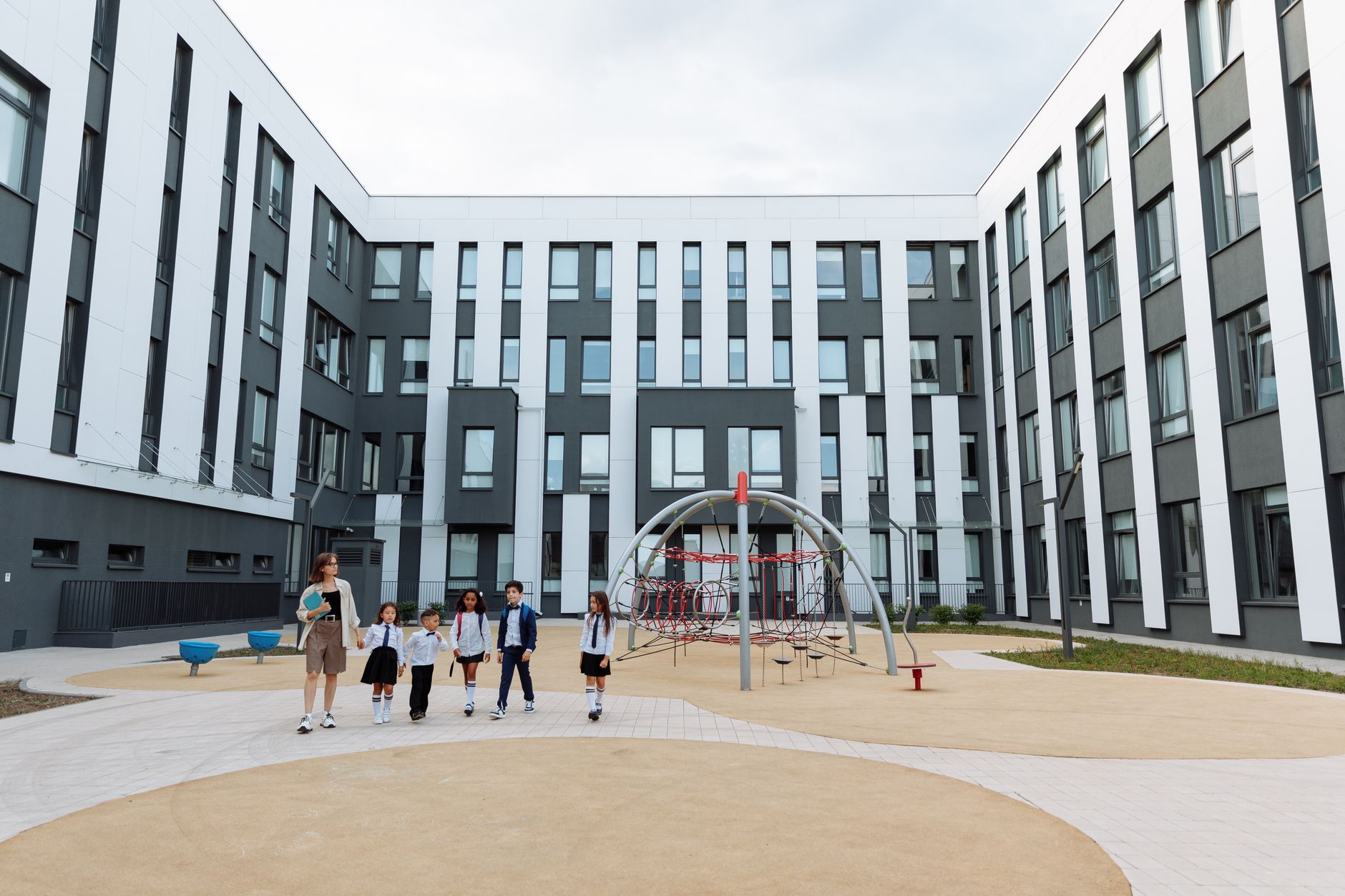
A Hindu family in London has launched legal proceedings in the UK High Court, alleging religious discrimination after their nine-year-old son was prevented from wearing a sacred marking to his primary school. The young student, who belongs to the Swaminarayan faith tradition, had attended Vicar’s Green Primary School in west London since 2021. For years, he wore the Tilak-Chandlo—a traditional U-shaped marking made of sandalwood paste with a central red kumkum circle—without any difficulty from the institution.
The dispute reportedly began in late 2025, when the school raised objections to the student wearing the mark. According to the legal filing, the situation escalated after the school began questioning the boy about his religious practice and restricted his participation in specific school activities. The mounting tension eventually led the parents to withdraw their son from the school, prompting the current legal challenge.
Represented by Ashray Law, the family is filing the case under the UK’s Equality Act 2010 and the Human Rights Act 1998, seeking £25,000 in damages. In a statement released by their legal team, the parents described the experience as distressing for their child, who they maintained was an ordinary pupil who simply wished to practice his faith. The family expressed hope that the proceedings would ensure no other child is forced to choose between their education and their religious identity.
Ambrish Limbachia, director of Ashray Law, noted that the case carries broader implications for religious freedom within the British education system. He stated that the proceedings aim to clarify the rights of children from all religious backgrounds, asserting that no student should feel compelled to compromise their beliefs to attend school. The family’s legal challenge is currently receiving support from the interfaith initiative Action for Harmony.
Nitin Palan, head of Action for Harmony, emphasized that religious equality must extend to all communities, including Hindu children for whom such traditions are a fundamental part of their personal identity. He stated that the organization is supporting the legal action to promote fairness and equal treatment for all students rather than to foster division.
In response to the allegations, Vicar’s Green Primary School has formally disputed the claims of discrimination. The school maintained that it has acted sensitively toward the family’s beliefs and sought to provide alternative arrangements that were ultimately rejected by the parents. The school’s administration reiterated its commitment to the diverse cultural and religious fabric of its community, stating that its policies are designed to uphold cohesion, fairness, and a shared sense of belonging while preventing disruption.
As the legal proceedings remain ongoing, the case serves as a focal point for discussions regarding the balance between institutional policies and religious expression in schools. Both the family and the school remain in disagreement over the events, and the High Court of England and Wales is now tasked with reviewing the merits of the discrimination allegations. For now, the matter stands as a significant test case for religious rights in the classroom.








Comments