


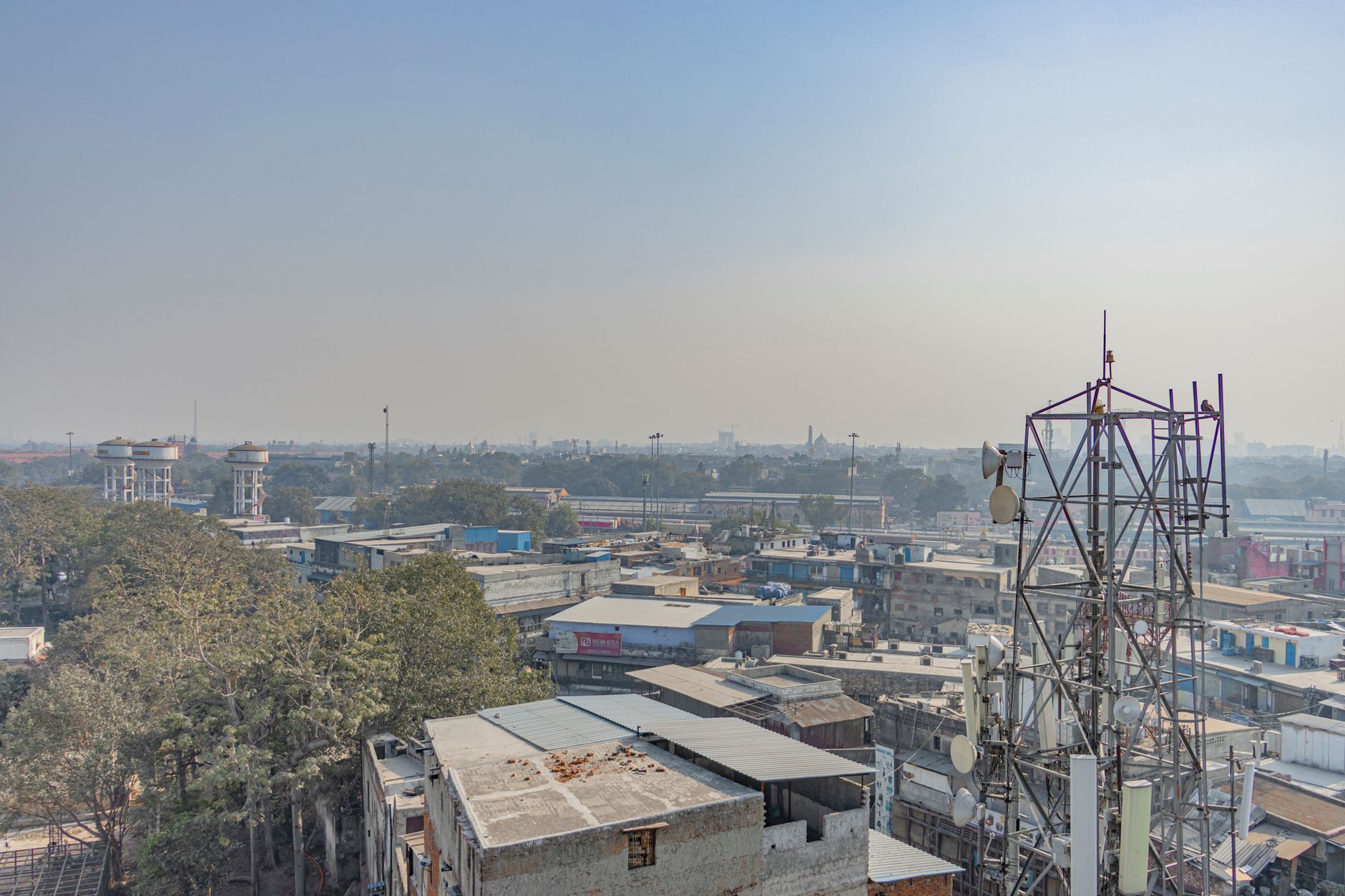
Delhi woke up to a grim environmental outlook as the city recorded its most polluted Diwali eve in a decade. Data from the Central Pollution Control Board (CPCB) indicated that the 24-hour average Air Quality Index (AQI) reached 369 by 4 pm on Saturday, placing it firmly in the "very poor" category. This measurement marks the highest pollution level for the day preceding Diwali since 2016, when the city recorded an AQI of 404. The pollution surge has been characterized as a "perfect storm" of unfavourable meteorological conditions and seasonal spikes in emissions.
The deteriorating air quality is the result of multiple contributing factors, most notably a significant rise in farm fires across the states of Punjab and Haryana. According to satellite data from ISRO, the count of these fires has increased for ten consecutive days, reaching their highest levels for the current season as of Saturday. This agricultural smoke, combined with local pollutants, has been trapped over the national capital due to unfavourable wind patterns. After sunset on Saturday, ground winds became calm, preventing the natural dispersion of pollutants and exacerbating the situation.
A critical metric for measuring air toxicity, PM2.5—fine particulate matter small enough to penetrate deep into human lungs—saw alarming spikes throughout the day. Between 10 am and 11 am on Saturday, the average PM2.5 levels across 59 monitoring stations in Delhi reached 295 micrograms per cubic metre. Notably, 36 of these stations reported levels exceeding 250 micrograms per cubic metre, the threshold designated by the CPCB for "severe" air quality. While Saturday afternoon saw a temporary improvement in ventilation, the overall trend remained significantly dirtier than the preceding Friday.
The impact of festive activities became immediately apparent as evening approached. Following the commencement of the permitted window for bursting firecrackers at 8 pm, PM2.5 levels across the city surged. An analysis of 15-minute readings showed that levels jumped from 177 micrograms per cubic metre at 7:45 pm to 208 at 8 pm, continuing a steady climb to 289 by 10 pm. This rapid increase was particularly pronounced in residential areas. In Punjabi Bagh, PM2.5 levels nearly tripled within a single hour, while other areas like RK Puram recorded levels more than double those observed at the same time on Friday.
By 9 pm on Saturday, nine monitoring stations had recorded PM2.5 levels above 400. In certain pockets of the city, such as Mundka, the readings reached as high as 718 micrograms per cubic metre. This trend shift represents a significant departure from Friday night, when no stations reported levels exceeding 400. The rapid deterioration of air quality on Saturday evening serves as a precursor to even more challenging conditions anticipated for Sunday and beyond.
Looking ahead, the outlook for air quality remains a point of concern for residents and health officials alike. Forecasts suggest that light wind conditions are expected to persist through Sunday, which will likely continue to trap pollutants over the city. Authorities and analysts project that the cumulative impact of these conditions could push air quality into the "severe" category by Monday. The current situation highlights the ongoing struggle with seasonal pollution management in the national capital as the region braces for the peak of the festive period.








Comments