


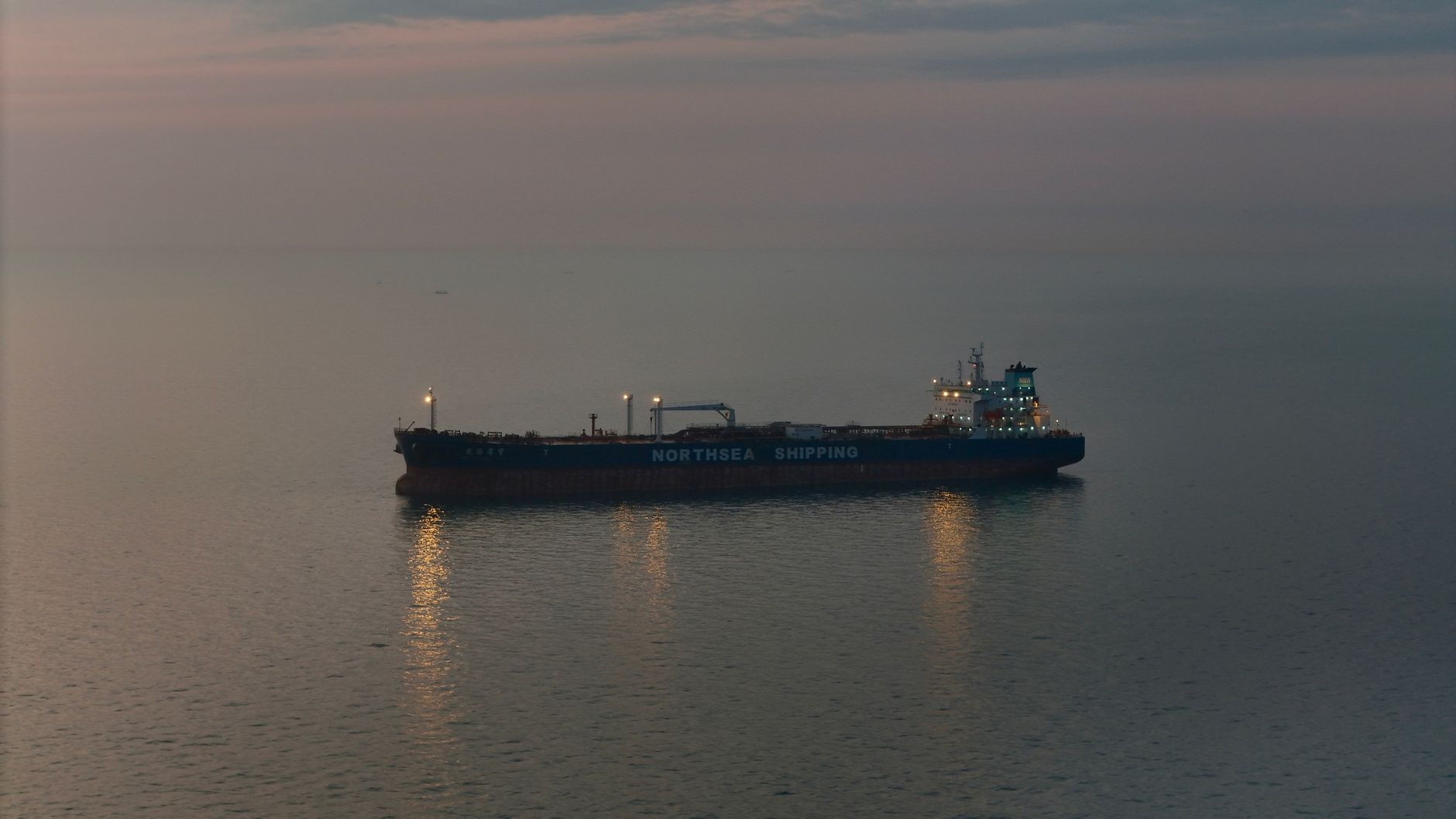
A fatal maritime incident occurred in the Gulf on November 5, resulting in the death of a sailor aboard a Greek-owned oil tanker. The vessel, identified as the Marshall Islands-flagged MT Velos Sapphire, was en route to Bahrain without any cargo when it was struck by an explosion. Velos Tankers, the Athens-based owner of the vessel, stated that the blast was likely caused by an unidentified projectile that impacted the ship's port quarter, leading to an onboard fire.
The incident coincides with a period of heightened volatility in the Strait of Hormuz, a strategic maritime gateway that typically facilitates the transport of approximately one-fifth of global oil consumption. Reports from Iranian media on Thursday indicated that five oil tankers and a tugboat had caught fire after reportedly striking mines within the strait. By Friday, November 6, Iran’s Revolutionary Guards alleged through state media that two additional oil tankers had caught fire, asserting that these vessels were attempting to transit via unauthorized routes while their navigation and identification systems were deactivated.
The Islamic Revolutionary Guard Corps further claimed in their statement that these tankers were moving with the support of the United States military. Tehran has sought to restrict traffic through the waterway since the outbreak of the West Asia war on February 28. In response to these regional tensions, the United States has enforced a blockade on Iranian ports and has actively provided escorts for commercial tankers navigating the strategic chokepoint.
Data from the U.S. Central Command suggests that, as of last month, the U.S. had assisted Gulf nations in the export of 1.5 billion barrels of oil through the Strait of Hormuz since the summer. The U.S. military recently stated that all mines had been successfully cleared from the waterway, contradicting the reports of mine-related incidents cited by Iranian authorities.
The British maritime agency, UKMTO, provided additional context on the incident, confirming that the master of a tanker transiting the strait on November 5 reported an explosion at the waterline on the port side off the coast of Oman. The agency noted that while the vessel sustained damage, the crew remained safe and the tanker continued its voyage under its own power. The discrepancy between the reports provided by the vessel's owners, maritime agencies, and Iranian officials highlights the complex security environment currently surrounding the Gulf region.
As authorities and maritime experts assess the situation, the impact of these events on international shipping remains a primary concern. The strait has long been a focal point for geopolitical tension, and the recent casualties and fire reports underscore the risks associated with traversing this critical energy corridor during the ongoing regional conflict. Investigations into the specific nature of the projectile and the circumstances surrounding the reported mine collisions are expected to continue.
At this stage, the full extent of the damage to the various vessels mentioned in the conflicting reports has not been independently verified beyond the initial statements issued by the relevant parties. The international shipping community continues to monitor the situation closely, as safety protocols for vessels in the Gulf remain a priority for nations relying on the uninterrupted flow of oil through this essential, yet increasingly perilous, global waterway.







Comments