


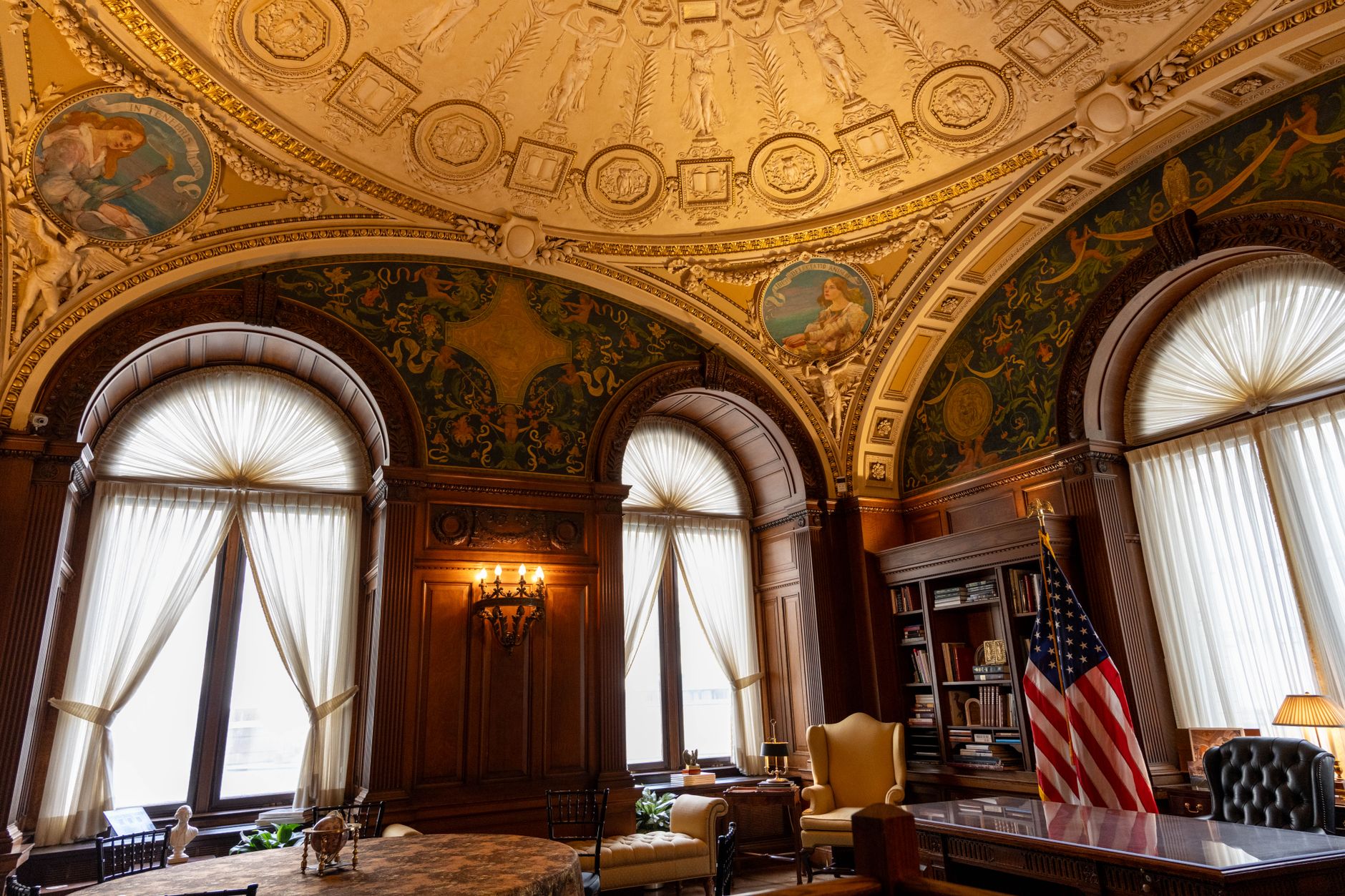
U.S. President Donald Trump signed an executive order on Thursday, November 5, 2026, officially designating the Oval Office as a national monument. The announcement comes in the wake of a challenging midterm election cycle for the Republican Party, which saw the opposition Democratic Party secure control of both the House of Representatives and the Senate.
Addressing reporters during the signing, the 80-year-old president stated that the proclamation is intended to preserve the integrity of the room. He asserted that the designation would make it impossible for any successor to alter, destroy, or renovate the space. Alongside the Oval Office, the neighboring Cabinet Room has also been included in this protected status. Mr. Trump, who returned to power last year, has since overseen significant aesthetic changes to the office, including the addition of various gold ornaments.
The timing of the decision has drawn sharp criticism from political opponents and analysts. Detractors have accused Mr. Trump of failing to address the primary concerns of the electorate, specifically pointing to the ongoing conflict in Iran and the broader issue of affordability for American households. Critics argue that instead of responding to the election outcomes, the president remains focused on personal construction and renovation projects within the capital.
This is not the first time the president’s focus on infrastructure projects has drawn scrutiny. Following the election results earlier in the week, reports indicated that Mr. Trump devoted significant time to showcasing renovation work on a new White House ballroom, seemingly dismissing the shift in legislative power. The current national monument designation has further fueled speculation regarding potential future alterations to the West Wing, particularly following repeated suggestions that he might relocate the White House press briefing room.
During the signing event, the president offered only a brief nod to the midterm results by placing a red baseball cap labeled “veto” on the Resolute Desk. Despite his party's electoral setbacks, Mr. Trump indicated he is prepared to exercise his executive powers to block potential Democratic legislation, while simultaneously expressing a theoretical openness to working with the rival party.
The media coverage of the event was notable for the absence of several major U.S. television networks. The administration has barred CNN from participating in the rotating pool of outlets that provide coverage of White House proceedings. Consequently, the signing of the order was not broadcast on many of the nation's primary news channels.
As the administration moves into this new political climate, the designation of the Oval Office remains a point of contention. While the president maintains that his actions are a preservation measure, political observers remain focused on how the White House will navigate a legislative agenda shaped by a newly empowered Democratic majority in both chambers of Congress. Future developments are expected to center on whether the president continues to prioritise internal facility projects or shifts his attention toward the pressing domestic and foreign policy concerns raised during the recent midterms.








Comments