


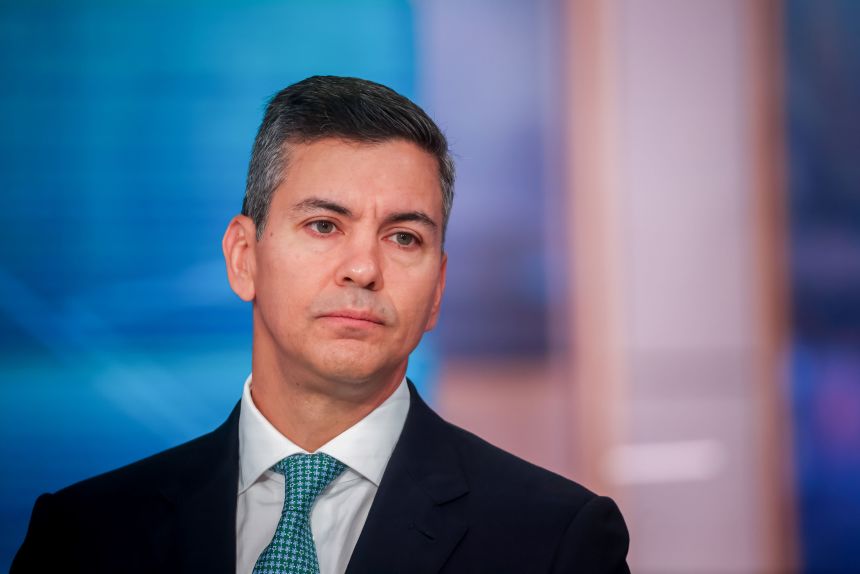
Paraguayan President Santiago Pena announced his resignation on Thursday, a move prompted by a deepening national crisis following the collapse of the digital bank ueno. The lender, which had rapidly expanded from a niche fintech company to a mid-tier banking institution, was found to be insolvent after breaching minimum solvency requirements mandated by the central bank. The fallout from this collapse has left approximately three million customers in the country of 6.5 million unable to access their personal accounts, triggering widespread public unrest and political volatility.
In a recorded video address released on Thursday, Pena explained that his decision to step down was motivated by the need to ensure the stability of the country and preserve democratic institutions. “I do so with the stability of our country, social peace and the need to preserve our democratic institutions in mind,” Pena stated. Following his resignation, Vice President Pedro Alliana is expected to assume the presidency. The transition occurs as the nation deals with the fallout of a institution that had been managing nearly $850 million in public funds.
The political pressure leading to the resignation had been building for weeks. Pena, an ally of United States President Donald Trump, faced intense scrutiny after opposition lawmakers initiated proceedings for an extraordinary session of Congress to file an impeachment motion. The accusations levelled against the president included claims of conflicts of interest, the mismanagement of pension funds, and the systematic cover-up of ueno’s financial insolvency. According to Al Jazeera’s Latin America editor, Lucia Newman, the president was widely accused of negligence and complicity in concealing the bank’s dire financial state.
The situation became untenable for the executive branch earlier on Thursday when Pena lost critical support from members of his own conservative party. As the political crisis unfolded in the halls of power, protesters gathered outside, demanding his immediate removal. Reports indicate that even as the resignation was announced, some segments of the public expressed dissatisfaction, arguing that the president should face a full trial and formal impeachment rather than simply being allowed to resign from office.
The central bank of Paraguay intervened in the operations of ueno after determining that the lender had failed to meet required solvency thresholds. This intervention effectively froze the assets of millions of account holders, creating a ripple effect across the economy. In his final address as president, Pena expressed a hope that the deposit guarantee fund would function correctly and that the public funds and resources belonging to the citizens of Paraguay would be protected throughout the transition and recovery process.
Despite the severe nature of the crisis, the leadership of ueno has remained silent, having made no public statements regarding the collapse of the institution or the allegations surrounding its financial management. As the legislative process continues, with some lawmakers still pushing to hold the executive branch accountable through impeachment, the country now enters a period of significant political and economic uncertainty. The appointment of the vice president is viewed by some as an attempt to restore order, though the primary challenge remains the restoration of access to the funds belonging to millions of impacted Paraguayan citizens.








Comments