


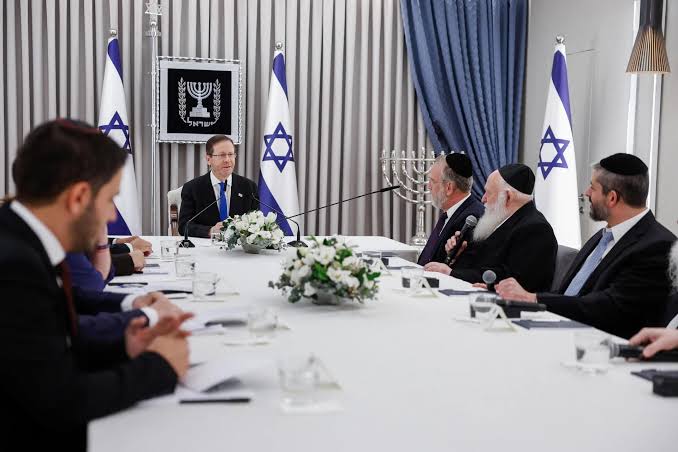
Israeli President Isaac Herzog formally initiated the process of government formation on Wednesday, as he began holding consultations with representatives from various political parties. The commencement of this process followed the official certification of the recent parliamentary election results, which Herzog declared as legally binding. By taking this step, the President has effectively moved the country toward a new administration, undermining efforts by outgoing Prime Minister Benjamin Netanyahu to challenge the legitimacy of the vote.
During the October 27 elections, neither Netanyahu’s bloc nor the faction led by his primary rival, Gadi Eisenkot, managed to secure the parliamentary majority necessary to govern independently. The political landscape is further complicated by historic gains made by Arab-led parties, a development that has become a central point of contention in the aftermath of the vote. "The elections are over. Now is the time to face reality," Herzog stated as he addressed the need to move past the election period.
In the lead-up to the official certification, Netanyahu and his political allies had repeatedly circulated claims that Arab-led parties had manipulated the election results, potentially with the support of foreign entities. However, these allegations were thoroughly investigated by Israel's elections commission. On Wednesday, the commission announced that it had found no evidence of any irregularities that could have compromised the integrity of the process or influenced the final outcome.
Supreme Court Justice Noam Sohlberg, who heads the elections committee, reiterated the commission's findings during a ceremony where the certified results were presented to President Herzog. Sohlberg underscored the danger of casting public doubt on democratic outcomes, warning that trust in the electoral process is fragile. He stated that while allegations of foreign influence are being treated as serious, they remain mere suspicions. Even if substantiated, he noted, their potential impact on the election results is considered limited.
Despite these findings, a separate probe conducted by the Shin Bet intelligence service into alleged foreign interference remains ongoing. Intelligence assessments discussed in a closed-door meeting of the elections committee suggested that substantial funds may have entered Israel from foreign nations, some of which are described as hostile. Notably, the Shin Bet provided no evidence to support these assertions, and the agency has faced scrutiny over its investigative tactics. In a controversial move, the intelligence service requested authorization to interrogate several elected officials, including Ra'am party leader Mansour Abbas.
Attorney General Gali Baharav-Miara rejected this request, stating that it is not permissible to interrogate elected officials without clear evidence to justify such actions. The rejection drew sharp criticism from far-right figures, including National Security Minister Itamar Ben-Gvir, who publicly demanded the arrest of Arab political leaders. In response to the heated rhetoric, President Herzog issued a strong condemnation of the "coarseness and racist expressions" directed at Arab Israeli voters, insisting that they must not be smeared.
As the consultation process continues, President Herzog is holding a series of meetings with political factions. On the first night, three parties aligned with Netanyahu's religious-nationalist base recommended him as their choice to form a coalition. Conversely, a fourth party recommended Eisenkot. The remaining eight parties, including two Arab-led factions, are scheduled to meet with the President on Thursday. Once these sessions conclude, Herzog will designate the candidate he deems most capable of building a viable coalition.
This decision will trigger several weeks of intense negotiations between the parties. If the designated candidate fails to secure a majority within the allotted time, Israel faces the prospect of calling yet another election early next year. For now, the focus remains on the delicate task of coalition building under the President's oversight, amidst a polarized political environment and ongoing investigations into the integrity of the campaign season.








Comments