


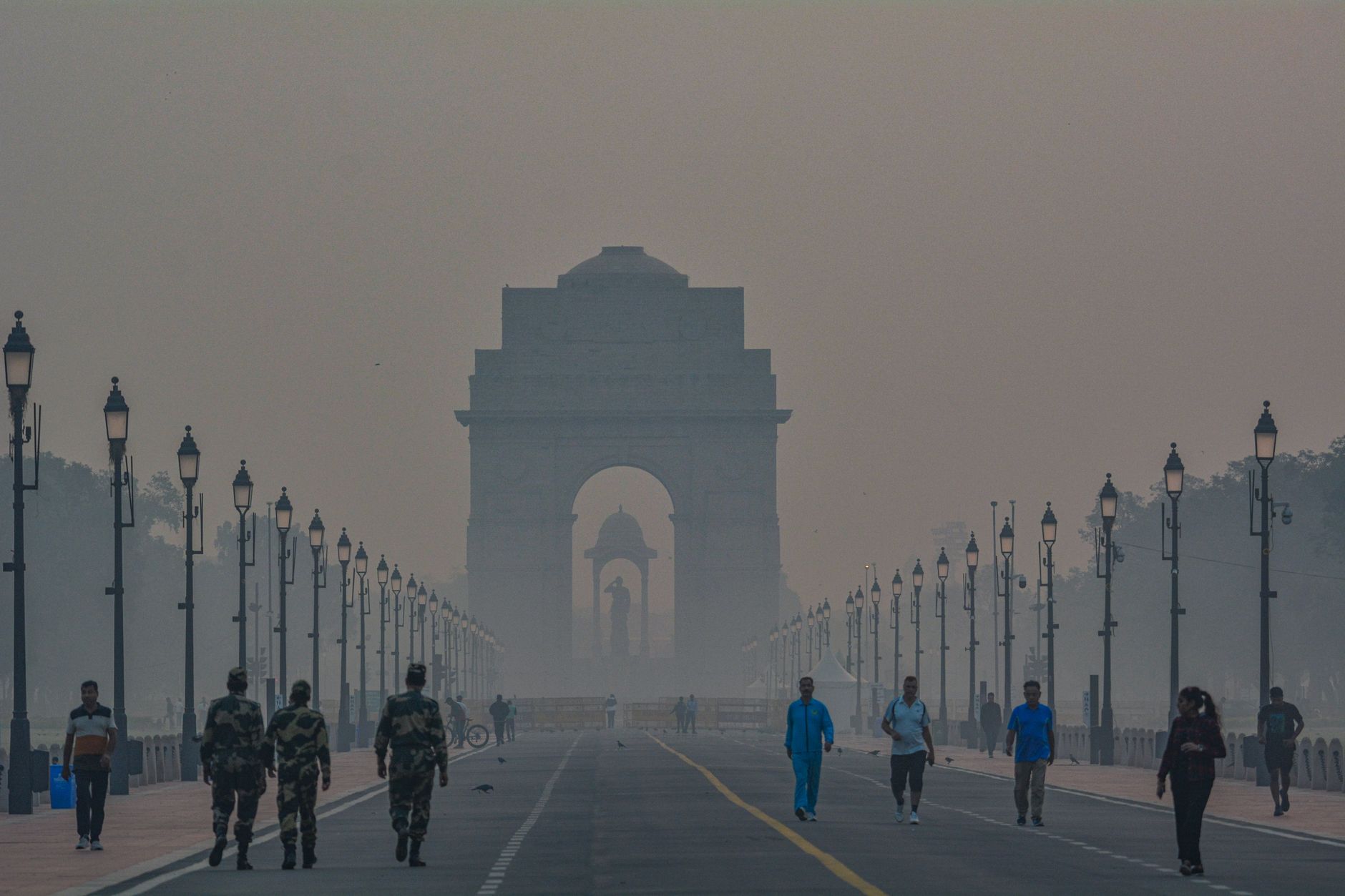
Air quality in the national capital deteriorated significantly on Wednesday, with the city recording its worst pollution levels in 288 days. According to the Central Pollution Control Board (CPCB), the 24-hour average Air Quality Index (AQI) spiked to 377, placing the city firmly in the 'Very Poor' category. The last time the capital witnessed air quality this poor was on January 20, when the index stood at 378. By the evening, real-time monitors at several locations across Delhi breached the 'Severe' threshold of 400.
Amidst the worsening haze, the Commission for Air Quality Management (CAQM) intensified its regulatory response. On Wednesday, the commission issued show-cause notices to the deputy commissioners and senior superintendents of police in five Punjab districts: Jalandhar, Faridkot, Bathinda, Barnala, and Fazilka. These notices were served due to non-compliance and contravention of the commission’s directives regarding the containment of paddy stubble burning. These actions bring the total number of Punjab districts facing direct regulatory consequences for farm fires to nine within the last four days.
Data from the ICAR-Indian Agricultural Research Institute indicated that 467 active crop residue burning events were detected by satellites across six states on Wednesday. Madhya Pradesh recorded the highest single-day count with 157 incidents, followed closely by Punjab with 151 and Rajasthan with 111. While the number of farm fires in Punjab remains lower than the figures recorded during the same period in 2023, the contribution of regional burning to Delhi's air quality remains a critical factor. The Decision Support System developed by the Indian Institute of Tropical Meteorology estimated that stubble burning contributed 16.28% to Delhi’s PM2.5 levels on Wednesday, trailing slightly behind the local transport sector.
The pollution crisis is not limited to Delhi. Neighbouring cities in the National Capital Region reported similarly alarming statistics. Noida’s Sector 62 recorded a 'Severe' AQI of 425, while areas like Bahadurgarh, Panchgaon, and Gajraula in Uttar Pradesh recorded 'Very Poor' air quality. CPCB data highlights that fine particulate matter, specifically PM2.5 and PM10, are the primary pollutants driving the current spike.
Looking ahead, the outlook for air quality in the capital remains concerning. Meteorologists have forecast that the AQI will persist in the 'Very Poor' category before potentially sliding into the 'Severe' category by Friday and Saturday. These conditions are expected to coincide with the upcoming Diwali celebrations. The forecast suggests that unfavourable weather patterns, combined with ongoing emissions, will likely keep air quality in the 'Severe' range for the next six days.
The India Meteorological Department noted that surface winds have been blowing from the north-west at speeds reaching up to 20 kmph during the afternoon, though these speeds tend to decrease during the evening and night. The weather at the Safdarjung base station remained largely clear with shallow fog, with visibility levels fluctuating between 800 and 1,000 meters in the morning. As the city braces for further deterioration, authorities are continuing to monitor the situation, with a 15-day construction ban in the NCR coming into effect on November 5 as part of the winter action plan.








Comments