


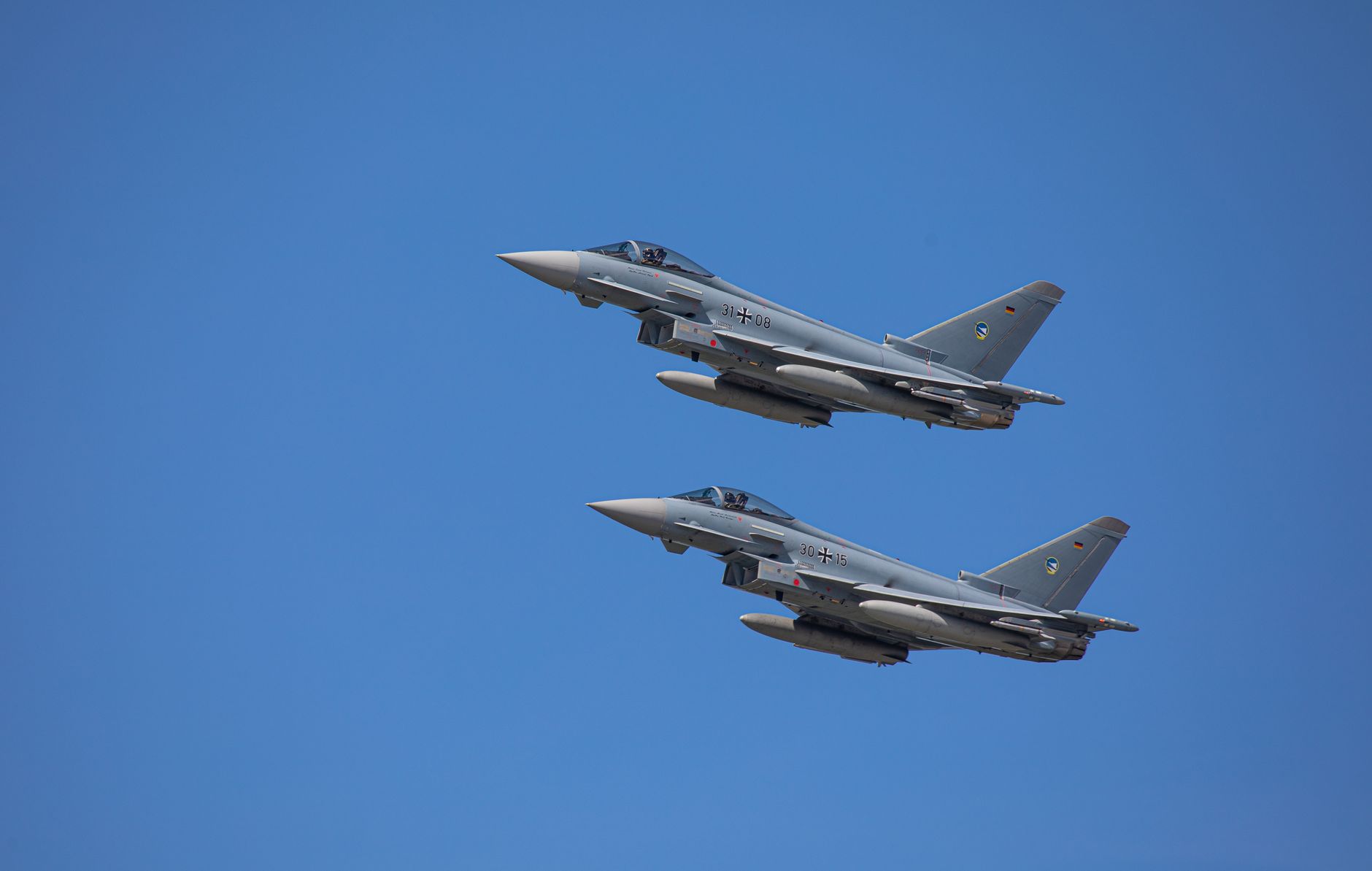
Defence Minister Rajnath Singh said on Saturday that the future of military power will be defined by the speed at which a nation can sense, understand, decide, and act, rather than the total number of platforms in its possession. Speaking at the second edition of the Exercise Tarang Shakti 2026 held at the Air Force Station in Jodhpur, Singh noted that modern warfare is increasingly shifting across domains beyond land, sea, and air, now encompassing space, cyberspace, the information domain, and the electromagnetic spectrum.
Highlighting the evolving nature of combat, the Minister pointed to the growing influence of artificial intelligence, drones, unmanned systems, electronic warfare, and precision-guided weapons. He emphasised that India has adopted self-reliance as a central national policy, aiming to build domestic capabilities for designing, manufacturing, and upgrading critical technologies. Singh mentioned several indigenous defence programmes, including the Tejas fighter aircraft, the Akash air defence system, and the Prachand, Rudra, and Dhruv helicopters, as evidence of this commitment to self-sufficiency.
The exercise, hosted by the Indian Air Force from September 26 to October 12, featured participation from seven nations, including Australia, Bangladesh, France, Germany, Sri Lanka, the United Arab Emirates, and the United States, with 32 additional countries present as observers. According to Singh, these collaborative efforts allow various air forces to share operational knowledge and coordinate mission planning effectively.
Reiterating the importance of international partnerships, the Defence Minister stated that future defence ties would be anchored in trust and technological synergy rather than just platform sharing. He encouraged the Indian Air Force to integrate the operational lessons learned during the multinational training into their future strategies, asserting that while nations operate different aircraft, they share a common goal of security. Singh concluded that India remains open to joint innovation and research with like-minded countries to address global security challenges.








Comments