


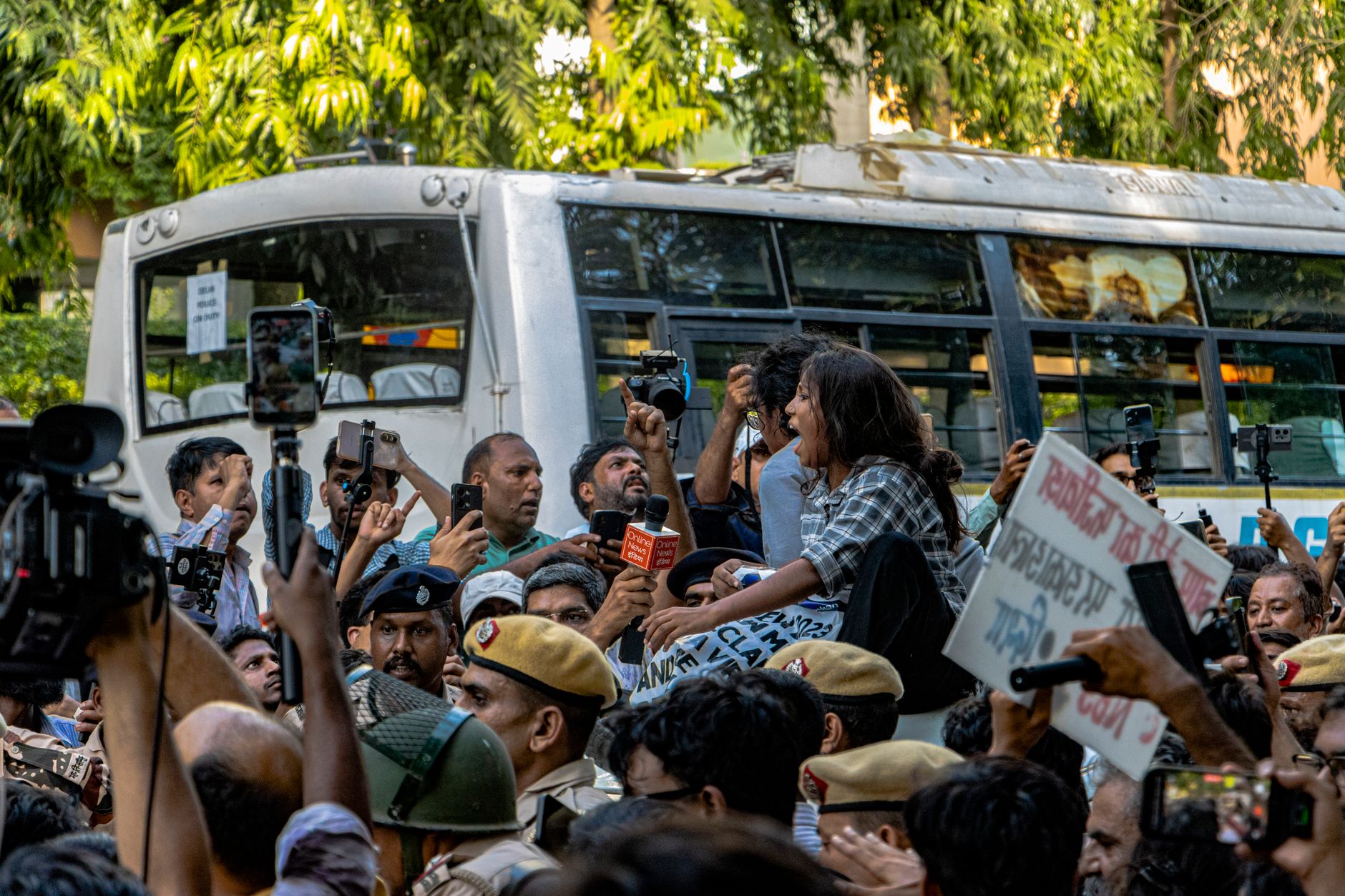
A significant legal debate regarding the right to protest in India's national capital has reached the Supreme Court. The Delhi Police, appearing before the apex court, has formally defended its position to remove Jantar Mantar from the list of designated venues for public demonstrations. The authorities argue that the historic site, which has served as a central hub for activists and protesters for decades, is no longer a viable location for managing large-scale gatherings.
During the proceedings, the Delhi Police highlighted various concerns regarding the suitability of Jantar Mantar, suggesting that the current infrastructure and the location's proximity to residential and commercial areas make it increasingly difficult to balance the right to protest with the need for public order and movement. The police department has maintained that designating more controlled spaces is essential to ensure that demonstrations do not disrupt the daily life of citizens or threaten security protocols.
As part of its proposal, the police have identified three specific alternative sites that they believe are better equipped to handle public protests. These locations include the Ramlila Maidan in Central Delhi, the Burari Ground in North Delhi, and the CBD Ground in East Delhi. According to the police, these sites are better suited to manage the logistical challenges associated with large crowds while still providing space for groups to voice their grievances.
The move to shift protest venues away from the heart of the city has been a subject of ongoing scrutiny by civil rights groups and political observers. Jantar Mantar, located in the vicinity of Connaught Place, has traditionally been the preferred site for activists, trade unions, and civil society organizations due to its central location and historical significance as a symbol of democratic dissent. The police department’s stance suggests a shift toward a more centralized model of crowd management where protests are confined to specific outskirts or designated grounds.
The Supreme Court is now tasked with weighing the fundamental right to protest against the state’s obligation to maintain public order and safety in a bustling metropolitan environment. The ongoing legal deliberations will likely determine the future landscape of democratic expression in Delhi. Observers note that the decision could set a significant precedent for how protest venues are managed in other major Indian cities, where similar tensions between civic engagement and urban administrative efficiency frequently arise.
This development follows a period of heightened discussions regarding the regulation of public spaces in Delhi. While the government and law enforcement have often cited traffic congestion and security threats as primary reasons for shifting protest locations, human rights advocates have frequently questioned whether such measures effectively curtail the visibility of dissent. The court's eventual ruling will be closely watched by legal experts, activists, and the general public, as it carries implications for the democratic framework of the national capital.
As the legal process continues, stakeholders are waiting to see how the court evaluates the proposed alternatives. The police remain firm in their argument that the suggested venues—Ramlila Maidan, Burari Ground, and CBD Ground—offer a balanced solution that respects the rights of the demonstrators while alleviating the pressure on central city infrastructure. The outcome of these court proceedings will ultimately dictate whether the city's protest culture will be forced to adapt to these new, state-sanctioned boundaries, or if the court will seek a more inclusive compromise that keeps the heart of Delhi open for public discourse.








Comments