


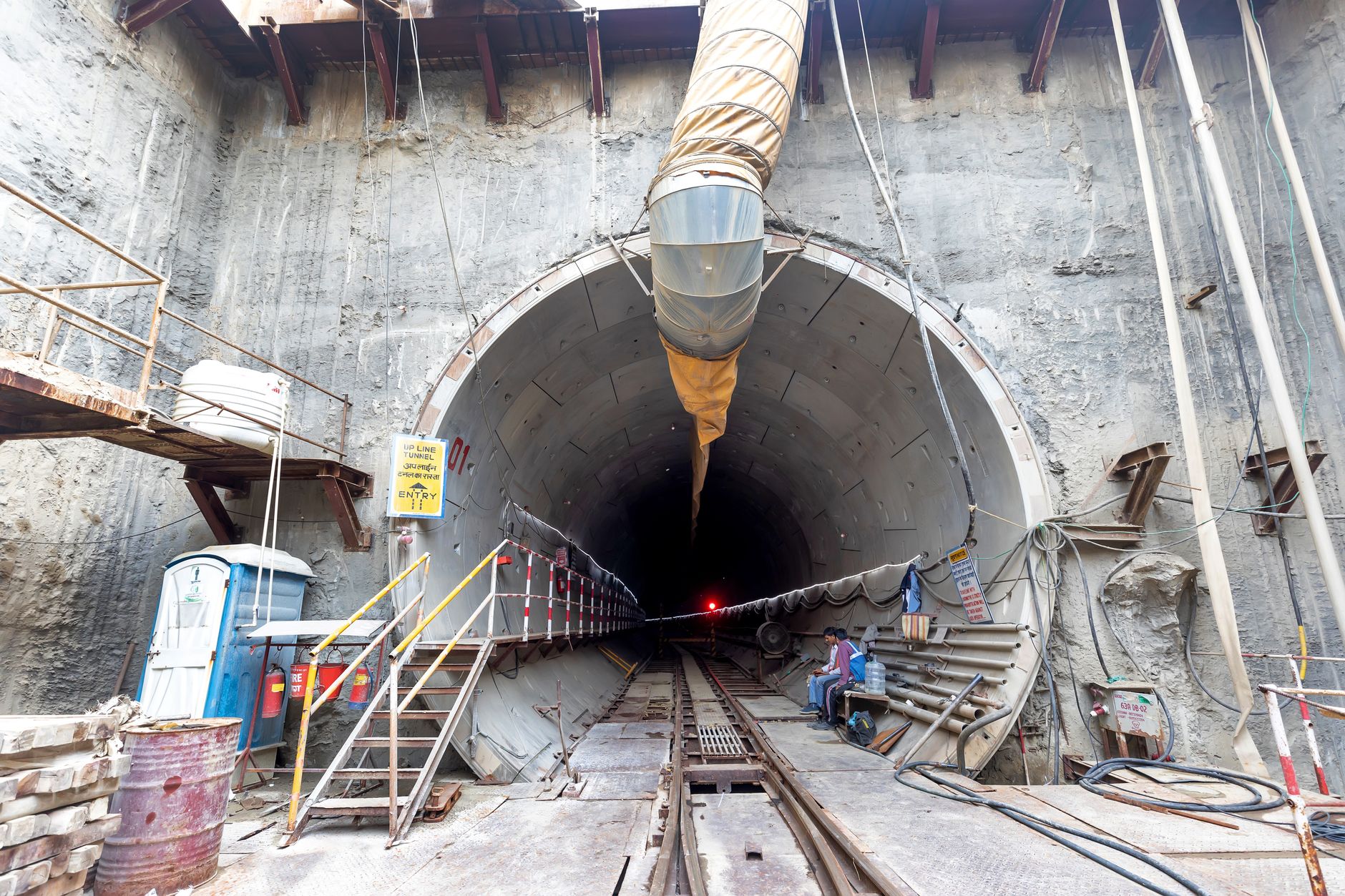
China is set to tighten export controls on specialized construction equipment, a strategic move that could significantly disrupt infrastructure projects across India. The new regulations, scheduled to take effect later this month, specifically target tunnel-boring machines (TBMs) and gear designed for concrete spraying at high altitudes. Beijing has indicated that these restrictions are aimed at sensitive regions and countries involved in territorial disputes with China, citing potential dual-use applications for both civilian and military infrastructure.
For India, the timing of these curbs is particularly sensitive. The nation is currently executing a massive expansion of road and rail networks, including critical projects located in the Himalayan border regions. These projects are designed to enhance connectivity and improve the speed of troop mobilization in areas where India and China share a longstanding territorial dispute. Because China dominates approximately 70% of the global tunnel-boring machine market, the sudden restriction on both new units and essential spare parts raises significant concerns regarding the maintenance of existing equipment fleets.
Industry experts suggest that the impact may extend beyond the procurement of new machinery. Ajay Srivastava, founder of the New Delhi-based Global Trade Research Initiative, noted that while India might attempt to reallocate existing machines between high-priority projects, the lack of access to components will pose a major hurdle. Given the heavy wear and tear associated with tunnel construction, the continuous supply of spare parts is essential for keeping projects on track. Delays in this sector are not unprecedented; in 2024, China reportedly stalled efforts by the German manufacturer Herrenknecht AG to provide TBMs for significant Indian infrastructure initiatives, including the Ahmedabad-Mumbai bullet train and segments of the Delhi Metro.
The strategic nature of these restrictions was underscored by analysts who track Chinese industrial policy. Sun Chenghao, a fellow at Tsinghua University’s Center for International Security and Strategy, remarked that Beijing’s focus on high-altitude equipment suggests a specific intent to monitor where its engineering capabilities are utilized. The concern, according to this perspective, is whether such technology could indirectly bolster another nation’s military logistics infrastructure. This reflects a broader trend where Beijing increasingly views its dominance in heavy machinery production through a geopolitical lens.
In response to these supply chain vulnerabilities, the Indian government has accelerated efforts to boost domestic manufacturing of heavy construction equipment. As part of the 2026-27 Union Budget, officials proposed a $1.2-billion incentive scheme aimed at supporting the production of TBMs, elevators, and firefighting systems. This program is expected to draw approximately $1.8 billion in private investment over a seven-year period, encouraging firms to move beyond mere assembly toward substantial local value-addition.
Major Indian engineering players are already beginning to pivot in light of these challenges. Larsen & Toubro is currently developing a prototype tunnel-boring machine, with company president R. Shankar Raman noting that the firm aims to manufacture equipment for its own use and eventual sale. However, industry leaders acknowledge that bridging the gap with Chinese manufacturers—who benefit from massive economies of scale—remains a daunting task. While the government of India continues to encourage domestic production, the transition remains in its early stages.
Looking ahead, the road transport and highways ministry, led by Nitin Gadkari, has outlined an ambitious target to invest nearly $9.6 billion in tunnelling over the next five years. Achieving these goals while navigating the new Chinese export environment will likely require a delicate balance between leveraging existing international partnerships and fast-tracking the domestic technological ecosystem. As the industry faces these new constraints, the focus remains firmly on de-risking infrastructure development from potential geopolitical disruptions.








Comments