


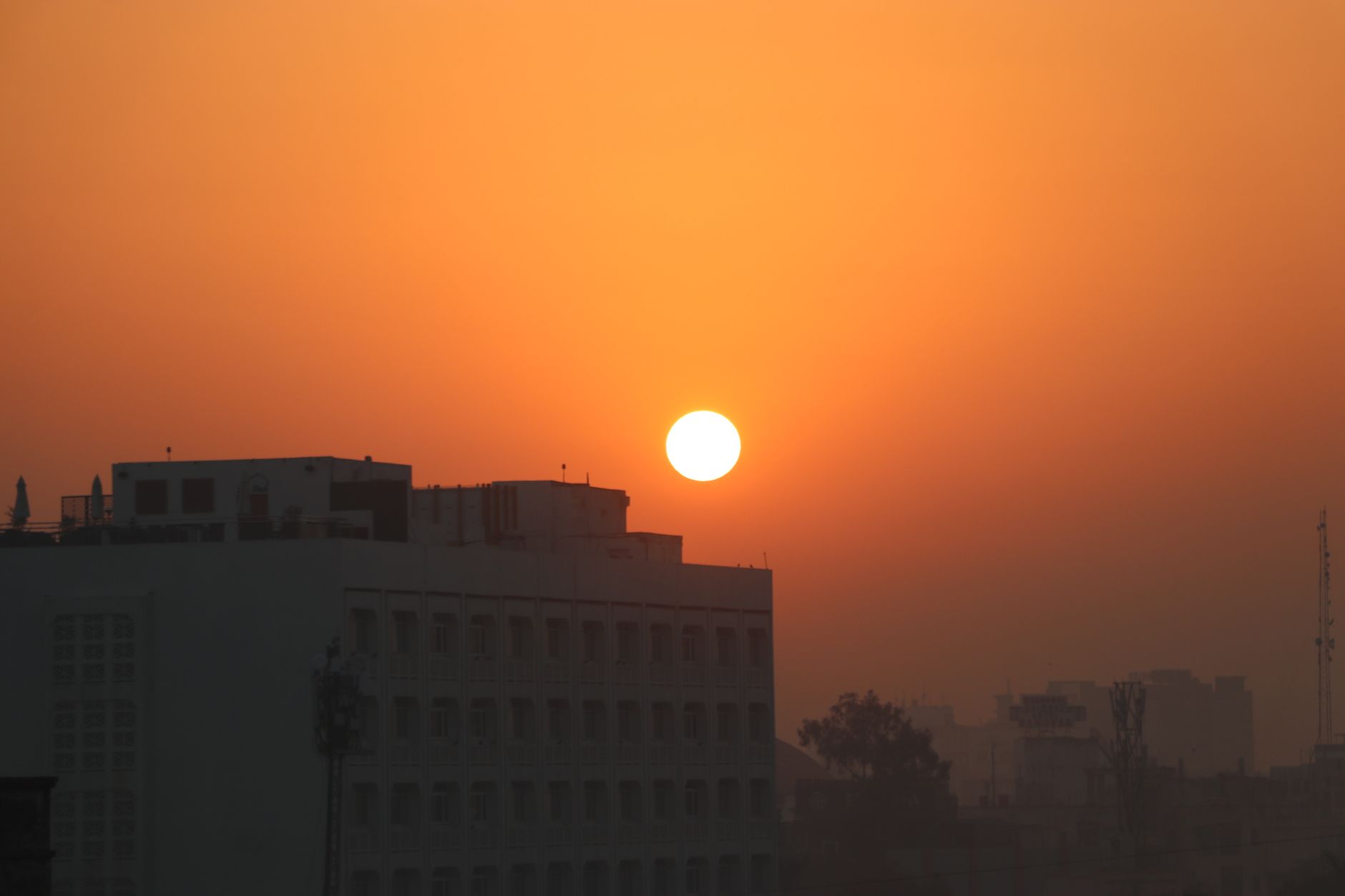
Delhi continues to grapple with deteriorating air quality, as the national capital's Air Quality Index (AQI) surged into the hazardous and severe categories on Monday. Data indicates that pollution levels hit a peak of 428 in certain locations, while various parts of the city recorded readings firmly within the very poor threshold. The persistent smog has necessitated an immediate escalation of regulatory measures as officials struggle to bring the air quality under control.
According to the latest readings from the Central Pollution Control Board (CPCB), the air quality situation is widespread across the city. The area surrounding Akshardham Temple and ITO reported an AQI of 349, while the vicinity of India Gate and Janpath recorded 335. Other significant stations also reflected the grim reality: Rohini registered an AQI of 396, Alipur followed at 375, Vivek Vihar at 370, and Narela at 363. Further data showed Chandni Chowk at 358 and Jawaharlal Nehru Stadium at 343, all falling within the very poor classification.
Lower readings were observed in other sectors, though these still posed health concerns. Burari recorded an AQI of 308, while Aya Nagar stood at 276. Even locations typically recording lower pollution levels saw significant increases, with the Indira Gandhi International Airport's Terminal 3 reporting 263, and Anand Vihar registering 242. These figures highlight the extent of the crisis, which is forcing residents to endure poor air conditions across diverse neighbourhoods.
In response to the escalating situation, Delhi Environment Minister Manjinder Singh Sirsa has underscored that enforcement teams are operating at an increased capacity. These teams are tasked with ensuring strict compliance with Pollution Under Control Certificates (PUCC) and conducting rigorous inspections of construction sites to mitigate dust, which is a primary contributor to the city's particulate matter levels. On November 1 alone, records show that 14,930 vehicles were inspected, resulting in 566 challans issued for PUCC violations, alongside the inspection of 300 construction sites.
Complementing these efforts, the Delhi Traffic Police have intensified the implementation of the Graded Response Action Plan (GRAP). Between midnight and 8:00 PM on November 1, authorities checked 7,279 vehicles. The enforcement drive resulted in 714 vehicles being turned back, 38 being impounded, and ten others receiving challans. Furthermore, the police held a coordination meeting with counterparts from neighbouring districts on Sunday to ensure that the restrictions are applied effectively across borders.
Public awareness remains a cornerstone of the administration's strategy. The traffic department is utilizing print media, social media, and radio campaigns to disseminate information regarding current restrictions. Additionally, information boards have been installed at various Delhi entry points, supplemented by the distribution of pamphlets to commuters to encourage adherence to pollution norms.
The current situation serves as a stark reminder of the seasonal challenges Delhi faces, where high pollution levels are exacerbated by a combination of meteorological factors and anthropogenic activities. Minister Sirsa emphasized that the mission to restore clean air requires a collective approach from all stakeholders. While enforcement remains the government's primary tool to curb the spike, authorities are expected to maintain these heightened inspections as long as the AQI remains in the dangerous range, with ongoing monitoring of both vehicular movement and industrial dust output to prevent further deterioration.








Comments