


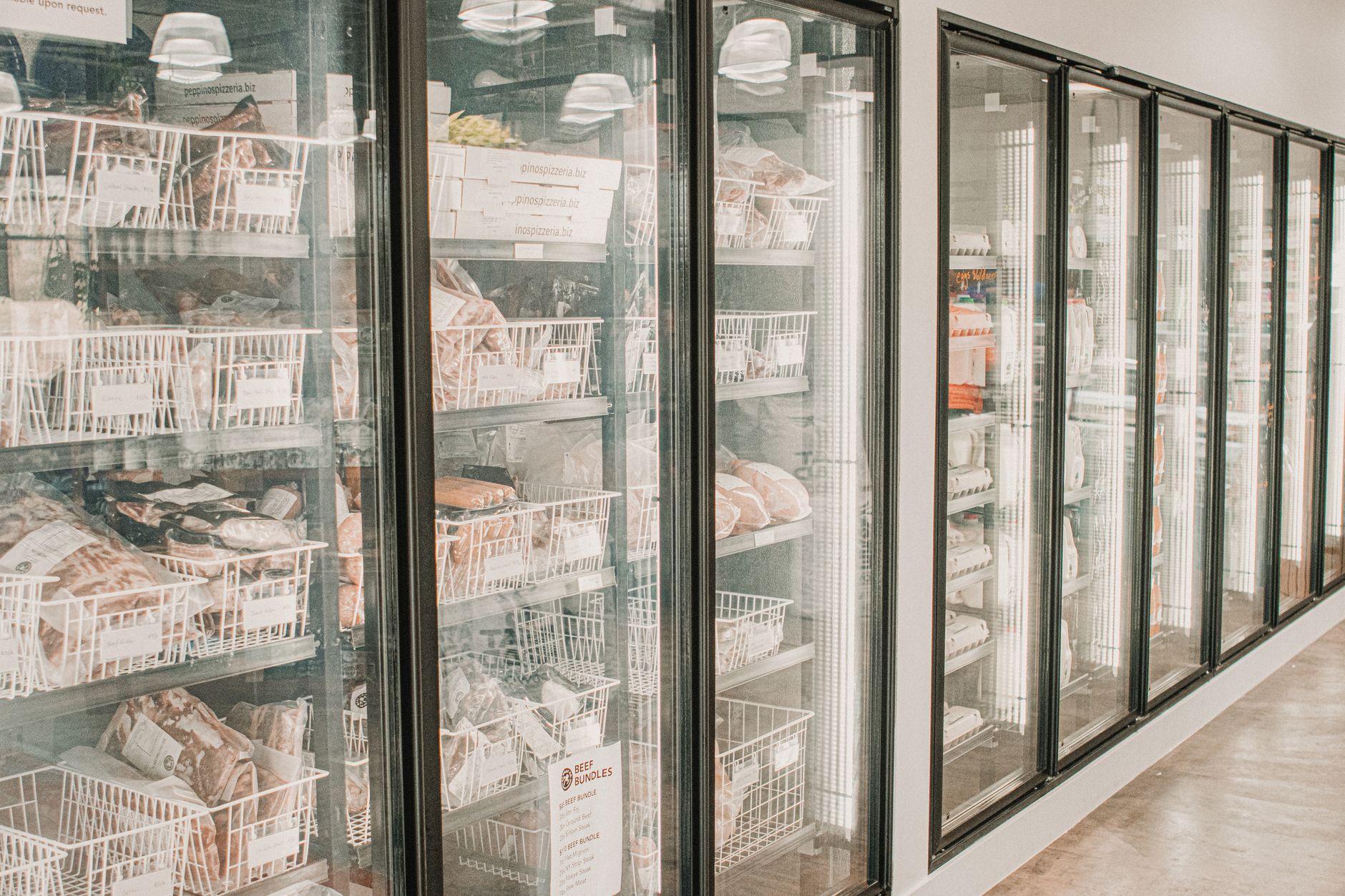
The United States Department of Defense has launched an investigation into a series of freezer malfunctions at military bases that resulted in the loss of food supplies. Officials are working to determine if these equipment failures, which occurred in August, were the result of a coordinated cyberattack on base infrastructure, according to a U.S. official familiar with the inquiry.
The disruptions reportedly impacted approximately six commissaries, which serve as grocery stores for service members and their families. At Fort Huachuca in Arizona, base personnel discovered that a walk-in freezer had unexpectedly switched into a defrost cycle, raising temperatures enough to spoil the stored provisions. To maintain the integrity of the ongoing probe, the official spoke on the condition of anonymity.
U.S. Cyber Command and law enforcement agencies within the Department of Defense are leading the investigation. As of now, investigators have not publicly confirmed a technical root cause for the malfunctions, nor have they identified any specific suspects or groups responsible for the incidents. While the investigation remains in its early stages, authorities are treating the event as a potential security breach.
As part of their efforts, U.S. investigators are coordinating with authorities in France. This cross-border cooperation follows a significant cyberattack earlier in October, where hackers manipulated the temperature controls of industrial cooling systems across more than 350 locations in France. The French incident affected major supermarket chains, including Carrefour, Monoprix, and Intermarche, where refrigerators and freezers were forced to heat up to 50 degrees Celsius, or 122 degrees Fahrenheit, leading to mass inventory disposal and occasional fires.
The events have drawn renewed attention to the security of operational technology, which encompasses the internet-connected systems that manage vital industrial and supply chain infrastructure. Cybersecurity analysts have long cautioned that while focus often remains on national power grids or water systems, food storage networks are increasingly at risk due to weak remote-access defenses.
The Food and Agriculture Information Sharing and Analysis Center (ISAC) has repeatedly highlighted that these connected industrial controls are prime targets for malicious actors. Because the food sector requires high availability and cannot withstand prolonged downtime, it is viewed as an attractive target for extortion and ransomware campaigns. A 2021 assessment by the Department of Homeland Security previously warned that cyber-induced refrigeration failures pose a tangible threat to national food distribution networks.
In response to these vulnerabilities, the incidents have spurred renewed legislative interest in Washington. Lawmakers have moved to revive the bipartisan Farm and Food Cybersecurity Act, which was originally introduced in 2025. The proposed legislation aims to strengthen crisis response protocols and improve federal threat-sharing mechanisms across the country's agricultural and food distribution pipelines.
While public reporting on the military incidents was preceded by coverage from the Signal and Silence blog and Stars and Stripes, the Pentagon has maintained a cautious approach to the probe. The ongoing investigation highlights the growing challenges faced by defense and civilian sectors in securing everyday supply chain technology against evolving digital threats.







Comments