


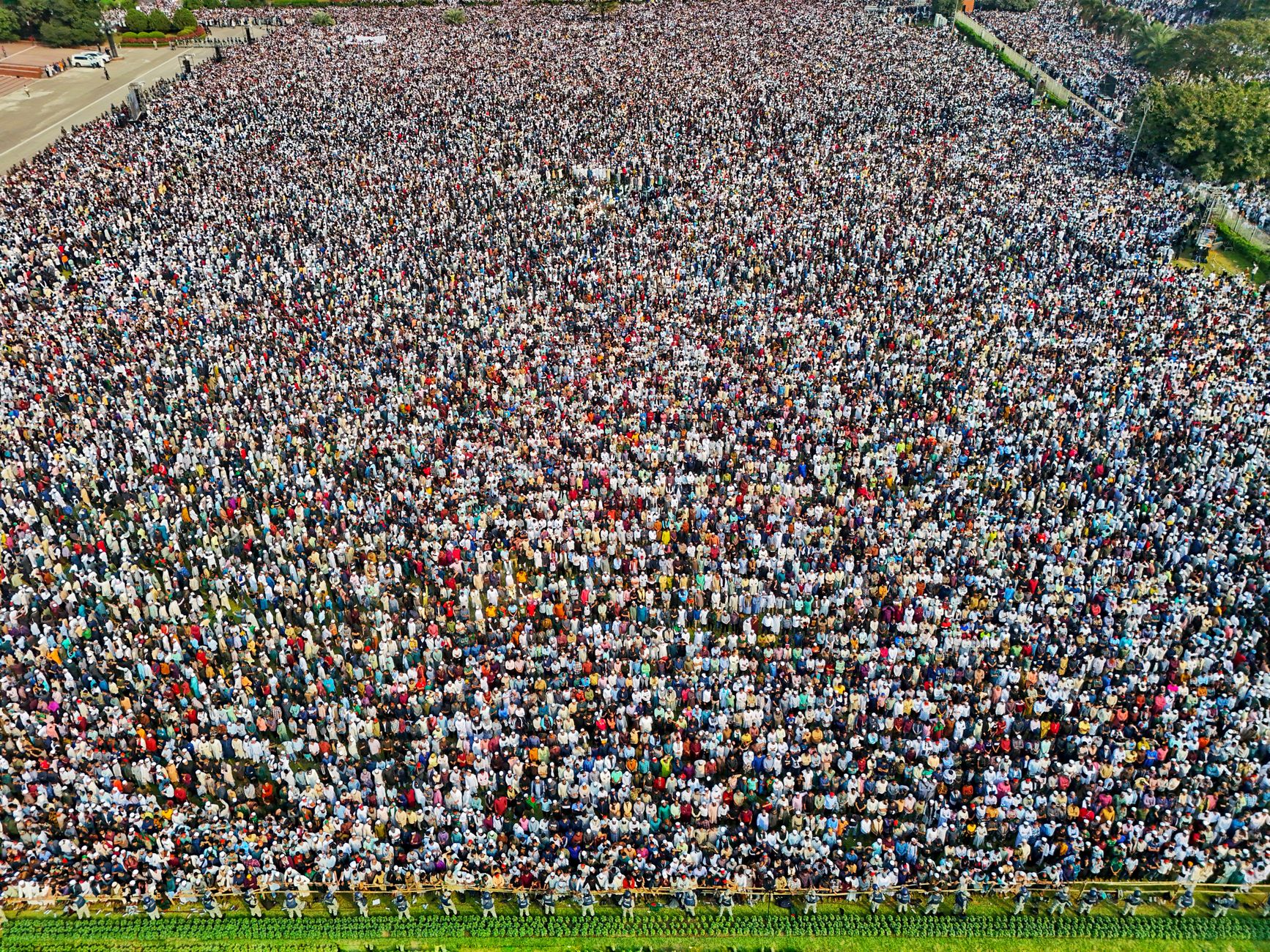
Prime Minister Narendra Modi on Friday, October 30, 2026, reiterated his commitment to the nation, vowing to serve the people of India until his last breath. The declaration came during a public address in Bhildi town, located in the Banaskantha district of Gujarat. The Prime Minister's remarks follow a recent political controversy sparked by comments made by Congress president Mallikarjun Kharge, who had targeted the Prime Minister in a public statement.
During his two-day visit to the state, Mr. Modi inaugurated the Bharat Bovine Breeding and Research Centre (BBBRC) and laid the foundation stones for various development projects valued at approximately ₹14,000 crore. Addressing the gathering, the Prime Minister spoke extensively on the government’s efforts to ensure the welfare of farmers and the country's economic stability despite global volatility.
The Prime Minister took aim at the Opposition, accusing certain political factions of finding satisfaction in national crises. He alleged that these groups intentionally spread misinformation to incite panic, specifically regarding the supply of essential commodities like fertilisers and cooking gas. According to Mr. Modi, these claims emerged amid the ongoing conflict in West Asia, which has impacted global supply chains and energy security.
"They sowed fear among farmers, claiming fertilisers would become unavailable. They created artificial queues and created a sense of panic," the Prime Minister told the audience. He further alleged that these attempts were aimed at creating chaos and defaming his government. He asserted that his administration had worked diligently to ensure that the global rise in fertiliser prices did not burden the Indian agricultural community.
Highlighting the government's intervention in the fertiliser market, Mr. Modi noted that while the global price for a bag of urea has reached ₹3,000, Indian farmers continue to receive it for less than ₹300. Similarly, he pointed out that while global prices for diammonium phosphate (DAP) have crossed ₹5,000, the domestic rate remains subsidised at ₹1,350. He stated that the government has shouldered a financial burden of approximately ₹16 lakh crore to shield cultivators from rising global costs.
The event also marked the distribution of the 24th instalment of the Pradhan Mantri Kisan Samman Nidhi (PM-Kisan) scheme. Under this initiative, more than ₹18,000 crore was transferred directly to the accounts of nearly 10 crore eligible farmers. The Prime Minister underscored that since the inception of PM-Kisan in 2019, around ₹4.5 lakh crore has been disbursed to small farmers, reinforcing his government's focus on agricultural empowerment.
Further detailing the economic support provided to the sector, Mr. Modi noted that wheat and paddy growers have received ₹24 lakh crore through Minimum Support Price (MSP) payments over the past 12 years. Additionally, he highlighted the Pradhan Mantri Fasal Bima Yojana, which has provided over ₹2 lakh crore in compensation to farmers during the same period. The PM-KUSUM scheme was also referenced as a success, with 12 lakh solar-powered water pumps installed to help reduce irrigation costs and save on diesel expenses for the farming community.
As his visit to Gujarat continues, the Prime Minister’s remarks signal a hardening of the political narrative ahead of future policy discussions. By emphasizing his long-term dedication to public service and the tangible results of his government's welfare schemes, Mr. Modi sought to reassure the public while distancing his administration from the criticisms leveled by the Opposition regarding the domestic impact of international conflicts.








Comments