


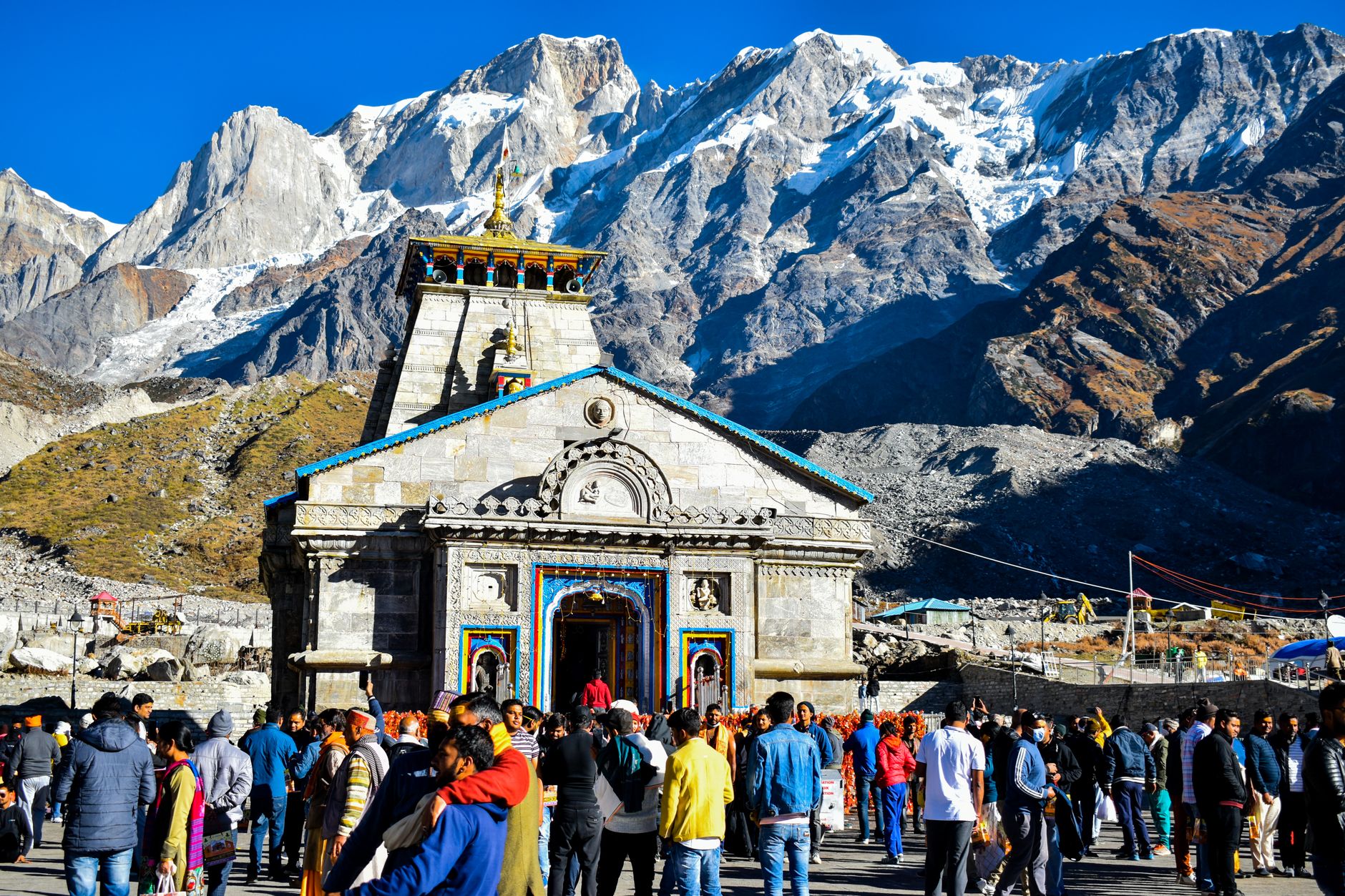
Bollywood actor Sara Ali Khan has become the subject of intense public scrutiny and debate following her recent visit to the Kedarnath shrine. The actor’s pilgrimage to the prominent Hindu site has drawn sharp criticism from a religious cleric, who reportedly issued a fatwa against her, declaring that her act of offering prayers at the temple was ‘haram’, or forbidden under Islamic principles.
This incident has rapidly transitioned from a private visit to a contentious national conversation. The remarks made by the cleric have brought to the forefront complex questions regarding religious identity and the extent to which public figures, or any individual, can exercise their personal faith in a diverse society. As news of the controversy circulated, it sparked an immediate and heated discourse on social media and across various news platforms, with many weighing in on the intersection of tradition, personal freedom, and societal expectations.
The Kedarnath shrine, located in the Himalayas, is a major pilgrimage destination for millions of Hindus, and the participation of public figures in such visits is typically viewed as a matter of individual devotion. However, the intervention of the cleric has shifted the focus toward the perceived boundaries of religious adherence. Supporters of the actor have argued that the act of visiting a place of worship should be considered a personal choice, protected under the broader umbrella of religious freedom and individual rights.
Conversely, the controversy reflects the persistent tensions that arise when individual actions are measured against traditional religious interpretations. By labeling the act as ‘haram’, the cleric has highlighted the friction between contemporary personal practices and certain orthodox viewpoints. This has prompted many to question the authority behind such proclamations and who holds the legitimacy to dictate where and how an individual chooses to offer their prayers.
As the debate continues to unfold, it has highlighted a larger, ongoing societal tension regarding personal autonomy in India. Many commentators and fans of the actor have expressed concern that such reactions might serve to limit the inclusive nature of the country's cultural and religious landscape. The situation has underscored the challenges that public figures often face when their private religious expressions become subjects of public litigation.
The discourse also touches upon the fundamental constitutional guarantee of freedom of conscience and the right to practice one's religion freely. While the cleric’s statement represents a specific traditional perspective, it has met with pushback from those who believe that such interventions do not align with the modern understanding of individual liberty. The episode serves as a reminder of the often-fragile balance between religious doctrine and the evolving social norms in modern India.
Moving forward, the incident remains a significant talking point, illustrating the sensitivity surrounding religious discourse in the public sphere. It remains to be seen how such discussions will impact the cultural expectations placed on public personalities and whether this incident will lead to a broader re-evaluation of how religious boundaries are defined and enforced in contemporary society. For now, the situation stands as a stark example of how deeply personal choices, such as a visit to a shrine, can quickly become catalysts for intense ideological debate.








Comments