


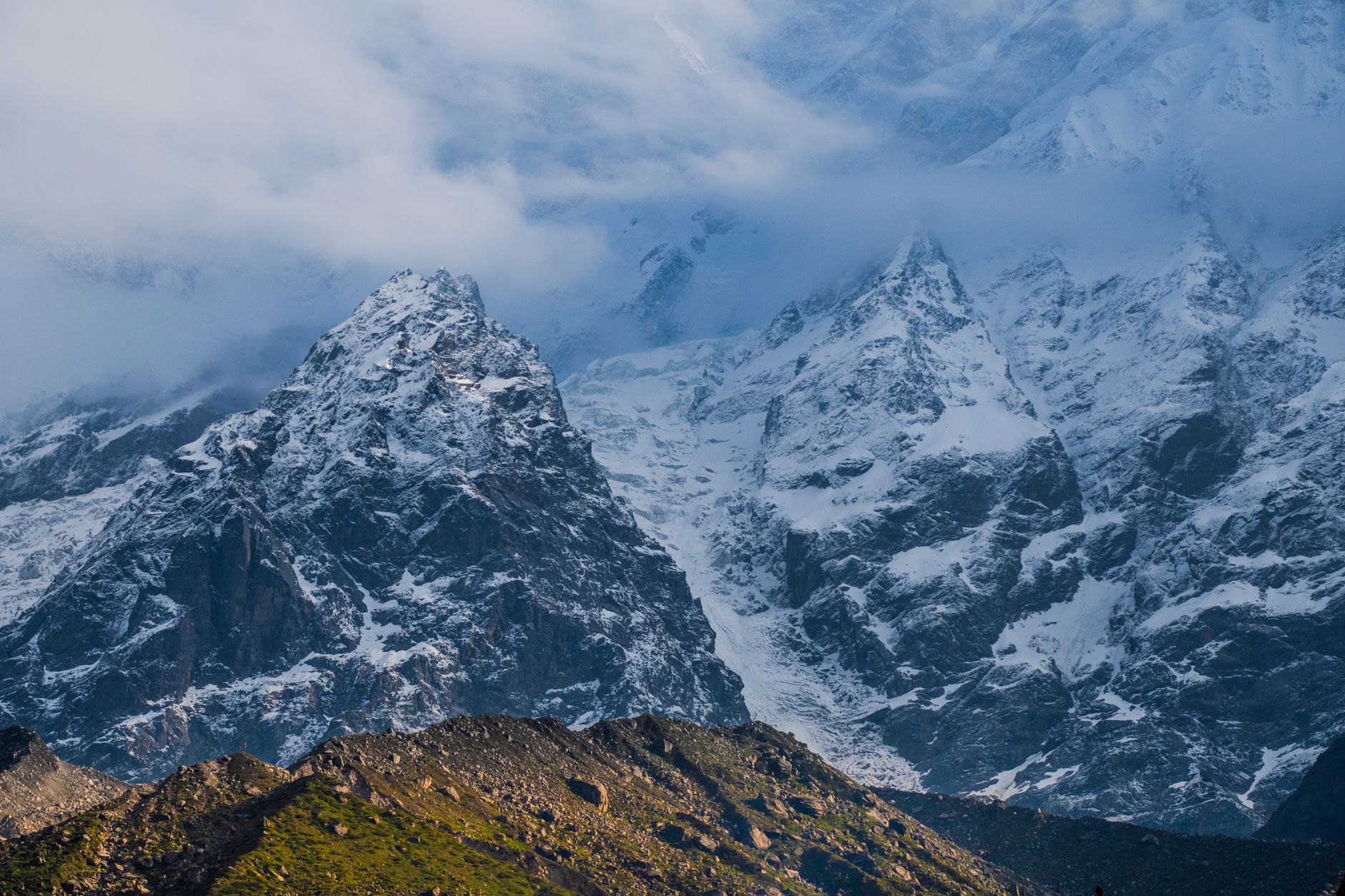
A new scientific study has highlighted significant risks to the pilgrimage town of Badrinath, warning that the collapse of hanging glaciers situated above the settlement could cause widespread damage to infrastructure. The research, published in the peer-reviewed journal Landslides on October 28, identifies three specific glaciers as potential sources of avalanches that could impact the town, which is situated at an elevation of approximately 3,415 metres above sea level.
The findings, which were supported by the Defence Research and Development Organisation (DRDO), suggest that a worst-case avalanche event could damage 398 buildings, two bridges, a helipad, a parking area, and roughly 2.66 kilometres of roads. The study team, comprising researchers from the Indian Institute of Science (IISc), the University of Cambridge, and the DRDO, utilized high-resolution satellite imagery and elevation models to identify and assess these glaciers, focusing on those with surface slopes of 30 degrees or greater.
Among the three identified sites, the second glacier poses the most significant threat. It possesses an estimated ice volume of 5.32 million cubic metres and a slope of 34.57 degrees. Simulations indicate that an avalanche originating from this site could reach a peak velocity of 78.5 metres per second, which translates to nearly 283 kilometres per hour. The flow of such an event could potentially reach a height of 73.5 metres, according to the researchers.
While the study suggests that the main Badrinath Dham shrine is not expected to be struck directly, the accumulation of rock and debris following an avalanche could still pose a significant threat to the area. The authors emphasize that while the second glacier is the most hazardous, the other two sites also require careful observation as part of comprehensive hazard-mapping and disaster mitigation strategies for the region.
Hanging glaciers are distinct from conventional valley glaciers as they perch on steep mountain faces or end abruptly at bedrock cliffs rather than extending to the valley floor. This unique positioning renders them highly susceptible to detachment or slope failure. As temperatures rise and glaciers transition to warmer, more temperate states, the reduced resistance at their base increases the risk of ice breaking away, triggering avalanches that carry large quantities of ice, snow, and rock debris.
The study arrives as the Himalayan region faces heightened scrutiny regarding ice-related disasters. Recent events, such as the glacial lake outburst flood (GLOF) in Bhutan and a catastrophic collapse in Nepal, have demonstrated the speed at which mountain-based hazards can impact downstream settlements. The research stresses the urgent need for robust early-warning systems and stricter construction regulations in mountain towns, particularly those that host large numbers of visitors, such as Badrinath, which recorded approximately 1.7 million pilgrims during the 2025 Char Dham Yatra.
The research team, which included scientists such as Abhilash Gogineni, Anil V. Kulkarni, Rayees Ahmed, H.S. Negi, Anurag Sharma, and Nandu Krishnan, concludes that these findings should serve as a prompt for broader regional hazard-mapping efforts. By identifying vulnerable sectors, authorities may be better equipped to manage the risks posed by shifting cryospheric conditions in the high Himalayas.







Comments