


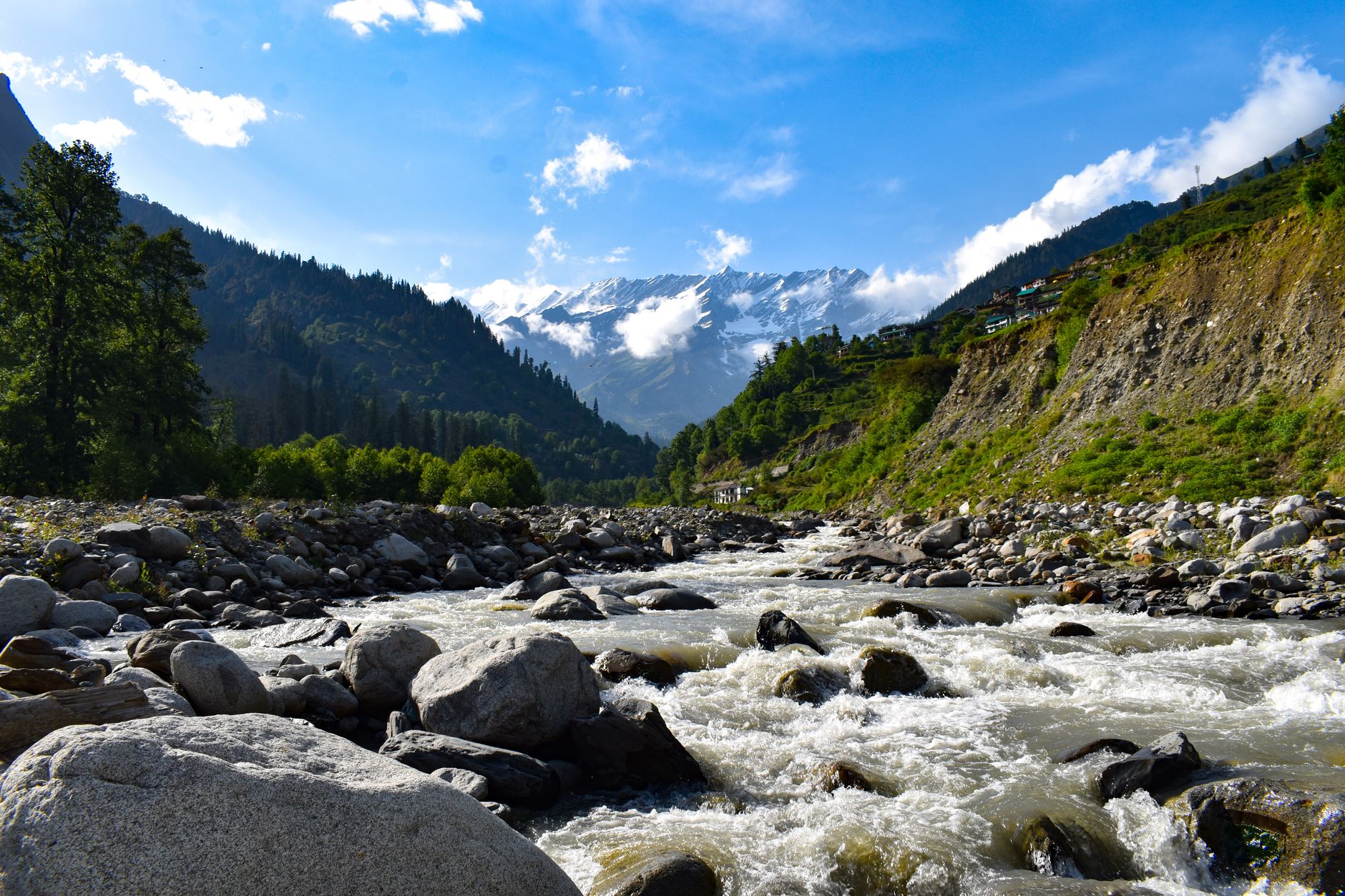
A sudden glacial lake outburst flood (GLOF) originating in the high-altitude Gasa district of Bhutan has triggered emergency warnings across the border in the Indian states of West Bengal and Assam. The incident occurred on Thursday evening at Shintaphu Lake, which is situated at the source of the Mo Chhu River. The lake is officially recognized as one of the 17 potentially dangerous glacial lakes within the Himalayan nation.
The breach of the lake’s natural dam sent a significant surge of water and debris flowing down the Mo Chhu River basin. By Friday morning, the floodwaters had traveled past Srigang in Kabesa Gewog, a region located approximately eight kilometres downstream from the historic Punakha Dzong. According to reports, the force of the water caused substantial destruction to infrastructure, including the Gasa Tshachu, a natural hot spring facility that had been impacted by a similar event in August 2021.
Furthermore, a solar irrigation lifting system in the Punakha area, recently installed to support local agricultural needs, was partially damaged and has been rendered non-functional. The debris carried by the flood has also obstructed sections of the Punakha-Gasa Highway, particularly near the Dzomlingthang area, which has hampered local transportation and transit.
Despite the extent of the physical damage, officials in Bhutan reported no loss of life. The success in preventing casualties has been attributed to the early warning systems in place and the prompt evacuation of residents and visitors from the immediate vicinity of the hot springs before the surge arrived.
The Mo Chhu River flows southward out of Bhutan and joins the Pho Chhu to form the Punatsangchhu, which enters India as the Sankosh River before eventually merging with the Brahmaputra. Upon the occurrence of the breach, the Bhutanese government communicated with Indian authorities to alert them of the approaching surge. This coordination has prompted administrative vigilance in bordering Indian districts.
In West Bengal, flash flood alerts have been issued for the Darjeeling hills, Alipurduar, and Jalpaiguri districts. In Cooch Behar, the local administration has specifically warned residents residing along the banks of the Sankosh River to exercise caution. Amit Kumar Shaw, Superintendent of Police for the Alipurduar Police District, addressed the public regarding the situation, stating, “My appeal to everyone is that there is no need to panic in any way. We are in alert mode, the administration is fully prompt, and all agencies are actively working, so there is no issue.”
In Assam, authorities in the Dhubri district are maintaining a close watch on water levels to track the progression of the flood. Experts note that GLOFs occur when water accumulated in former glacier beds is released due to the failure of natural dams composed of ice, rock, and moraine. Such events are often triggered by factors including heavy rainfall, seismic activity, or rapid glacial melting linked to climate change. As the surge makes its way through the transboundary river systems, agencies across the region remain in a state of high alert to mitigate potential threats to downstream communities and infrastructure.







Comments