


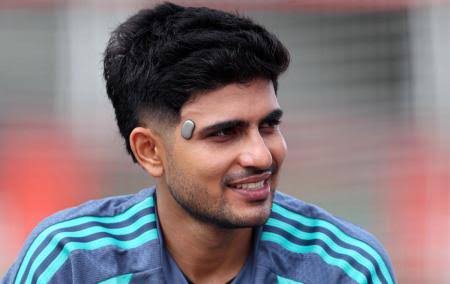
Indian cricketer Shubman Gill has recently been seen experimenting with the "Temple" wearable device during a trip to Auckland, New Zealand. The device, which has sparked widespread curiosity in the tech community, marks a significant departure from the standard wearable form factor that has dominated the consumer electronics market for over a decade. While mainstream manufacturers continue to refine wrist-based smartwatches and fitness trackers, the Temple unit is specifically engineered to be mounted on the side of the forehead, offering a unconventional approach to personal health data collection.
The wearable has gained notable traction due to its association with Zomato founder Deepinder Goyal, who has been instrumental in the product's development and promotion. Unlike standard devices that monitor heart rate, step count, or blood oxygen levels from the radial artery at the wrist, the Temple device utilizes sensors positioned near the temple. This shift in anatomical positioning is intended to capture physiological data that may be more difficult to track reliably using wrist-bound sensors, particularly during intense physical exertion or specific movement patterns common in high-performance sports.
Reports of Shubman Gill interacting with the device have intensified public interest in the product's capabilities. As a high-performance athlete, Gill's interest in the device suggests that the technology aims to appeal to individuals who prioritize precise biometric tracking. The placement of the sensor on the forehead is arguably one of the most distinctive features of the product, moving away from the conventional aesthetic of wearable tech and into a category that emphasizes utility and medical-grade tracking over ornamental design.
Market analysts note that the wearable technology sector has faced stagnation in recent years, with many products offering identical feature sets and similar physical designs. By introducing a device that challenges the standard "watch" aesthetic, the developers behind Temple appear to be targeting a niche segment of users who are dissatisfied with the limitations of wrist-worn hardware. The move reflects a broader trend in health-tech startups attempting to disrupt established industry norms through radical redesigns of familiar hardware interfaces.
The specific testing conducted by Gill in Auckland serves as a high-profile endorsement of the device's comfort and viability in real-world scenarios. For a professional cricketer whose daily routine involves extreme physical demand, field training, and recovery cycles, the ability to maintain consistent data tracking without the interference of a wrist-mounted object is a potential competitive advantage. It remains to be seen how the device performs across a wider demographic and if the unconventional form factor will be accepted by general consumers who are accustomed to more traditional wearable designs.
Despite the buzz surrounding the product, details regarding the sensor's exact accuracy, battery longevity, and data privacy policies remain limited to initial disclosures and public demonstrations. The tech industry continues to observe the development of the Temple project closely, as it represents a rare instance of a non-traditional player attempting to challenge the dominance of major global electronics brands. Whether the forehead-mounted design becomes a mainstay in the fitness tracking ecosystem or remains a specialized tool for professional athletes is a question that only long-term adoption will answer.
As the device moves through its testing phases, feedback from users like Gill will likely prove essential for the engineering teams involved. Incorporating the device into a professional athletic training regimen provides invaluable data on how the hardware holds up during sweat-intensive activities, extreme movement, and long-term wear. For now, the Temple wearable remains one of the most discussed gadgets in the space, signaling a potential shift in how wearable technology integrates with our physical presence.








Comments