


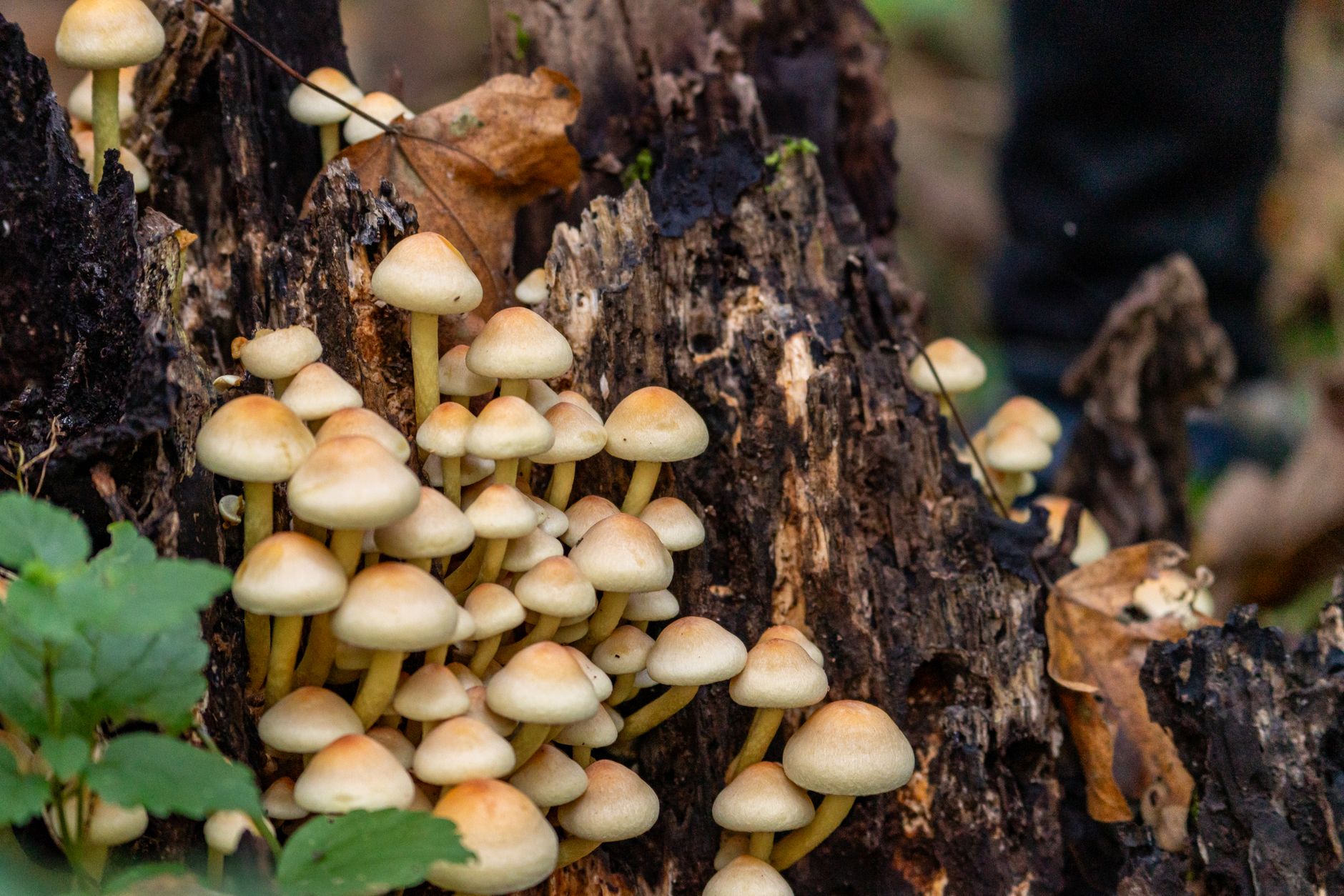
For over a century, reports of a bizarre phenomenon involving the perception of tiny, brightly dressed human figures have emerged from various parts of the world. Now, researchers have successfully identified a mushroom species linked to these unusual visions, following investigations in China and the Philippines. According to a study published in the journal Mycologia, scientists from the University of Utah used DNA sequencing to link these experiences to the fungus Lanmaoa asiatica.
This visual experience is often referred to as 'Lilliputian hallucinations,' a term derived from the tiny inhabitants in Jonathan Swift’s Gulliver’s Travels. Individuals who have consumed the mushrooms describe seeing dozens or even hundreds of miniature figures interacting with their environment. These figures, sometimes appearing as clowns or elves in colourful clothing, are often described as moving across furniture or climbing walls, offering a vivid and convincing visual experience rather than fleeting or indistinct images.
The scientific pursuit to understand these reports began as early as 1934, following accounts from Papua New Guinea, where the phenomenon became known as 'mushroom madness.' Throughout the 1950s and 1960s, anthropologists and mycologists attempted to identify the specific mushrooms within the Boletaceae family that might be responsible. Despite rigorous investigations, including efforts by Swiss chemist Albert Hofmann, researchers at the time failed to isolate a causative substance, leading to a decline in interest by the end of the 1960s.
The mystery resurfaced in the 1990s in Yunnan province, China, where residents reported similar experiences after consuming locally known 'Jian shou qing' mushrooms. In this region, the mushroom is a popular edible delicacy often consumed between June and August. However, locals are well aware of the risks, typically warning diners to ensure the fungus is thoroughly cooked. Eating the mushroom raw or improperly prepared has been historically associated with both illness and the characteristic hallucinations.
A significant breakthrough occurred in 2024 when Colin Domnauer, a doctoral researcher at the University of Utah, discovered similar reports among an Indigenous community in the Cordillera region of the Philippines. Residents there described a wild edible mushroom known as 'Sedesdem' that induced visions of tiny humans. The similarity between these reports and those from China and Papua New Guinea suggested a potential biological link despite the vast geographical distances involved.
To investigate further, Domnauer collected specimens from both China and the Philippines for genetic analysis. The researchers confirmed through DNA sequencing that both the 'Jian shou qing' from China and the 'Sedesdem' from the Philippines were indeed Lanmaoa asiatica. This discovery also expanded the known geographical distribution of the species. Attempts were made to collect samples in Papua New Guinea, but adverse weather conditions prevented the team from obtaining viable material for direct genetic comparison, leaving those historical accounts unconfirmed at the species level.
Despite identifying the mushroom, the specific chemical mechanism remains a mystery. Researchers did not detect any known psychoactive compounds typically associated with hallucinogenic mushrooms in the samples. While the study provides a vital connection between the biological source and the reported human experience, scientists have clarified that this identifies the species linked to recent cases rather than definitively proving that every historical account across the last century involved the same fungus.








Comments