


Sagar Defence, a Mumbai-based startup that began its journey in a cramped 150-square-foot workspace, has transformed into a major defense entity with extensive research and manufacturing facilities across Pune and Andhra Pradesh. Founded in 2015 by Captain Nikunj Parashar alongside co-founders Mridul Babbar, Lakshay Dang, Saurabh Patil, and Ankit Kumar, the company has navigated significant personal and professional challenges to reach its current position as a leading provider of autonomous weapons systems for the Indian Armed Forces.
Speaking at the Indian Navy’s ‘Swavlamban’ Naval Innovation and Indigenisation Seminar held recently in New Delhi, Captain Parashar shared the company's arduous path to success. He highlighted that the firm’s progress was marked by persistence despite various setbacks, including his own personal health struggles involving two heart attacks and a paralytic stroke. Today, the organization is a significant player in the defense sector, specializing in swarm boats and unmanned surface vessels (USVs) that are increasingly critical for modern naval surveillance and combat operations.
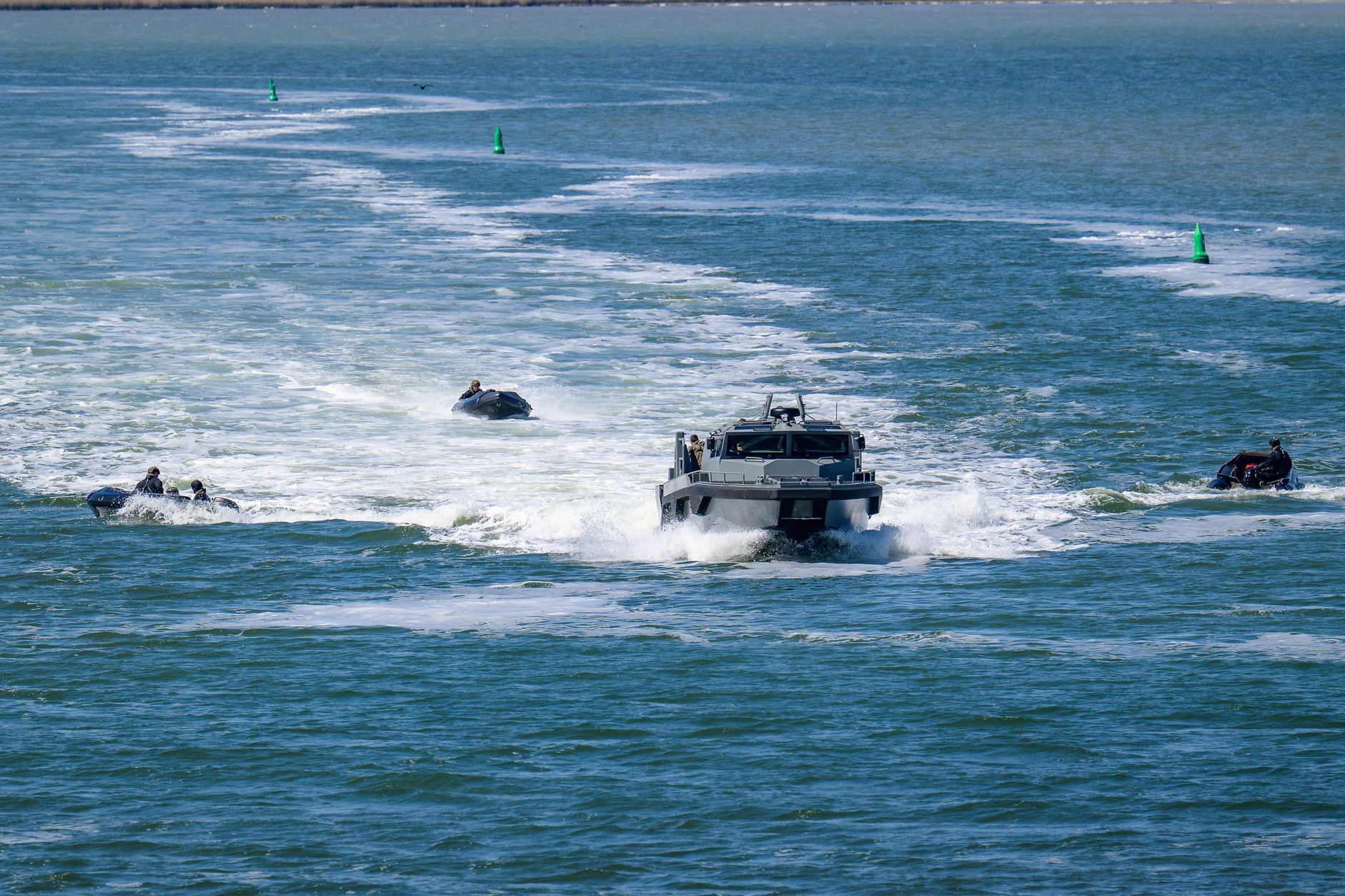
Under the Navy’s iDEX (Innovations for Defence Excellence) ‘SPRINT’ contract, Sagar Defence has initiated the supply of 12 armed unmanned surface vessels. Among these is the signature ‘Matangi’ craft, a high-speed interceptor equipped with a 12.7mm stabilized remote-controlled gun station. These vessels incorporate advanced electro-optical radar tracking and anti-jamming GPS navigation, allowing them to conduct autonomous strikes. The platforms are designed for versatility, capable of being operated as unmanned surveillance tools or as transport for marine commandos during special operations. The Indian Army has already deployed similar craft for patrolling in the Pangong Tso lake region of eastern Ladakh.
Beyond maritime vessels, the company’s product portfolio includes specialized multi-payload quadcopters and hexacopters, such as the Spectre and Varuna series, as well as a Maritime Spotter Drone built to land on warships while at sea. Furthermore, Sagar Defence has entered into a partnership with Israel Aerospace Industries (IAI) to co-develop the "Point Blank" system. This precision strike missile, which features vertical take-off and landing (VTOL) capabilities, serves as a loitering munition designed for high-speed engagement.
The ‘Swavlamban’ exhibition also highlighted advancements from other homegrown startups contributing to the naval ecosystem. Zen Technologies showcased an autonomous surface vessel prototype intended for multi-role network missions, including fire support and anti-submarine warfare. Meanwhile, C14 introduced its ‘Tandav’ modular USV platform and ‘AquaScan,’ an artificial intelligence-driven underwater vision device for divers, which has reportedly attracted interest from the Indian Navy for potential procurement.
The push for indigenous defense solutions is further supported by innovations in space-based monitoring. The startup Galaxeye is currently offering the Navy a satellite-based solution designed to track shadow vessels within Indian waters. According to Aarav Saexna, a forward-deployed engineer at Galaxeye, this technology allows for the detection and data retrieval of unidentified ships in real-time, functioning effectively even during nighttime or adverse weather conditions.
These developments reflect a broader trend in the defense sector toward technological self-reliance, with companies utilizing advanced robotics, AI, and autonomous systems to address modern security requirements. As Sagar Defence and its contemporaries continue to scale their manufacturing and R&D capabilities, the integration of these technologies into the Indian Navy’s fleet signals a shift toward more agile and network-centric naval defense strategies.








Comments