


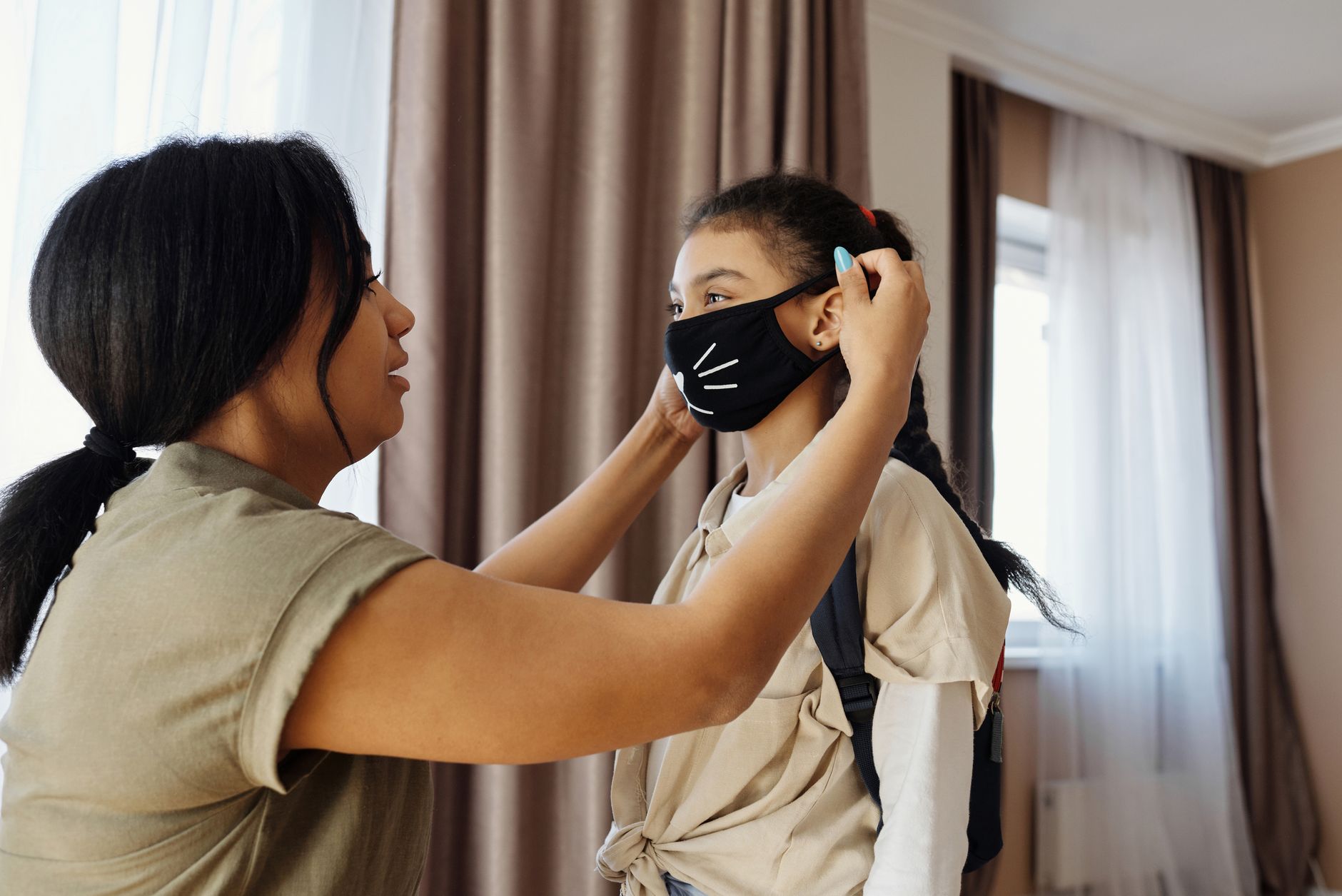
With air pollution levels rising, parents are increasingly seeking effective ways to protect their children from hazardous outdoor air quality. While colourful or cartoon-themed masks may appear appealing, paediatricians emphasise that functionality must take precedence over design. Four experts have outlined a guide to help parents navigate the complexities of mask selection, fit, and safety protocols for children.
Dr. Amit Gupta, a paediatrician and neonatologist at Motherhood Hospitals in Noida, suggests that children over the age of five or six should wear child-sized, certified respirators such as N95 or KN95 masks when outdoor exposure is unavoidable. Experts highlight that these respirators are specifically designed to filter PM2.5, the fine particulate matter that is particularly harmful to a child’s developing lungs. Dr. Ravi Malik, founder and director of Malik Radix Health Care, cautions against masks that prioritise aesthetics over filtration ratings, noting that valved masks are unsuitable because they do not filter exhaled air and often fit small faces poorly.
Achieving a proper fit is as critical as the choice of the mask itself. Dr. Sumera Khan, an MD in Paediatrics at Crescent Hospital, explains that a mask must fully cover the nose, mouth, and chin without leaving gaps around the cheeks or nose bridge. A mask that allows air to escape near the eyes or causes eyeglasses to fog is a clear indicator of a poor fit. Parents are advised to check that the mask remains secure while the child talks or moves their jaw and does not obstruct their vision. Dr. Indu Khosla, a senior consultant in paediatric pulmonology at Narayana Health SRCC Children’s Hospital, Mumbai, warns that modifying adult-sized masks by folding or knotting them is ineffective and can compromise the seal.
Regarding age-specific precautions, the medical consensus is clear: children under two years old should never wear masks due to the significant risk of suffocation and their inability to express distress. For children aged two to five, experts recommend usage only during short periods of high pollution and strictly under adult supervision. Furthermore, masks should never be worn while a child is sleeping.
When considering alternatives, experts clarify that standard blue surgical masks and cloth masks are insufficient against fine pollution particles. These items were originally designed to block droplets rather than the microscopic particles found in smog. Dr. Khan notes that because these masks fit loosely, they do not offer the intended level of protection. Consequently, if a parent cannot secure a well-fitted, certified respirator, the paediatricians suggest that limiting time spent outdoors is a more effective strategy than relying on less efficient face coverings.
Ultimately, while a high-quality respirator can reduce exposure to fine particulate matter, it cannot eliminate all pollutants, including harmful gases. A mask should be viewed as one component of a broader strategy to maintain child safety during periods of poor air quality. Parents are encouraged to prioritise keeping indoor environments clean and reducing outdoor activities during peak pollution hours, as no mask provides complete immunity to the effects of contaminated air.








Comments