


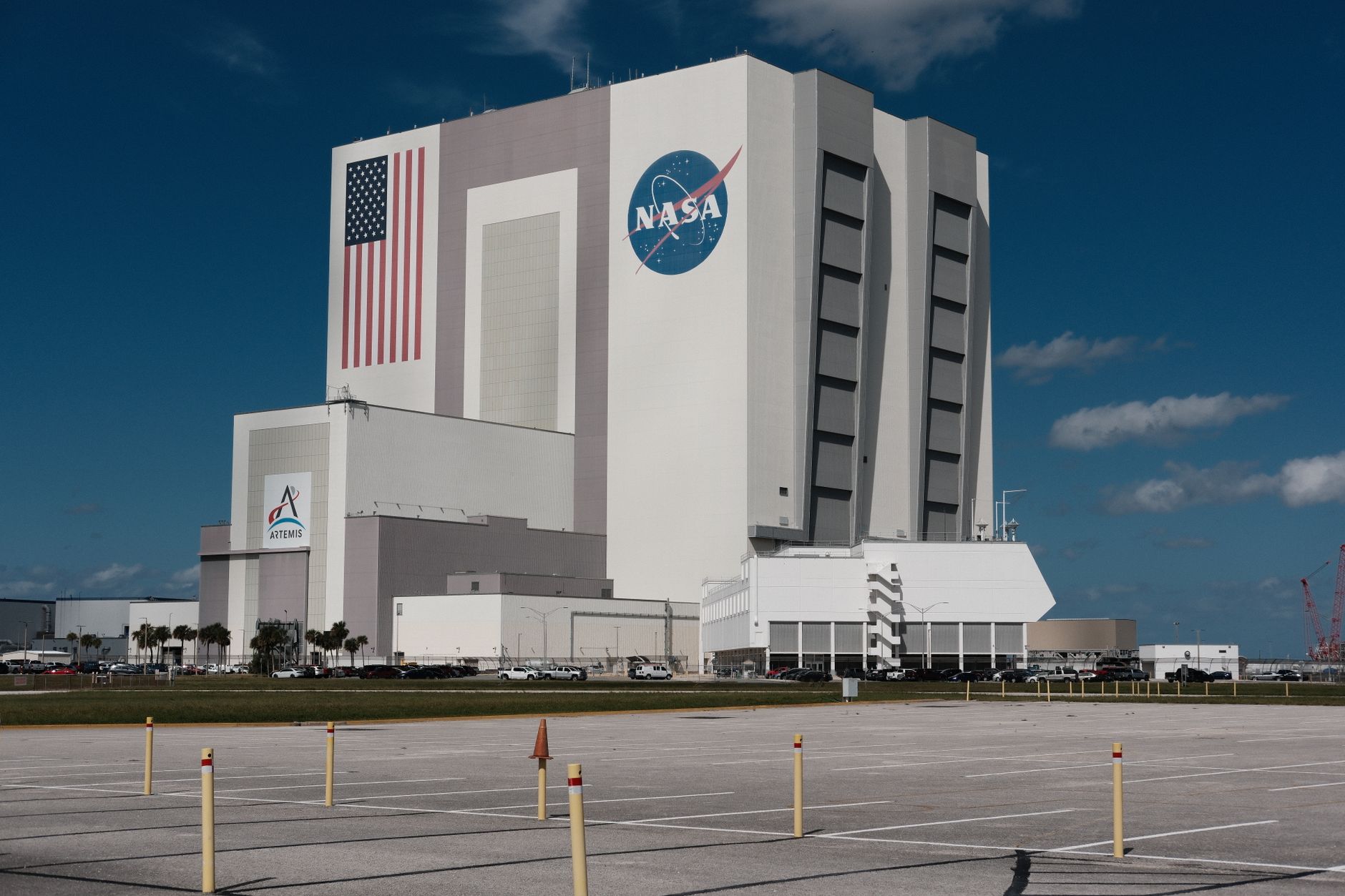
NASA administrator Jared Isaacman has provided a significant update regarding the agency’s lunar exploration roadmap, confirming that preparations for upcoming docking exercises are firmly on track. As part of the broader effort to establish a sustainable presence on the moon, NASA plans to conduct essential docking tests with lunar landers developed by SpaceX and Blue Origin throughout the coming year. These exercises are viewed as a vital step in executing the ambitious Artemis mission schedule, which seeks to return human explorers to the lunar surface and eventually establish a permanent base near the moon’s south pole.
During a recent press conference held at the Kennedy Space Center, Isaacman drew parallels between the current era of space exploration and the historical achievements of the Apollo program. He noted that the agency is utilizing a familiar operational playbook, reflecting on the rapid progression seen between the Apollo 7 splashdown and the Apollo 11 moon landing. Isaacman remarked that this strategic framework remains a cornerstone of the agency’s planning as it navigates the modern space race. He observed that the competition to reach the moon has become increasingly intense, driven by the need to accelerate progress following years of slower development cycles.
The announcement follows the successful completion of the Artemis II mission, which saw four astronauts orbit the moon roughly six months prior to the current update. According to reporting by Fortune, NASA intends to maintain flexibility regarding its choice of lunar lander for the Artemis IV mission, currently scheduled for 2028. By keeping multiple options available, the agency aims to ensure the most effective integration of systems provided by both SpaceX and Blue Origin, both of which are central to the goal of constructing a moon base in regions distinct from the equatorial landing sites visited during the Apollo era.
The upcoming docking tests will involve a crew of three NASA astronauts and one Italian astronaut, who will launch into orbit aboard the agency’s Orion capsule. The mission profile involves a sequence of three quick, successive launches from Cape Canaveral to facilitate the docking procedures. The Orion capsule is scheduled to dock first with Blue Origin’s 'Blue Ghost' lander at an altitude of approximately 270 miles, or 435 kilometers, above Earth. Following this, the capsule will proceed to dock with the SpaceX Starship at a lower orbital altitude.
The technical complexity of these maneuvers has been met with enthusiasm within the space community. NASA associate administrator Amit Kshatriya expressed excitement regarding the mission’s design, describing the technical requirements as a development that would be appreciated by those closely following rocket science. The collaborative nature of these efforts, involving major commercial partners, underscores the agency’s push toward a more competitive and innovative approach to deep-space operations.
Despite the challenges inherent in such an ambitious schedule, leadership remains optimistic about the trajectory of the Artemis program. Commenting on the scale of the undertaking, officials have highlighted the resilience and capability inherent in the American space industry. As the agency moves closer to the 2028 target for Artemis IV, the focus remains on rigorous testing and the successful validation of commercial lander capabilities, ensuring that the necessary infrastructure for a long-term lunar presence is securely established in the years ahead.








Comments