


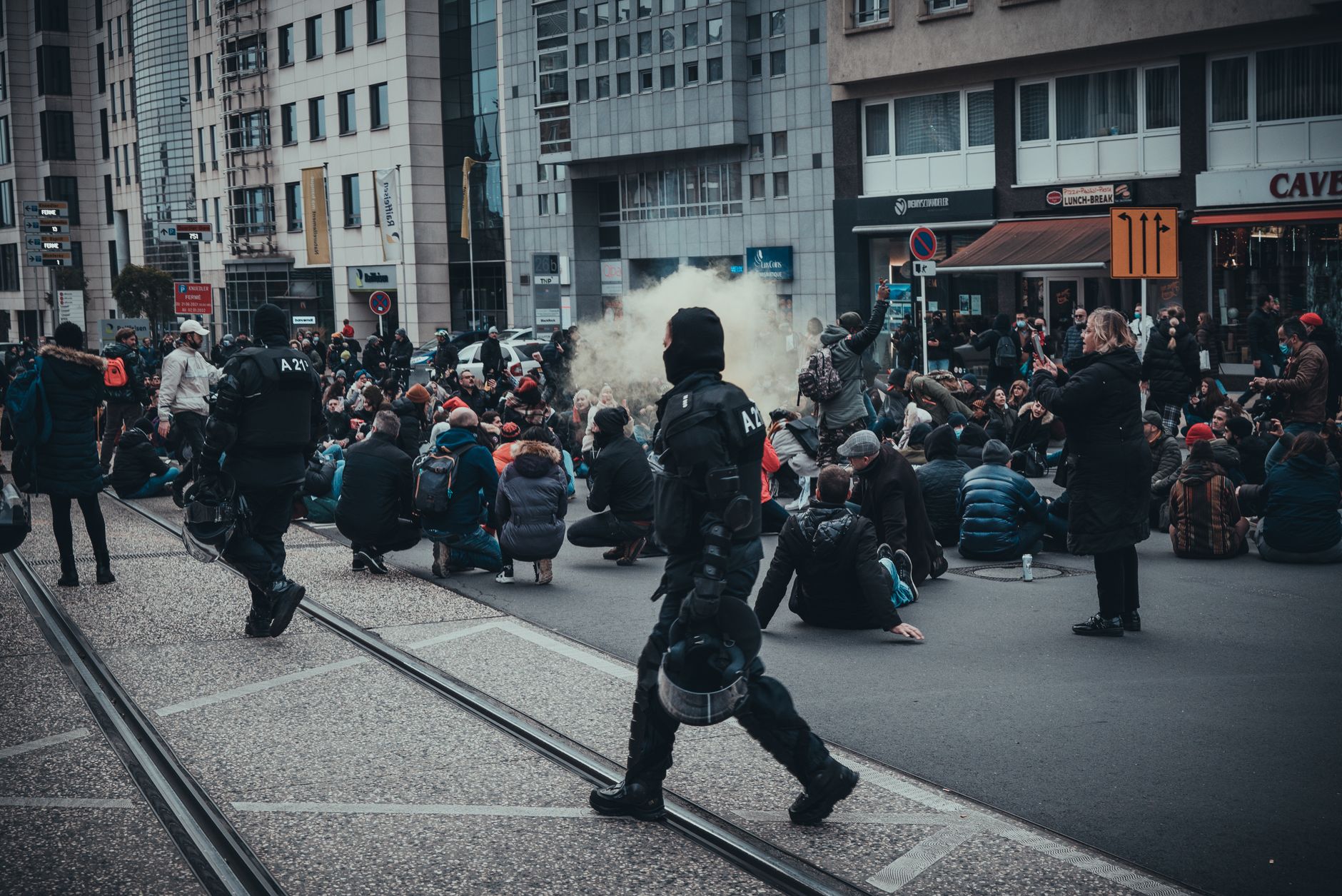
Thousands of citizens across several European nations took to the streets over the weekend in a series of coordinated demonstrations against rising living costs, alleged government corruption, and ongoing social issues. Rallies occurred across France, Albania, Italy, Spain, and Portugal, with protesters demanding better housing affordability, increased investment in education, and the protection of public pensions.
In France, the situation escalated into significant unrest. Interior minister Laurent Nuñez confirmed that nearly 1,000 individuals had been arrested during Saturday's demonstrations. While the government estimated a turnout of 410,000 protesters nationwide, organizers claimed the number was closer to 800,000. In Paris, law enforcement utilized water cannons and tear gas to disperse crowds along the Cours de Vincennes after projectiles were thrown at officers. Police also deployed a Gendarmerie helicopter to monitor the area, citing the presence of hundreds of rioters toward the end of the march.
French left-wing leader and presidential candidate Jean-Luc Mélenchon criticized the heavy police presence, accusing officers of firing tear gas directly into the crowds. Meanwhile, international attention turned to the unrest, with US President Donald Trump referencing the French protests during a campaign rally in Georgia, attributing the instability to the country's immigration policies.
In Albania, the capital city of Tirana became the focal point for thousands of demonstrators. Student-led protests, fueled by grievances over unemployment, poor education standards, and systemic corruption, saw participants targeting government buildings. Riot police used rubber bullets, water cannons, and tear gas to counter protesters who hurled rocks and fireworks at authorities. Reports indicated that a fire was set at the entrance of the agriculture ministry, and protesters damaged local businesses and banks. Authorities stated that over 300 individuals, including both police and protesters, had been injured during the preceding week of unrest.
Italy also experienced widespread demonstrations across major cities, including Rome, Milan, Turin, Naples, Bologna, and Florence. Italian police reported that nine individuals were arrested, and 371 were briefly detained, with 110 of those being minors. In response to the violence, Prime Minister Giorgia Meloni announced the deployment of an additional 500 soldiers to Milan to support the 5,000 police and security personnel already stationed there. She also advocated for stricter penalties for minors involved in violent conduct during public protests.
The mood in Italy was particularly tense in Rome, where a small group of protesters attempted to enter the Colosseum before being removed by guards. Despite the heightened security measures in Milan, where several luxury retailers boarded up their storefronts as a precaution, many of the marches in other parts of the country remained largely peaceful throughout the day. Prime Minister Meloni defended the government's security response, emphasizing that while the right to protest is guaranteed, the safety of citizens and the protection of urban centers remain top priorities.
As these demonstrations continue to unfold across the continent, governments in the affected regions are facing mounting pressure to address the underlying economic and social concerns of their citizens. The protests reflect deep-seated frustrations regarding the rising cost of living and a perceived lack of government transparency. With security measures tightened and the political discourse intensifying, the future trajectory of these movements remains uncertain as leaders struggle to balance public order with the democratic right to assembly.








Comments