


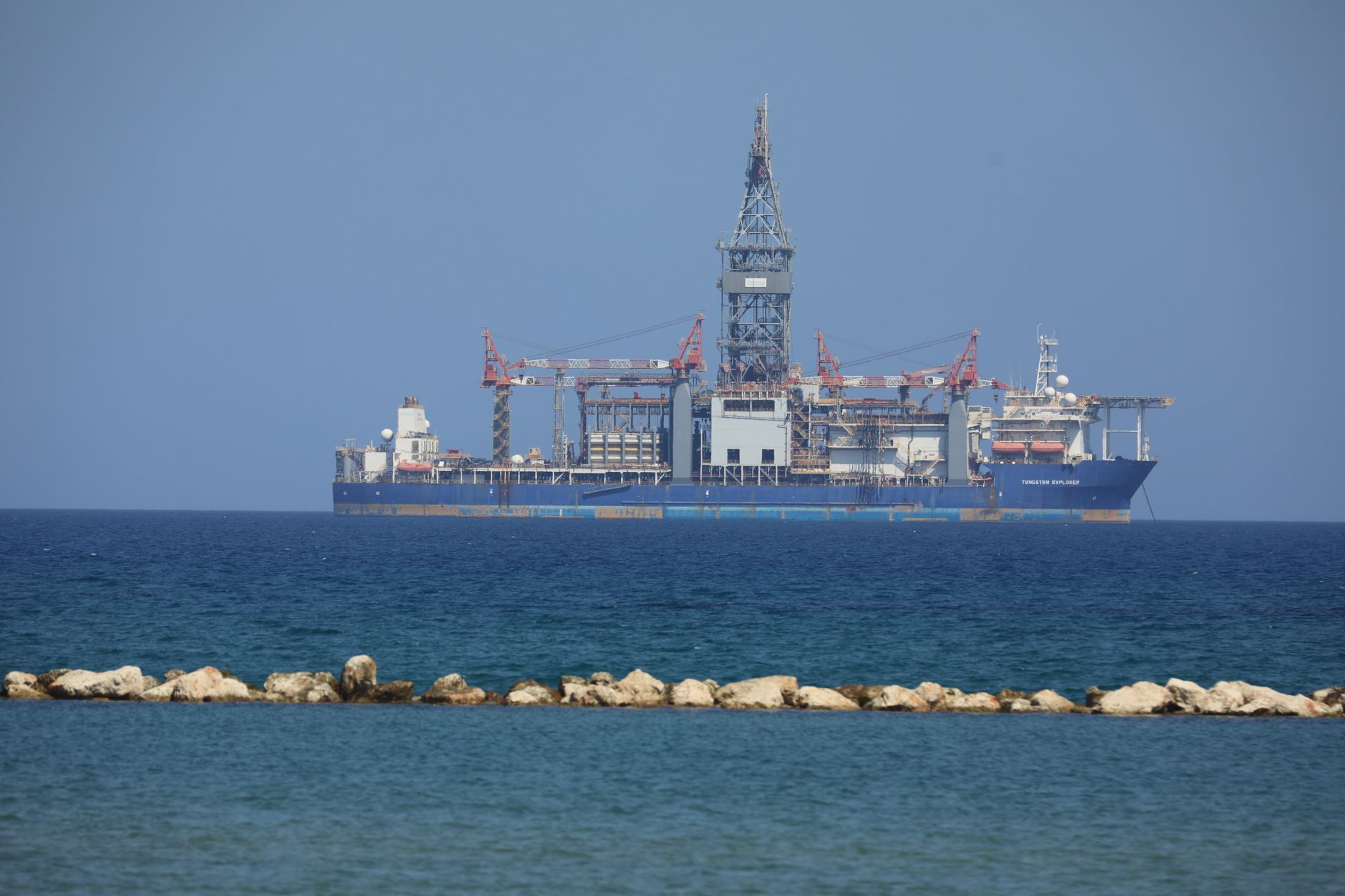
The Indian government has officially unveiled the operational guidelines for the Samudra Manthan scheme, a massive Rs 84,084-crore initiative designed to bolster domestic energy security by de-risking deepwater exploration. Announced by Prime Minister Narendra Modi during his Independence Day address in 2025, the program seeks to address India’s heavy dependence on imported hydrocarbons by incentivizing state-run firms to conduct offshore drilling in challenging, high-risk environments.
Under the new framework, the state will cover up to 50 percent of the costs for exploratory wells in deepwater and ultra-deepwater zones. For stratigraphic wells, which are essential for geological mapping, the support is even higher, covering up to 100 percent of actual costs. These subsidies are capped at Rs 675 crore per exploratory well and Rs 1,350 crore for each stratigraphic well. The scheme is restricted to projects in blocks awarded under the Revenue Sharing Contract regime since 2016, excluding older production-sharing or coal-bed methane blocks.
A critical component of the policy is the "central bargain"—a recovery clause that allows the government to claw back its investment from the revenues of successful wells. According to the guidelines, repayment is required after seven years of commercial production, or once the operator has recouped 50 percent of its development costs, whichever occurs first. If a well fails to yield commercially viable oil or gas, the state absorbs the loss, effectively carrying the early-stage geological risk to encourage exploration that companies might otherwise avoid.
The scheme targets the completion of 60 wells, specifically those located at depths exceeding 400 metres for deepwater and 1,500 metres for ultra-deepwater. Petroleum Secretary Neeraj Mittal has described the intervention as the most ambitious upstream effort in recent memory, projecting that it could significantly enhance India's reserves by more than 600 million tonnes of oil equivalent. To ensure fiscal discipline, payments are tied to specific technical milestones, with 40 percent disbursed when drilling reaches 40 percent of the planned depth and the remainder provided upon successful completion.
Beyond direct well support, the initiative introduces a second track focused on viability gap funding for shared infrastructure. This component is specifically aimed at stranded or small discoveries in basins like Mahanadi and Kutch, where standalone development is economically unviable. By funding shared assets such as trunk pipelines, subsea manifolds, and central processing platforms, the government hopes to create integrated production systems. These hubs must operate under fair and non-discriminatory access rules, allowing for multiple operators to utilize the infrastructure.
A third pillar of the scheme focuses on long-term industrial capacity. The government intends to fund the development of oil and gas manufacturing and services zones, complete with warehousing, testing laboratories, and berthing facilities. This initiative is designed to position India as a global manufacturing and fabrication hub as offshore activities scale up over the coming years. Developers of these zones are encouraged to leverage support from the Commerce Ministry’s BHAVYA scheme, though the guidelines maintain that the government will not accept additional liabilities beyond the defined scope.
The program is slated to run through the 2030-31 fiscal year, with the current year serving as a preparatory phase and full-scale implementation beginning in 2027-28. Operators are held to strict eligibility criteria, and failure to meet work commitments or misuse of funds may result in the suspension of payments or the recovery of disbursed tranches. With the Public Investment Board overseeing proposals, the government aims to maintain rigorous oversight while actively pushing to transform India’s offshore energy prospects.








Comments