


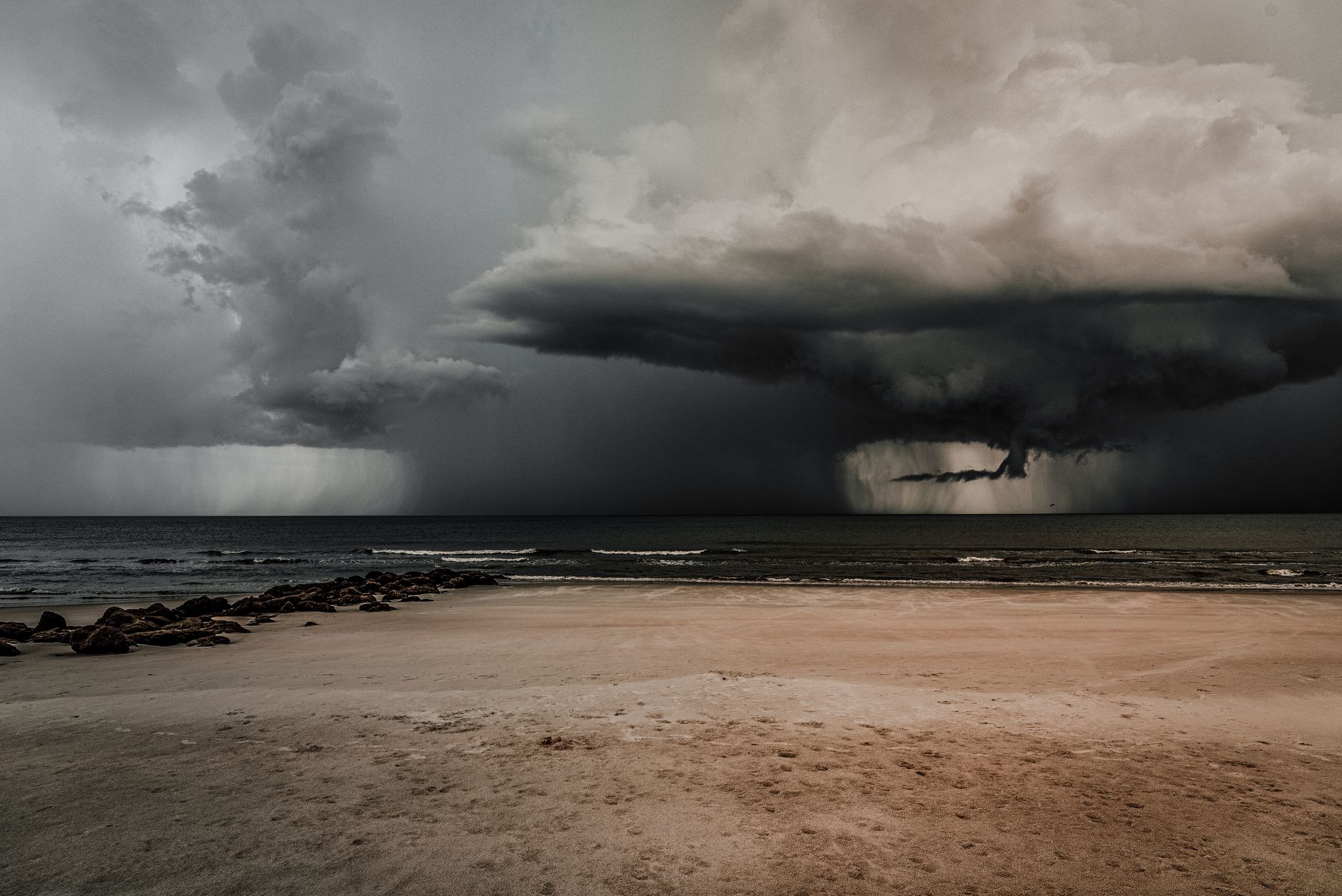
A powerful Typhoon Champi has significantly disrupted travel and daily life across East Asia, leading to the cancellation of hundreds of flights and the widespread closure of schools and offices. The storm, which is currently moving past the north-east coast of Taiwan, has prompted emergency measures from local authorities who are bracing for extreme weather conditions. While the eye of the storm is expected to avoid direct landfall in Taiwan, weather officials have warned that its trajectory remains unpredictable, particularly if the system begins to stall or deviate from its current path.
The impact of the typhoon has been severe, with official reports confirming at least one death. Authorities stated that the victim was swept away by waves on Liuqiu island. Furthermore, the storm has resulted in 171 injuries and forced the emergency evacuation of approximately 1,000 individuals across the region. In a precautionary move to ensure public safety, most of Taiwan’s 22 counties and cities suspended work and classes on Friday, an event often referred to locally as a "typhoon holiday." Taiwan’s massive $5tn stock exchange also remained closed for the day due to the hazardous conditions.
According to the Central Weather Administration in Taiwan, the storm is forecast to bring as much as 90cm of rain along with violent winds through Saturday evening. Officials have issued urgent warnings, advising the public to avoid coastal areas and mountainous terrain as the rainfall is expected to peak on Saturday morning. With the exception of Kinmen county, the entire island has effectively shut down to mitigate the risks posed by the approaching system, which registered wind gusts of up to 191km/h on Friday afternoon.
As Champi continues its progress, it is shifting toward the Okinawa islands in southern Japan. The effects have already been felt there, with local utility companies reporting power outages affecting nearly 8,400 households. More than 160 flights have been cancelled across four major Japanese airlines as the region prepares for the storm's arrival. Before reaching Taiwan, the system also brought heavy rainfall and significant wave activity to the Batanes island chain in the Philippines, where local government images showed coastal roads submerged and blocked by debris.
Meteorologists note that Champi is the latest in an exceptionally high frequency of storms affecting the region this year. Earlier in the week, it reached peak intensity with sustained winds of 185mph, effectively making it the strongest storm globally for the current year. Though it has weakened slightly from its "super typhoon" status, it remains a formidable weather system. This intensity has been attributed to a strong El Niño phenomenon, which is currently heating the Pacific Ocean and creating favorable conditions for more frequent and powerful cyclones.
This season has proven to be particularly active, with Japan recording its 30th typhoon of the year. This marks the first time since 2013 that the country has experienced such a high volume of storm activity. Following its movement past Taiwan and Okinawa, the typhoon is expected to hover over the waters off China’s eastern coast before tracking further north-east toward Japan's main island. While regional weather agencies remain cautious, the path of the storm continues to be monitored closely to ensure that disaster preparedness protocols remain in effect for all vulnerable areas.








Comments