


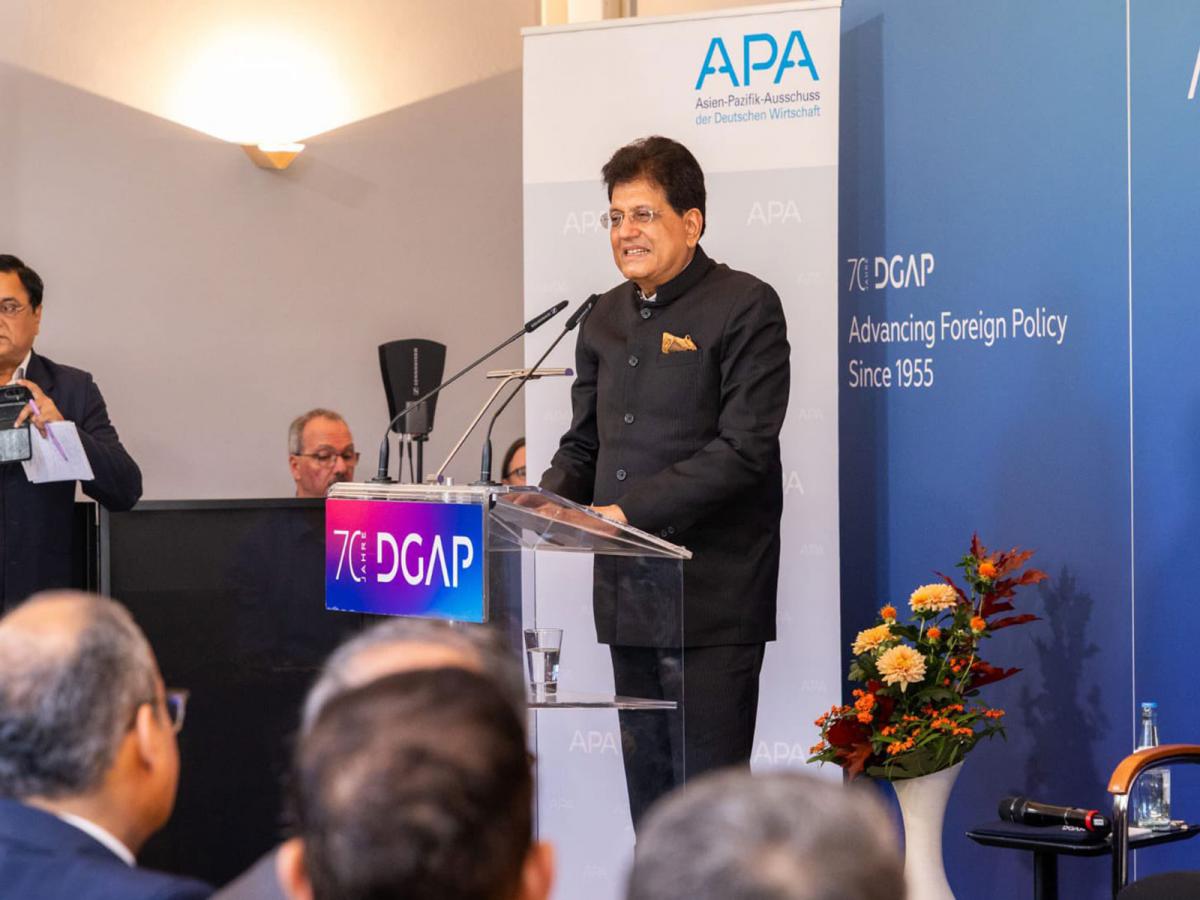
Union Commerce and Industry Minister Piyush Goyal has issued a strong critique of the European Union’s carbon-related trade policies, warning that the bloc’s current regulatory trajectory could invite economic instability. Speaking at the Berlin Global Dialogue, the minister argued that the European Union’s Carbon Border Adjustment Mechanism (CBAM) and the imposition of heavy import duties on steel were creating an unsustainable burden for both businesses and consumers.
The minister specifically pointed to the cumulative impact of these environmental regulations, noting that they threaten to undermine the global competitiveness of European industries. By placing additional compliance costs on carbon-intensive imports such as steel, aluminium, and cement, the EU risks driving up the cost of essential domestic projects. Mr. Goyal cautioned that these measures could inevitably lead to higher prices for a wide range of infrastructure, including highways, ports, airports, and utility networks.
During his address, the minister suggested that the regulatory environment in Europe has become increasingly complex, making it difficult for industries to keep pace. He remarked that the growing list of requirements, combined with high import duties, could prove counterproductive. "You’re inviting disaster. Your cost of living will go up," he stated, while highlighting that the European automotive sector is already experiencing challenges in maintaining its international market position.
Mr. Goyal also touched upon the broader implications for international trade relations. He warned that in an interconnected global economy, such protectionist-leaning regulations could prompt trading partners to introduce retaliatory measures. According to the minister, if one nation or bloc restricts market access, it is likely that others will respond with similar barriers, ultimately harming European businesses and destabilizing the global trade environment.
A significant portion of the minister's argument centered on climate equity and historical responsibility. He noted that India, while supporting roughly 17 percent of the global population, accounts for only 3 to 3.5 percent of global carbon emissions. In contrast, he argued that Europe’s historical and per capita carbon contributions remain disproportionately high. He emphasized that even today, the per capita environmental impact in Europe is significantly greater than that of India, where the government is focused on meeting the energy and food requirements of 1.4 billion people.
The minister emphasized that India remains committed to building fair and balanced trade partnerships based on competitiveness and complementary strengths. He stated that India is currently managing one of the world's fastest-growing clean energy programmes while balancing the developmental needs of its citizens. The government maintains that it approaches international agreements by ensuring they are equitable for all involved parties.
The European Union’s CBAM is designed to account for carbon emissions embedded in specific goods entering the European market. However, exporters and several emerging economies have expressed concerns that the mechanism functions as a trade barrier, adding significant compliance costs. As the debate continues, the friction between European environmental standards and the trade interests of developing nations remains a focal point in global economic discussions, with the potential to influence future bilateral and multilateral agreements.








Comments