


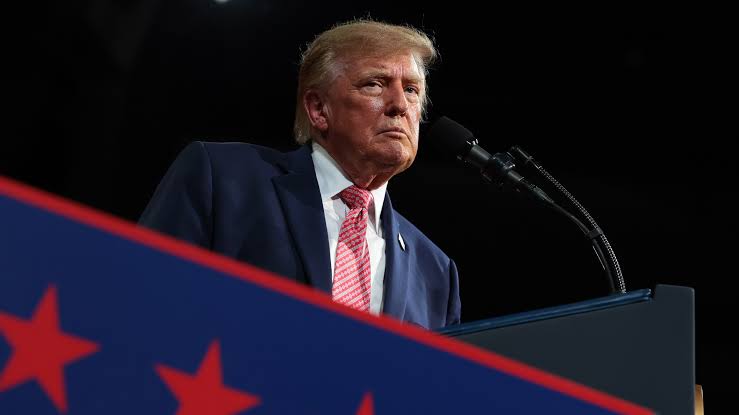
A federal judge in the United States has issued an order requiring President Donald Trump to appear for a deposition as part of his ongoing $10 billion defamation lawsuit against the British broadcaster, the BBC. US Magistrate Judge Enjolique Lett ruled on Thursday that the President must answer questions under oath in a session conducted by the network's legal team.
According to the court order, this testimony must take place no later than December 11. The judge warned that failure to comply with this deadline could result in legal sanctions against the President, including the potential dismissal of the case. The deposition had previously been set for October 16, but was cancelled by the President’s team, who cited a “matter of national importance” as the reason for his absence.
However, the BBC’s legal counsel, Charles Tobin, challenged this justification in court. Tobin noted that the President was actively participating in political campaign activities in Georgia on that date. “He was participating in party politics and prioritised that over sitting for the deposition,” Tobin stated during the proceedings.
The underlying lawsuit concerns a documentary aired by the broadcaster titled, "Trump: A Second Chance." The legal action centres on the program’s use of clips from a speech delivered by Trump on January 6, 2021—the day supporters of the President breached the United States Capitol. The President has alleged that the documentary misleadingly edited his remarks to suggest he was inciting attendees to storm the legislature, where members of Congress were certifying the 2020 election results.
While the BBC has acknowledged that its filmmakers spliced together various segments of the President's speech from that day, it has consistently denied the claims of defamation. The network previously issued an apology and saw the departure of its top news executive and its head following the controversy. Nevertheless, the broadcaster maintains that its actions do not constitute defamation under the law.
For his part, President Trump has continued to assert that his comments during the January 6 speech were not intended to encourage violence or impede the peaceful transition of power. He has long promoted claims that the 2020 presidential election was affected by fraud, a stance he reiterated during his address on the Ellipse prior to the riot, where he encouraged supporters to “fight like hell.”
This case is part of a broader trend of litigation initiated by the President against various media outlets over their coverage of his administration. He is currently involved in a $10 billion defamation suit against The Wall Street Journal and a separate $15 billion lawsuit against The New York Times and the publisher Penguin Random House. These legal challenges have drawn criticism from press freedom advocates, who express concern that the President may be utilizing the legal system and government pressure to influence media reporting.
The legal landscape surrounding the President remains complex, involving various past and present proceedings. While he previously faced federal charges related to efforts to overturn the 2020 election, those charges were dropped after he won the 2024 election. Additionally, a state-level conspiracy case in Georgia was dismissed in November 2025 following a change in the prosecution team.








Comments