


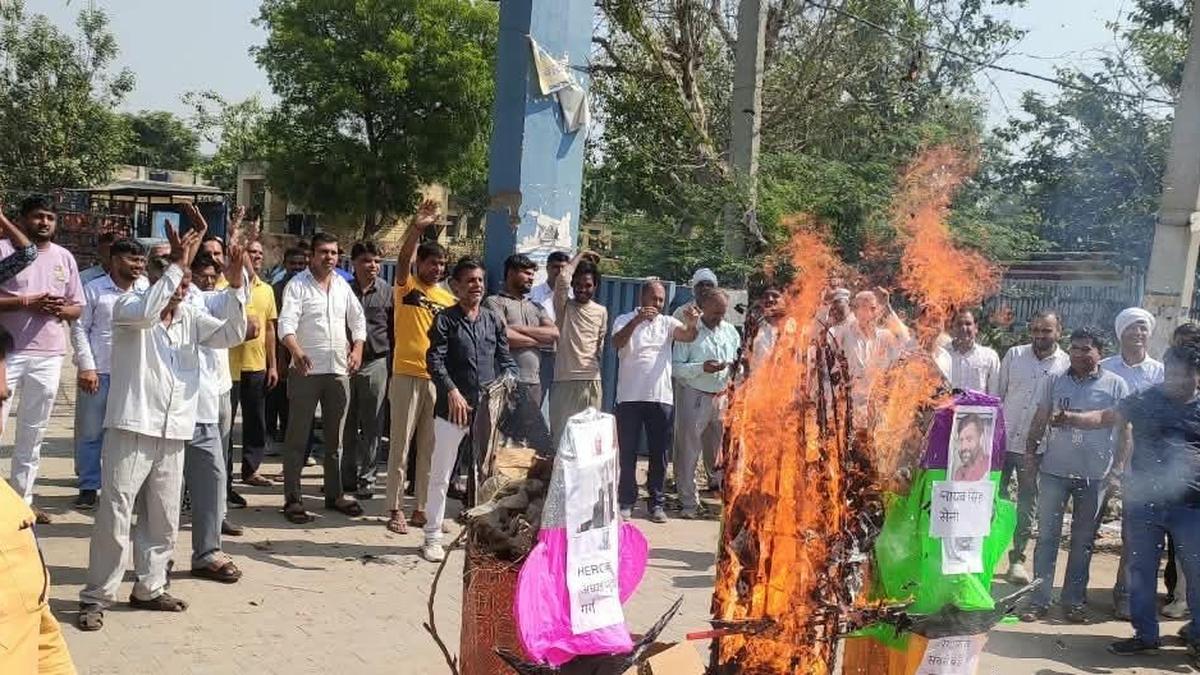
A large-scale protest by electricity department employees has brought power operations to a halt across parts of Haryana, as approximately 40,000 staff members began a three-day strike on Thursday. The industrial action, organised by the Haryana Bijli Karamchari and Engineers Joint Sangharsh Morcha, was triggered by the recent decision of the state’s power sector regulator to grant a parallel distribution licence to a private company in Gurugram and Nuh districts.
The unrest follows an order issued on October 19 by the Haryana Electricity Regulatory Commission (HERC), which granted Eleven Power Private Limited a 25-year licence to supply electricity in the specified regions. This decision allows the private entity to operate alongside existing state-owned distribution companies. The union, representing the striking workforce, maintains that the entry of a private player in these districts threatens the stability and structure of the public power utility.
The impact of the strike has been felt across multiple sectors, with numerous residential and industrial areas reporting electricity supply disruptions. According to the Joint Sangharsh Morcha, the absence of workers has left various 33 kV and 11 kV feeders unattended, preventing the repair of routine breakdowns. This, in turn, has led to secondary issues, including the disruption of water services and a significant reduction in industrial output, as power flow to industrial zones remains unstable.
In response to the growing agitation, Chief Minister Nayab Singh Saini held a high-level review meeting on Wednesday with administrative secretaries to assess the situation and plan for essential service management. Acknowledging the concerns raised by the electricity department staff, the Chief Minister confirmed that the state government intends to contest the HERC’s order. He stated that the government will represent the employees' interests before the Appellate Tribunal for Electricity (APTEL).
The Chief Minister further indicated the government’s willingness to engage legal counsel trusted by the power workers’ unions to spearhead the challenge against the licence grant. By seeking legal intervention through the tribunal, the state administration hopes to de-escalate the situation and address the grievances that have led to this massive work stoppage.
The HERC, which functions as a three-member statutory body, is tasked with the regulation of the state's power sector. Its members and chairperson are appointed by the state government following recommendations from a selection committee. The issuance of the licence to Eleven Power Private Limited was done under Section 14 of the Electricity Act, 2003, which provides for parallel distribution licences. The union’s opposition highlights the ongoing tension between public sector unions and the state's efforts to open the power market to private players.
As the three-day strike continues, the state remains in a precarious position regarding utility services. Both the government and the unionized staff are now focused on the upcoming proceedings at the Appellate Tribunal for Electricity, which will serve as the next critical juncture in this dispute. Until then, citizens and businesses in the affected regions of Gurugram and Nuh face continued uncertainty regarding the reliability of their electricity supply as the standoff between the state and the employees remains unresolved.








Comments