


The Esports World Cup (EWC) has officially announced its 2027 Qualifier Program, a strategic initiative designed to broaden access to the global tournament through a decentralized network of local competitions. By integrating various tournament organizers, gaming festivals, and federations into the official "Road to EWC" framework, the organizers aim to reach approximately 1.8 million players across more than 400 events throughout the year.
This expanded qualification pathway is divided into two primary routes for participants. The first, EWC Direct Qualifiers, maintains and strengthens the existing links between established competitive tournaments and the global EWC stage. Organizers under this model retain their commercial autonomy while ensuring they adhere to the rigorous standards set by EWC and the respective game publishers.
The second and perhaps more transformative route is the introduction of EWC Satellite Last Chance Qualifiers. This track is specifically designed to incorporate local ecosystems into the broader tournament structure. Organizations such as universities, cyber cafés, gaming festivals, and regional federations can now link their existing competitions—or create entirely new ones—to the EWC qualification ladder. Winners of these local events will secure guaranteed entries into the corresponding Last Chance Qualifier tournaments, providing a clear route to the world stage for amateur and semi-professional talent.
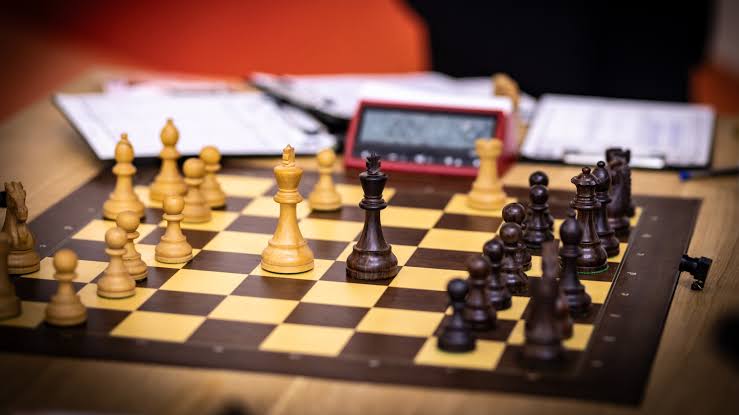
While the program covers multiple gaming titles, chess has been explicitly named among the initial disciplines supported by the Satellite Last Chance Qualifiers, alongside Counter-Strike 2, Street Fighter 6, and FATAL FURY: City of the Wolves. To facilitate this global participation, the Esports Foundation has committed to providing essential support for winners, including assistance with travel visas and tournament accommodation.
The inclusion of chess reflects the sport's rising profile within the esports community, particularly in India. Indian Grandmasters have demonstrated significant success in previous iterations of the competition. For instance, in 2026, four Indian Grandmasters participated in the Esports World Cup, with Vidit Gujrathi notably reaching the final of "India Rising," the official chess qualifier. Additionally, Karthik Venkataraman secured a top-12 finish in the 2026 Last Chance Qualifiers.
The trend of success for Indian players is not limited to 2026. In 2025, Nihal Sarin, competing under the S8UL Esports banner, successfully navigated the Last Chance Qualifier stage to earn a position in the quarterfinals of the global tournament. These performances have solidified the country's growing reputation as a key player in the intersection of traditional chess and digital competition.
Commenting on the initiative, Faisal Bin Homran, Chief Product Officer at the Esports Foundation, stated that the program highlights the potential of connecting diverse competitive pathways to a single, global destination. According to Bin Homran, the goal is to leverage the strength of local esports communities worldwide, allowing them to play an official role in building the foundation for the Esports World Cup. By fostering these local ecosystems, the organization hopes to create more sustainable opportunities for players to compete directly within their home territories.
As the 2027 season approaches, tournament organizers and stakeholders are expected to begin integrating these new pathways into their local schedules. The expansion serves as a significant development for competitive chess players, who will now have a formalized and globally recognized route to compete for championship titles on one of the world's largest esports platforms.








Comments