


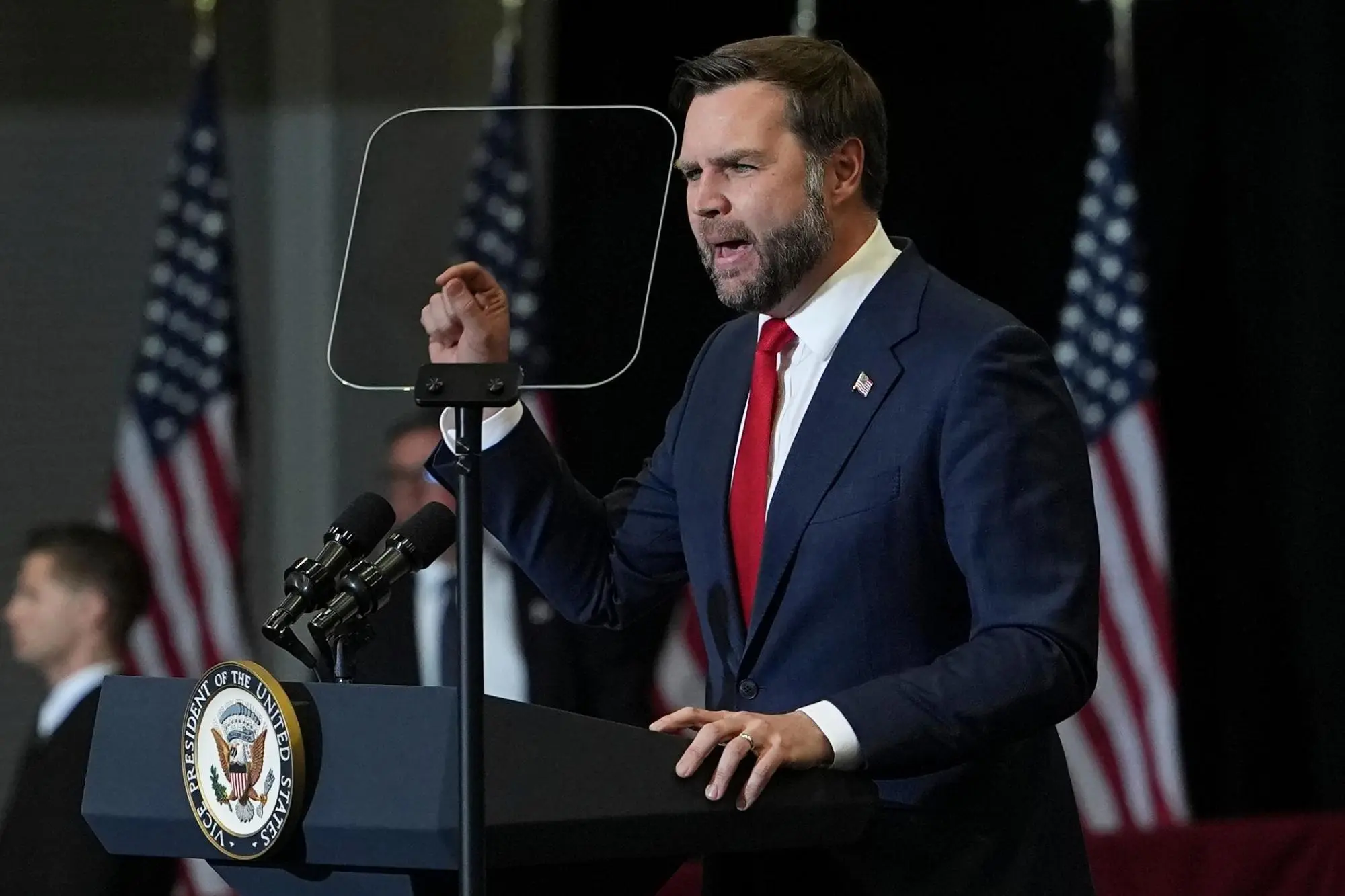
Vice President-elect JD Vance has publicly expressed his frustration with members of his own party, stating he was "disgusted" by the reaction of some Republicans to a controversial campaign advertisement released by former presidential candidate Vivek Ramaswamy. The comments, made by the incoming Vice President during a visit to Cincinnati, mark a significant moment of internal party friction as the political landscape shifts following the recent election cycles.
The advertisement in question, a 60-second political spot, had drawn sharp criticism from various segments of the Republican Party, with detractors questioning the tone and content of the messaging. When pressed for his stance on the appropriateness of the material, Vance adopted a dismissive tone. He told reporters gathered in Cincinnati that the specific details regarding the ad’s content were "not really my concern," effectively distancing himself from the internal debate that had consumed some of his colleagues.
Vance clarified that his priorities lie elsewhere, particularly in the broader effort to strengthen the party's presence in upcoming and ongoing electoral contests. "I am focused on supporting Republican candidates in their midterm races," Vance noted. By framing his position around the practical necessity of political support rather than engaging in ideological policing, the Vice President-elect sought to refocus the conversation on the party’s strategic objectives rather than individual marketing choices.
This incident highlights a growing tension within the GOP regarding messaging tactics and the influence of high-profile figures like Ramaswamy. While some traditionalists within the party have advocated for a more conventional approach to campaign advertising, others, including those aligned with Vance, appear less interested in enforcing stylistic or rhetorical purity. The divide reflects broader questions about the future identity of the party as it moves into a new administration.
The reaction to the ad also underscores the complex relationship between various wings of the Republican Party. Since rising to national prominence, Vivek Ramaswamy has often taken unconventional routes in his political outreach, which has occasionally sparked debate among party insiders. Vance’s defense of the campaign rhetoric suggests a willingness to overlook internal disagreements in favor of maintaining unity behind the party's broader legislative and political goals.
As the party looks toward future electoral challenges, the ability to reconcile these different approaches to messaging will remain a critical test. Analysts suggest that the dismissal of these internal complaints by a figure as influential as Vance signals a shift toward a more pragmatic, if not confrontational, stance on internal discipline. Whether this approach will satisfy the party's more critical base remains an open question as the political season progresses.
Ultimately, the statement from Cincinnati serves as a signal that the incoming administration may prioritize electoral outcomes over the stylistic preferences of the party establishment. With the midterm cycle acting as a litmus test for the party's reach, Vance’s explicit decision to ignore the controversy surrounding the Ramaswamy ad suggests a clear strategic direction for the months and years ahead.








Comments