


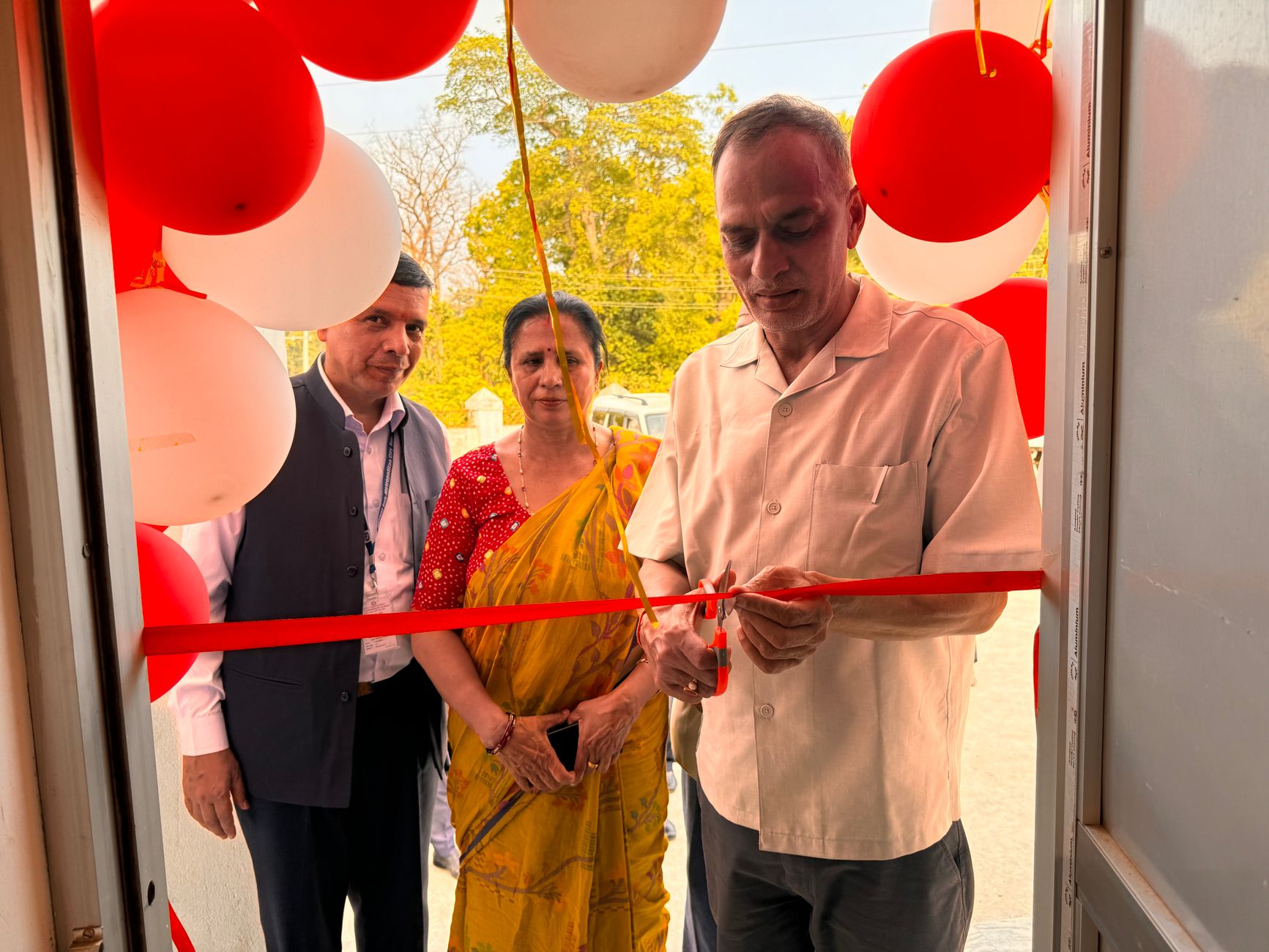
In a significant milestone for infrastructure development in Chhattisgarh, rail connectivity reached the remote Rowghat area in the Kanker district on Tuesday. This marks the first time that this region of the Bastar division has been linked by train services since India's Independence. The inauguration of the Tadoki-Rowghat railway section serves as a major advancement in the state’s effort to bridge the connectivity gap for its tribal and forest-dwelling populations.
Chief Minister Vishnu Deo Sai officially inaugurated the new rail section during a programme held at the Raipur railway station. Simultaneously, the Chief Minister also launched the Abhanpur-Kurud broad-gauge line. Union Railway Minister Ashwini Vaishnaw participated in the event virtually from New Delhi to mark the occasion. During the ceremony, the dignitaries flagged off new passenger train services on both routes, which are expected to provide local residents with improved access to healthcare, education, trade, and transport facilities.
Addressing the significance of the project, Chief Minister Sai noted that the arrival of rail connectivity in Rowghat represents far more than a simple expansion of the existing network. He described it as a crucial step toward opening the interior areas of Bastar and southern Chhattisgarh to new socio-economic opportunities. The administration emphasized that this development aligns with a broader vision to provide modern transport infrastructure to remote and underserved tribal pockets of the state, an effort that the Chief Minister credited to the leadership of Prime Minister Narendra Modi.
The newly opened section is a vital component of the larger Dallirajhara-Rowghat-Jagdalpur railway project, a collaborative venture involving the Chhattisgarh government, the National Mineral Development Corporation (NMDC), the Steel Authority of India (SAIL), and the Indian Railways. The entire 95-kilometre Dallirajhara-Rowghat line was constructed at an approximate cost of ₹1,628 crore. While passenger operations were already functional on the 77.5-kilometre stretch between Dallirajhara and Tadoki, the completion of the final 17.5-kilometre segment last month enabled the extension of services to Rowghat.
Beyond its social impact, the new railway link serves a strategic industrial purpose. The line is designed to facilitate the movement of iron ore from the resource-rich mining area of Rowghat to steel manufacturing units, most notably the Bhilai Steel Plant. By streamlining the transport of raw materials, the project is expected to enhance regional economic efficiency while simultaneously fostering local development.
Looking toward the future, Railway Minister Ashwini Vaishnaw outlined the government's plans for further expansion. He explained that the current link connecting Raipur to Rowghat via Dallirajhara is intended to be extended significantly in the coming years. The long-term vision involves extending the tracks to Jagdalpur, with subsequent connectivity planned to reach Koraput in Odisha and the port city of Visakhapatnam in Andhra Pradesh. This ambitious corridor is intended to link areas that have remained outside the national railway network for decades.
The expansion of the railway infrastructure reflects an ongoing effort to bring the Bastar region into the national mainstream. As the government prepares for future phases of the project, local authorities are focusing on the necessary logistical support, including land acquisition processes, to ensure that the continued rollout of the rail network proceeds as planned. For the residents of Rowghat and the surrounding districts, the arrival of the first passenger train serves as a tangible symbol of progress in an area that has long been isolated by difficult terrain and limited transport options.








Comments