


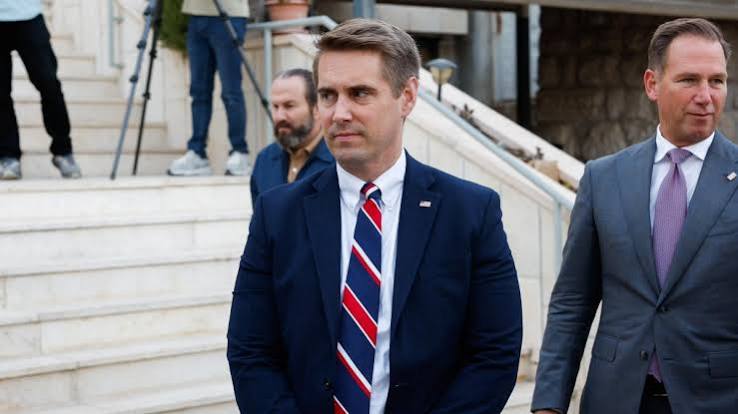
High-ranking United States officials visited the Palestinian village of Taybeh in the Israeli-occupied West Bank on Sunday, a day after masked Israeli settlers reportedly attacked a delegation that included European diplomats and a French mayor. The delegation, which included Assistant Secretary of State for Democracy, Human Rights and Labor Riley Barnes and US Ambassador to the Holy See Brian Burch, arrived at the Latin Convent church to meet with local Christian community members.
The diplomatic visit took place following a surge in tensions during the region's annual olive harvest. On Saturday, a group of diplomats from Belgium, France, and Poland, alongside a French mayor, were allegedly assaulted by masked settlers near the village of Taybeh. The incident has drawn significant international attention, with the French government formally urging Israeli authorities to identify and prosecute those responsible, while also calling for an immediate end to criminal violence within the territory.
This week has seen multiple reports of violence involving settlers, activists, and journalists. On Friday, Washington Post photojournalist Heidi Levine was hospitalized after she was assaulted while documenting a Palestinian olive harvest in another part of the West Bank. Despite these reports, Israeli authorities had not announced any arrests regarding the weekend attacks as of Sunday.
Israeli government officials have offered varying responses to the unrest. While Foreign Minister Gideon Saar and the Israel Defense Forces (IDF) attributed the attack on the European delegation to "Israeli rioters," Prime Minister Benjamin Netanyahu adopted a more cautious tone. He suggested that the diplomats had entered a "sensitive area with a history of confrontations without prior coordination with the IDF" and stated that the circumstances surrounding the assault on Levine remained "unclear."
The incident occurs against a backdrop of increasing volatility in the West Bank. According to data from the Israeli human rights group Yesh Din, at least 170 attacks by settlers against Palestinians have been recorded since September 27. These incidents have increasingly targeted foreign observers, activists, and members of the press. On Sunday, observers reported seeing a group of at least 10 masked individuals throwing rocks at Palestinians near the town of Salfit, prompting intervention from Israeli border police who fired tear gas at the hills.
The West Bank remains a flashpoint, hosting approximately 500,000 Israeli settlers alongside at least three million Palestinians. While the international community, including the United Nations, largely views Israeli settlements as illegal under international law, the Israeli government rejects this characterization, maintaining that the land is "disputed" rather than occupied.
The visit by US officials also coincides with the lead-up to Israel's upcoming parliamentary election, scheduled for October 27. The political climate remains charged, particularly regarding US-Israel relations and the administration's stance on settlement expansion. While President Donald Trump has voiced opposition to the expansion of settlements this year, the current US administration has faced scrutiny over the level of pressure applied to Israel's right-wing, pro-settler government to alter its existing policies. As of now, the situation in the West Bank remains tense, with rights groups calling for stronger law enforcement to curb the escalating violence.







Comments