


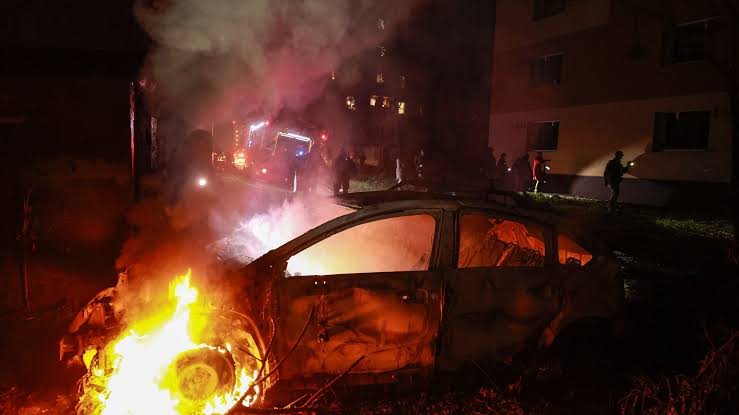
A series of coordinated Ukrainian drone strikes has resulted in significant fires at two major oil facilities in St Petersburg, marking a dramatic escalation in the ongoing conflict between Kyiv and Moscow. St Petersburg Governor Alexander Beglov confirmed that the drone attacks ignited fires at the Petersburg Oil Terminal and the Ruchi oil depot. The incidents, which occurred on Sunday, also saw damage reported at a logistics centre owned by the retailer Ozon and a data centre operated by the technology firm VK.
Authorities have confirmed that the strikes resulted in at least one fatality and left five other individuals injured. This aerial offensive was part of a much broader campaign reported by the Russian Ministry of Defence, which claimed its air defence systems had intercepted 1,015 Ukrainian drones across 15 different Russian regions, as well as over the annexed Crimean peninsula and the Black Sea. Despite these claims, the intensity of the drone strikes has underscored the vulnerability of Russian infrastructure deep within its borders.
The flare-up coincides with growing diplomatic friction regarding a proposed 'energy ceasefire.' President Volodymyr Zelenskyy has publicly accused Moscow of continuing its bombardment of Ukraine’s critical energy infrastructure, alleging that Russia has conducted 76 separate attacks on the energy, oil, and gas sectors since a ceasefire was announced by the American President on October 11. Zelenskyy noted that these strikes have left tens of thousands of families without electricity, with facilities in the Vinnytsia, Zhytomyr, Khmelnytskyi, and Odesa regions bearing the brunt of the recent overnight assaults.
In a statement posted to social media, Zelenskyy argued that the continued attacks demonstrate that Russia is not acting in good faith regarding agreements or potential sanctions relief. He suggested that Moscow perceives the lack of strict repercussions as an incentive to persist with its military campaign, specifically aimed at inducing a total blackout across Ukraine. Meanwhile, Kremlin spokesperson Dmitry Peskov maintained a defiant stance, telling the TASS news agency that while Kyiv continues to resist the invasion, these developments are insufficient to alter the overarching course of the war.
The human cost of the conflict was also felt in southern Ukraine, where local officials reported that a woman was killed and at least two other people, including a six-year-old girl, were wounded in separate strikes in Zaporizhzhia. Reports indicate that these attacks caused significant damage to two apartment buildings, 18 private vehicles, and a local educational institution, further complicating the humanitarian situation in the city.
Beyond the direct fighting, a separate diplomatic incident occurred when Ukrainian drones reportedly entered Lithuanian airspace. The Ukrainian foreign ministry expressed regret over the incursion, with spokesperson Heorhii Tykhyi suggesting the drift was likely caused by Russian electronic warfare systems that diverted the drones from their intended military targets. Kyiv has pledged to share full details with Lithuanian authorities to clarify the circumstances of the event.
As the conflict enters this heightened phase, the international community continues to monitor the impact of these strikes on both energy security and regional stability. With Russia vowing to maintain its strategic objectives and Ukraine accusing Moscow of exploiting diplomatic opportunities to fund its war efforts, the prospect of a lasting ceasefire appears increasingly distant. For now, both nations remain locked in a cycle of aerial combat and retaliatory rhetoric that shows little sign of abating.







Comments