


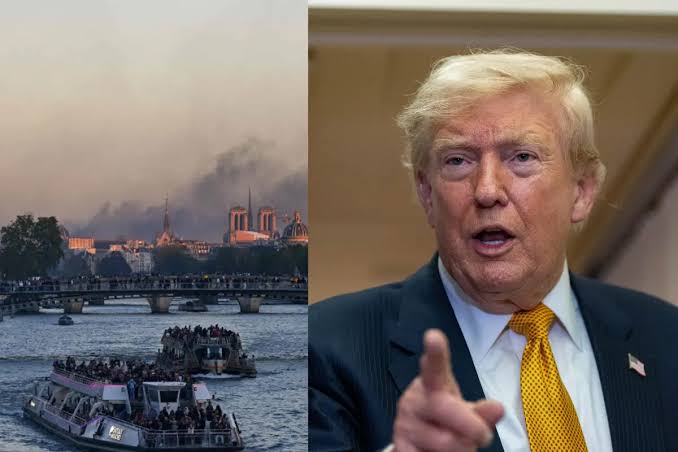
United States President Donald Trump has issued a public call for France to close its borders and implement stricter immigration controls. Citing the ongoing unrest within the country, Mr. Trump claimed that the arrival of individuals from diverse backgrounds has contributed to the nation’s current difficulties, stating that the country is “burning.” He further warned that it could soon be “too late” for French authorities to address what he characterized as an immigration-driven crisis.
These comments were made against the backdrop of significant nationwide protests across France, where thousands of demonstrators gathered to express grievances over the rising cost of living and the deteriorating conditions in schools. The demonstrations, which spanned multiple cities, eventually descended into widespread violence. According to official reports, the confrontations between protesters and security forces were intense, resulting in at least 1,800 arrests across the country.
The scale of the unrest was significant, with reports of shops being looted and public infrastructure being targeted by violent groups. In a particularly notable incident in the city of Limoges, a 19th-century City Hall was engulfed in flames, leading to the collapse of its roof. Authorities have noted that the damage to public buildings and private property was extensive, marking one of the most volatile periods of domestic unrest in recent times.
Discrepancies regarding the participation numbers for these demonstrations have been noted. Government authorities estimated that approximately 550,000 people took part in the protests nationwide, whereas event organizers provided a higher figure, suggesting that around 800,000 individuals had joined the movement. Regardless of the exact turnout, the impact on public order was severe, placing significant pressure on the French security apparatus.
The intensity of the clashes also resulted in a high number of casualties among service personnel. Interior Minister Laurent Nunez stated that more than 500 police officers, gendarmes, and firefighters sustained injuries while attempting to manage the crowds and quell the violence in various urban centers. This high rate of injury among security forces underscores the physical dangers faced by responders during the escalation of the protests.
In response to the deteriorating situation, French President Emmanuel Macron scheduled an emergency meeting with senior government officials. The meeting was set to take place on Sunday, serving as a precursor to a national address by the President intended to outline the government's next steps. The administration is currently faced with the dual challenge of addressing the economic frustrations voiced by the public and restoring order following the violent outbreaks.
Mr. Trump’s characterization of the situation—specifically his allegation that immigrants brought hatred to the country—has added a distinct international dimension to the domestic French crisis. By asserting that immigration has fundamentally damaged France, the US President has positioned border security as a central issue in his commentary on the ongoing events. As the French government prepares its official response and long-term policy adjustments, the international community continues to observe how Paris navigates this complex intersection of civil discontent and border policy.
What happens next remains dependent on the outcomes of the government's emergency meetings and the potential for further protests. The French administration is now tasked with managing public sentiment while simultaneously addressing the security failures that allowed for the widespread destruction seen during the demonstrations. The focus will likely remain on whether the government chooses to pivot its current policies regarding living standards or whether it adopts a more stringent stance on internal and border security in the face of continued pressure.








Comments