


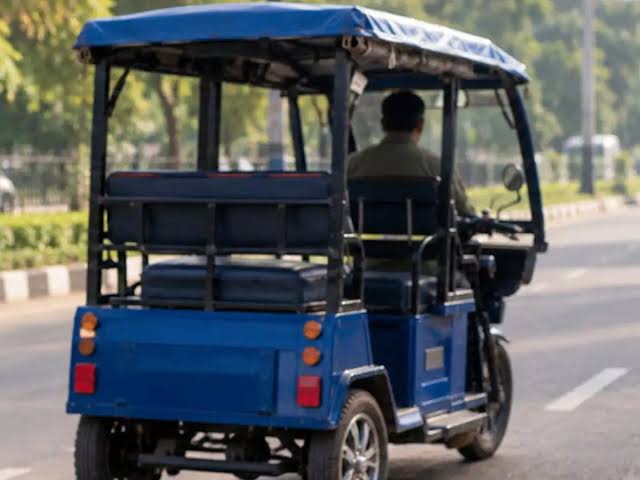
The Delhi government has released a draft scheme proposing to cap the total number of e-rickshaws operating in the national capital at 2.5 lakh. The move, titled the Delhi E-Rickshaw (Registration and Operation) Scheme, 2026, aims to address systemic issues including severe traffic congestion, road safety hazards, and rising levels of air and noise pollution. The government has identified the current "excessive and unregulated proliferation" of these vehicles as a primary factor necessitating the new restrictions.
According to the draft document, once the proposed limit of 2,50,000 vehicles is reached, no new registrations will be issued unless the cap is formally revised by authorities. This limitation is designed to bring order to the capital's public transport landscape. The proposal has been opened for public consultation, allowing residents and stakeholders 30 days to submit their feedback and suggestions before the policy is finalized and implemented.
The draft provides a precise definition of an e-rickshaw, characterizing them as battery-operated three-wheelers designed for a maximum of four passengers, excluding the driver. These vehicles must have a luggage capacity not exceeding 40 kilograms, a net power output capped at 2,000 watts, and a maximum operating speed of 25 kmph. Strict adherence to these technical specifications will be required for any vehicle to be considered for registration under the new framework.
Central to the new regulatory effort is the mandatory requirement for an E-Rickshaw Compliance Certificate (ECC). Under the proposed guidelines, no e-rickshaw will be permitted to operate unless it is registered as a transport vehicle and possesses a valid, digitally issued ECC. This certificate will carry a validity period of two years and must contain comprehensive information, including the vehicle's registration details, the owner's credentials, driver information, proof of valid insurance, and fitness documentation. Furthermore, each ECC will be strictly linked to a single e-rickshaw and one designated driver.
The policy also introduces ownership caps to prevent monopolistic control and improve fleet management. Individual owners who are residents of Delhi will be limited to owning five e-rickshaws. Larger entities, such as companies, firms, NGOs, cooperative societies, and driving schools, will be permitted to own up to 100 e-rickshaws. However, these entities are mandated to ensure proper charging or battery-swapping infrastructure is available. Furthermore, once an organization’s fleet reaches 25 vehicles, they will be required to obtain an aggregator licence.
For the drivers, the proposed rules mandate that every operator must hold a valid driving licence specifically for e-rickshaws, alongside a public service vehicle (PSV) badge. The scheme explicitly prevents the linkage of a single driver to more than one ECC, ensuring greater individual accountability for every vehicle on the road. These measures reflect the government's broader intent to professionalize the sector, which has grown rapidly in recent years as a preferred last-mile connectivity option in the city.
As the capital faces continued challenges with infrastructure and air quality, the success of this scheme will depend on the effectiveness of its enforcement and the feedback received during the public consultation period. By establishing a fixed ceiling and a centralized digital tracking system, the government seeks to transform the current fragmented e-rickshaw industry into a more regulated and safety-conscious segment of the urban transit network.








Comments