


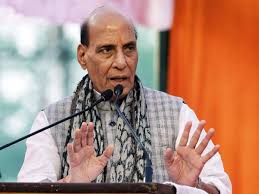
Defence Minister Rajnath Singh is set to embark on a two-day visit to Dushanbe, Tajikistan, to represent India at the 25th meeting of the Shanghai Cooperation Organisation’s (SCO) Council of Heads of Government. The high-level summit, scheduled for October 19 and 20, serves as a critical platform for member states to deliberate on the organisation’s economic trajectory and institutional framework. According to the Ministry of Defence, the primary agenda will focus on bolstering multilateral cooperation across various sectors, including trade, investment, innovation, and cultural exchanges.
The SCO Council of Heads of Government meets annually to manage the organisation's budget and address foundational issues related to economic interaction among member nations. Unlike the Council of Heads of State, which functions as the highest decision-making body of the organisation, the Council of Heads of Government plays a pivotal role in reviewing ongoing cooperation initiatives and streamlining the bloc's administrative and financial functioning. The previous iteration of this meeting was hosted in Moscow on November 18, 2025, where External Affairs Minister S. Jaishankar represented India.
India’s participation in the upcoming Dushanbe summit is part of its ongoing commitment to active engagement within the SCO framework. New Delhi has consistently used these forums to highlight the necessity of expanding intra-SCO trade while lowering trade costs and strengthening supply chains. As global economic dynamics shift, India remains keen on advocating for more efficient connectivity and logistics, which it views as essential for regional growth and stability.
In preparation for the summit, India has already outlined several key priorities during recent discussions among SCO economic and trade officials. In September, during a meeting in Dushanbe, Indian representatives pushed for the adoption of simplified customs procedures and the transition toward paperless trade, including the electronic exchange of documentation and enhanced multimodal connectivity. These measures are designed to integrate regional markets more effectively and improve the flow of goods and services across borders.
Beyond infrastructure, India has expressed a strong interest in deepening cooperation in emerging and strategic sectors. These include the creative and digital economy, agriculture, pharmaceuticals, renewable energy, and green hydrogen. Furthermore, New Delhi has called for increased reliance on digital and cross-border payment systems to facilitate financial interactions. Such initiatives are aimed at providing better access to trade finance for start-ups and micro, small, and medium enterprises, which are seen as critical drivers of regional economic innovation.
India's strategy within the SCO also involves contributing to digital public infrastructure and fostering people-to-people exchanges, which the Ministry of Defence identified as vital components of its regional diplomatic approach. The upcoming meeting in Tajikistan provides a formal opportunity for member states to exchange views on these practical, mutually beneficial initiatives. By advocating for these reforms, India seeks to ensure that the SCO remains an effective platform for addressing the complex logistical and financial challenges facing the region today.
As the summit approaches, the international community will be watching to see how the member states align their policies regarding industrial cooperation and financial interaction. For India, the meeting represents a crucial opportunity to reinforce its position on regional economic integration and to build consensus on strategies that promote sustainable growth. The outcomes of the deliberations in Dushanbe are expected to shape the collaborative agenda for the SCO in the coming year, particularly regarding its institutional and economic priorities.








Comments