


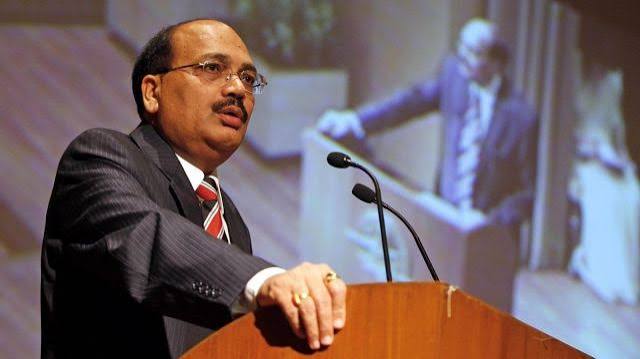
Chief Justice of India (CJI) Surya Kant asserted on Saturday that the questioning of institutions by the youth serves as a "healthy sign of a vibrant democracy." Speaking at the 34th convocation of the National Law School of India University (NLSIU) in Bengaluru, the CJI emphasised that the judiciary should remain receptive to the aspirations and concerns of the younger generation, noting that they are active stakeholders in the country's present, not merely its future.
Justice Kant, who presided over the event as the university's chancellor, underscored the necessity for dialogue and transparency. He acknowledged that while social media and public platforms have become common venues for expressing disagreement, it is vital for institutions to engage with these voices. However, he clarified that judicial functions must remain rooted in established constitutional processes. "Not every issue can be addressed in the court of public opinion, and judges must ultimately decide cases based on the Constitution, the law and the evidence before them," he stated.
The event was held amid a backdrop of prior uncertainty, following the earlier cancellation of the ceremony due to objections raised by some students and alumni regarding the participation of the CJI and Bar Council of India Chairman Manan Kumar Mishra. Despite these initial concerns, the convocation proceeded on Saturday with notable attendees, including Karnataka Chief Minister DK Shivakumar, Karnataka High Court Chief Justice Vibhu Bakhru, and Ranga Shankara co-founder Arundhati Nag.
In his address to the graduating class, Justice Kant encouraged the students to cultivate intellectual independence that extends beyond the mere mastery of legal principles. He described law school as a critical environment where ideas clash and convictions are challenged. According to the CJI, the legal profession demands both the courage to stand up for justice and the humility required to listen to perspectives that are often overlooked. He urged the graduates to practice fairness by engaging in open debate and learning to disagree with others without undermining their dignity.
The CJI highlighted that legal education should equip students to encounter viewpoints that differ from their own, fostering an environment of respectful debate. He urged the new graduates to uphold honesty and maintain professional integrity throughout their careers, warning against taking shortcuts or compromising their personal convictions in the face of difficult choices. He reminded the students that their entry into the legal field carries a profound responsibility to society.
Addressing the challenges inherent in the profession, Justice Kant noted that a career in law would inevitably test their patience and ethics. "Law will challenge your patience, test your ethics, and call upon the deepest reserves of your courage. But it will also reward you with the singular joy of service, the serene satisfaction of righting a wrong, the pride of defending liberty, and the honour of upholding the Constitution," he told the graduates.
As the ceremony concluded, the message from the Chief Justice served as a call for the next generation of legal professionals to balance the spirit of dissent with a commitment to the rule of law. By encouraging graduates to protect institutional autonomy while remaining active in public discourse, Justice Kant reaffirmed the role of the judiciary as a space that must accommodate the evolving voices of the nation, provided those voices remain anchored in the country's constitutional framework.








Comments