


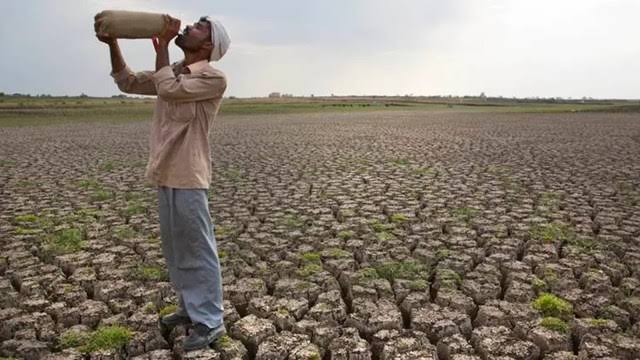
The Maharashtra government has expanded its drought-hit list, declaring 40 additional talukas as affected by water scarcity. This latest inclusion brings the total number of drought-hit regions in the state to 305. In a move aimed at providing immediate liquidity to the agrarian community ahead of the Diwali festival, Chief Minister Devendra Fadnavis announced that an advance relief payment of ₹5,000 will be deposited directly into the bank accounts of farmers.
Addressing the severity of the situation, the Chief Minister confirmed that drought mitigation protocols are now being implemented across all identified regions. Mr. Fadnavis also issued a stern warning to financial institutions, including cooperative societies, district banks, nationalised banks, and microfinance companies, strictly prohibiting them from exerting pressure on farmers to recover outstanding loans during this period of crisis.
The declaration of these additional talukas follows the application of Trigger 1 and Trigger 2 criteria, which now makes these regions eligible for assistance under the Centre’s National Disaster Response Fund (NDRF) guidelines. Makrand Jadhav Patil, the Minister of State for Relief and Rehabilitation, detailed a comprehensive package of 12 relief measures designed to support the affected population. These initiatives include a stay on the recovery of agricultural loans, the restructuring of existing crop debts, and a complete exemption from current electricity bills for agricultural pumps. Furthermore, the state has mandated a total waiver of examination fees for students residing in these drought-hit talukas, with no specific eligibility criteria attached.
Water management has emerged as a primary focus for the administration. Revenue Minister Chandrashekhar Bawankule, who serves as the chairman of the Cabinet Sub-Committee on Drought, emphasized that water tankers should only be utilized as a last resort. He directed district officials to prioritize the revival of dormant water supply schemes that had previously been shut down due to transformer issues or pending electricity dues. To ensure transparency and efficiency, the government is moving toward a digital monitoring system, including a dedicated tanker mobile application and GPS tracking to oversee water distribution.
At the local level, the Pune Municipal Corporation (PMC) has introduced stricter conservation measures. Effective from October 15, the city will suspend water supply every Thursday. The corporation has also banned the use of drinking water for construction activities and ordered the closure of all vehicle-washing centres until the arrival of the next monsoon. These restrictive steps are part of a broader mandate from the State Water Resources Department, which has called for micro-planning of dam water storage in response to the El Niño effect, which is expected to persist into the coming year.
Officials have urged district collectors to submit detailed proposals for local drought relief within 15 days. To address financial constraints, districts have been advised to utilize funds from the Fifteenth Finance Commission to settle pending electricity bills, while others are encouraged to adopt one-time settlement schemes. The government also pledged to support farmers by purchasing cultivated fodder at guaranteed prices, ensuring that livestock remains protected as water and resource shortages continue to challenge the region.








Comments