


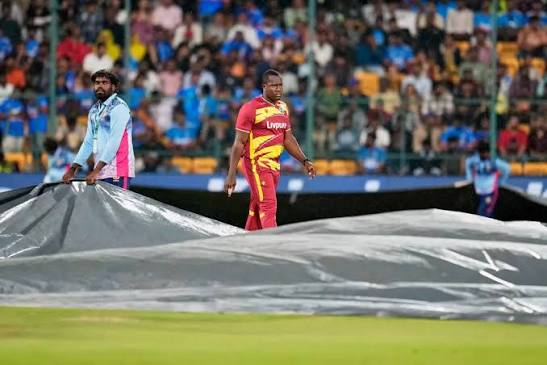
In a significant tactical move amidst challenging weather conditions, the Indian team management confirmed changes to their playing eleven for the ongoing T20 series against the West Indies. As rain disrupted the proceedings, officials from both sides worked to ensure the match continued, with the West Indies winning the toss and opting to bowl first. The decision was heavily influenced by the overcast skies and the potential impact of moisture on the pitch, which had already seen significant rainfall leading up to the start of play.
The return of seasoned pacer Bhuvneshwar Kumar into the bowling attack stands as the primary highlight of India's squad adjustments. Known for his ability to swing the ball, Bhuvneshwar’s inclusion is viewed as a strategic response to the conditions, where early movement could prove crucial in a shortened game. The team management indicated that his experience would be vital in navigating the damp outfield and controlling the flow of runs during the restricted overs.
In the batting department, India opted for a structural change by bringing in Shivam Dube. He replaces Nitish Kumar Reddy, who has been a consistent feature in the squad during recent matches. Dube’s inclusion is expected to provide depth to the middle order, with the team looking to maximize scoring opportunities despite the reduced number of overs caused by the inclement weather. This rotation signals India’s intent to maintain a balanced side that can adapt quickly to changing match dynamics.
The match, which has been severely curtailed due to persistent rain, poses a unique challenge for the players. For the West Indies, the decision to bowl first reflects a preference to chase a target, banking on their bowlers to capitalize on the difficult batting conditions created by the rain-affected outfield. The atmosphere at the venue has remained tense, with ground staff working tirelessly to clear the pitch and outfield whenever the rain subsides, ensuring that the game can proceed to a logical conclusion.
This encounter is part of a larger series that has already seen intense competition between the two sides. Both teams are looking to secure a tactical advantage, and these last-minute changes demonstrate how the playing conditions are dictating team selection. The focus for India will be on building a competitive total, while the West Indian bowling unit will aim to restrict the visitors early, utilizing the conditions that prompted their decision to bowl.
As the game progresses under the threat of further showers, the tactical flexibility shown by both teams remains a key talking point. The decision to rotate players like Dube and Bhuvneshwar suggests that the Indian team is prioritizing match-specific adjustments to counter the challenges posed by both the opposition and the environment. Spectators and analysts alike are closely monitoring how these changes influence the flow of the game once the players manage to stay on the field for an extended period.
Looking ahead, the remaining overs will be critical in deciding the outcome of this clash. With the rain-reduced format placing extra pressure on both batting and bowling units, the result will likely hinge on which side manages to adapt better to the stop-start nature of the match. For the Indian squad, the performance of the incoming players will be closely evaluated as they prepare for the subsequent matches in the series, where weather and surface conditions are expected to remain a significant factor in decision-making.








Comments