


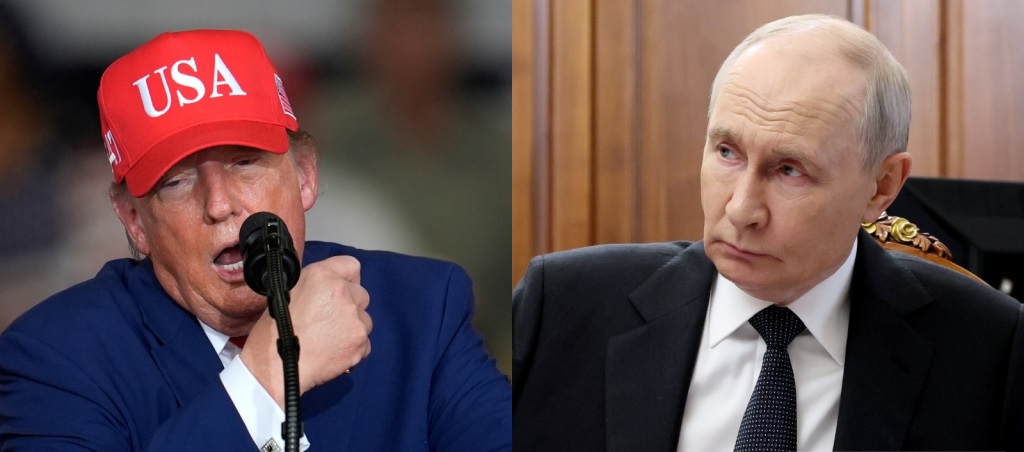
The United States has granted a significant reprieve to India’s economic interests following a decision by President Donald Trump to waive sanctions, restrictions, and tariffs under the Sanctioning Russia and Iran Act (SRIA). The executive order, issued on October 16, allows India to continue its engagement without the immediate threat of punitive measures, a development that experts believe is vital for the nation’s energy security and overall industrial performance.
By invoking Section 15 of the act, President Trump determined that withholding certain sanctions remains in the national interest of the United States. The legislation, often referred to in policy circles as the Lindsey Graham Act, had previously authorized the American president to impose duties of up to 100 percent on countries purchasing Russian crude oil and natural gas. With the waiver now in place, India maintains its ability to secure Russian energy supplies at competitive rates, which analysts suggest will help moderate domestic input costs and provide a cushion against inflationary pressures.
Industry bodies have largely expressed optimism regarding the development. Anant Swarup, Secretary General of the industry chamber FICCI, described the waiver as a positive step for India’s energy security. He noted that the availability of affordable crude oil is essential for supporting India’s growth momentum. However, Swarup also pointed out that because the waiver is subject to modification or withdrawal on short notice, it lacks the durable predictability that businesses typically require for long-term strategic planning. He expressed hope that both nations would prioritize stability and transparency to ensure that such measures do not disrupt ongoing bilateral trade negotiations.
The impact of this decision extends beyond energy, reaching deep into India's export sector. Ajay Sahai, Director General of the Federation of Indian Export Organisations (FIEO), emphasized that the move helps avert a major risk to Indian exporters. By removing the immediate threat of trade barriers, the waiver is expected to restore confidence among international buyers and stabilize order flows, particularly in employment-intensive industries such as textiles, leather, engineering goods, and the gems and jewellery sector.
Deep Kapuria, Chairman of Hi-Tech Gears and an international trade expert, characterized the waiver as a pragmatic and welcome step. He suggested that this move could facilitate the resolution of remaining differences hindering the signing of a broader Bilateral Trade Agreement between the two countries. According to Kapuria, the decision serves as a significant boost to the bilateral economic relationship, potentially creating a more conducive environment for future trade discussions.
Despite the relief, stakeholders remain cautious about the long-term outlook. Sahai highlighted that for Micro, Small, and Medium Enterprises (MSMEs), which often rely on stable trade environments to manage tight margins, the reviewable nature of the waiver creates a layer of uncertainty. Exporters are hopeful that this initial relief will serve as a foundation for a more durable and predictable trade understanding. Meanwhile, there is an ongoing emphasis on continuing to strengthen India’s industrial competitiveness and diversifying export markets to reduce reliance on temporary policy exemptions.
Ultimately, the US administration’s decision reflects a balancing act of geopolitical interests and economic pragmatism. As global energy markets remain sensitive to supply-side constraints, the ability to continue sourcing crude from Russia remains a strategic necessity for India. Whether this waiver leads to a permanent shift in trade relations or remains a transitory arrangement will likely depend on the outcomes of the upcoming high-level dialogues between Washington and New Delhi.








Comments